



Planting miscanthus rhizomes: when, how deep, with which machine and how many per hectare
A miscanthus field is planted once and then harvested for twenty years, and a planting that has to be repeated or gap-filled is expensive. This article covers the planting window, the handling of the rhizomes between the cold store and the soil, the planting depth and the machines, and the choice between three densities, 15,400, 17,800 and 20,000 rhizomes per hectare, together with the harvest chain that suits each density.
The crop: what is miscanthus · The whole season: the cultivation guide · The stock: buy rhizomes
Main points for planting a miscanthus field
-
Rhizomes are planted in spring, once the soil has warmed, and by the end of May at the latest.
Advisers in Germany, France, the United States and Ukraine give a soil temperature of about 10 °C, and the British and Irish guides recommend March and April. A rhizome planted early can use the spring soil moisture and has a full season to build up the rhizome system that must survive its first winter. We do not plant in autumn. -
In a cold store rhizomes keep for weeks, and once out of it they should be planted within hours.
In a British storage trial, rhizomes kept at 3-5 °C for two weeks established as well as fresh ones, while the establishment of rhizomes kept at ambient temperature fell to 67% after two weeks and to 17% after four. The stock should go from the cold store into the soil within about four hours. -
The seedbed is prepared as for maize, the rhizomes are planted at 10-15 cm, and the field is rolled.
The advisory guides also call for a fine, level tilth in which capillary water reaches the rhizome, a pre-emergence herbicide within two weeks of planting and no nitrogen in the planting year. Deeper planting reduces emergence, and shallow planting lets the rhizome dry out. -
A field is planted with a planter built for rhizomes and a small area by hand, and the planting costs much less than the stock.
One such planter is the four-row SM 4, which a Croatian maker builds to order. Contract planting costs a fraction of the price of the planting stock (chapter 04). -
Planting density affects the early yields and the choice of harvest chain, but not the yield of the mature stand.
In an Illinois trial, denser plantings closed the canopy sooner and yielded more while the stand was young, and the difference disappeared at maturity. In Ireland, the extra early yield of a dense planting did not pay for the extra stock. We plant 20,000 rhizomes per hectare so that the canopy closes in the second year and no gaps have to be filled. Where a forage harvester cuts the field, we recommend the low density of 15,400.
Rhizomes are planted in spring so that the plant has a full season before its first winter
Advisers set the start of planting at a soil temperature of about 10 °C in the top 10-15 cm, once no hard frost is expected. The Bavarian and Lower Saxon services give 10 °C, the Saxon service 8-10 °C, the French chambers of agriculture 8-10 °C or above 10 °C, Iowa State University 50 °F and the Ukrainian literature 10-12 °C at 5 cm. The figure is a convention taken over from maize, and we found no trial that measured it as a threshold for miscanthus. In Southern and Central Europe the soil reaches this temperature in March or April, and in Northern Europe and upland areas in late April or May.
According to the British and Irish guidelines, a rhizome planted in March or April can use the spring soil moisture and has a whole season to build up the rhizome system that must survive the first winter. A larger rhizome system also withstands drought and frost better in the following years.
A late planting tends to go into drier soil. In a British trial of seed-raised plug plants, late-April and mid-May plantings survived their first winter at 96-99%, mid-June plantings at 90% and a late-June planting into a dry spell at 84%, with a first-year yield of 1.1 t of dry matter per hectare against 4.9 t for the mid-May planting. The trial used plug plants rather than rhizomes, and its results agree with the advice for rhizomes given above.
Late spring frosts that destroy the early foliage are the main constraint on a long first season. The shoots emerge about three weeks after planting, and until then the rhizome below ground is not exposed to air frost.
The latest planting date
The Saxon service advises against planting after 20 May, because after a later planting the first autumn frost comes before the plant has finished growing. In its 20-year series, the Bavarian horticultural institute found the highest losses among young plants that were still growing at the first frost.
Why we do not plant in autumn
An autumn-planted rhizome goes into the winter without roots and without a shoot, as a piece of stem 10-15 cm below the surface, where the soil can fall below the temperature that kills it. In laboratory tests the rhizome of the clone dies at about -3.4 to -4.4 °C, and Bavarian field data put the critical temperature for young plants near -5 °C. The value depends on the method of measurement and on hardening. An established plant has a larger and deeper rhizome mass. Snow cover has a strong effect on the soil temperature: in Quebec the soil minimum was -17.5 °C under 16 cm of snow and -1.5 °C under 39 cm. In the Bavarian trials, a straw cover or earthing-up in autumn did not improve overwintering.
The advisory services in the United Kingdom, Ireland, Germany, France and the United States recommend spring planting. A short Bavarian leaflet allows autumn planting, and a Ukrainian trial of 2022-2024 on chernozem near Vinnytsia, with mild winters and frequent thaws, found that October planting gave better results than May planting. The trial covered one site with mild winters, and its planting stock is not stated to be the clone. We plant in spring only and recommend the same to our customers.
The trial had three sites in Ontario. At Elora about 80% of the plants survived the first winter, and at Leamington and Elora more than 99% survived the second.
Our planting calendar
We lift the stock while it is dormant, hold it at +1 to +3 °C and plan the lifting with each buyer so that the rhizomes go from the cold store to the field within the planting window. In Croatia and Ukraine the window runs from late March to May.
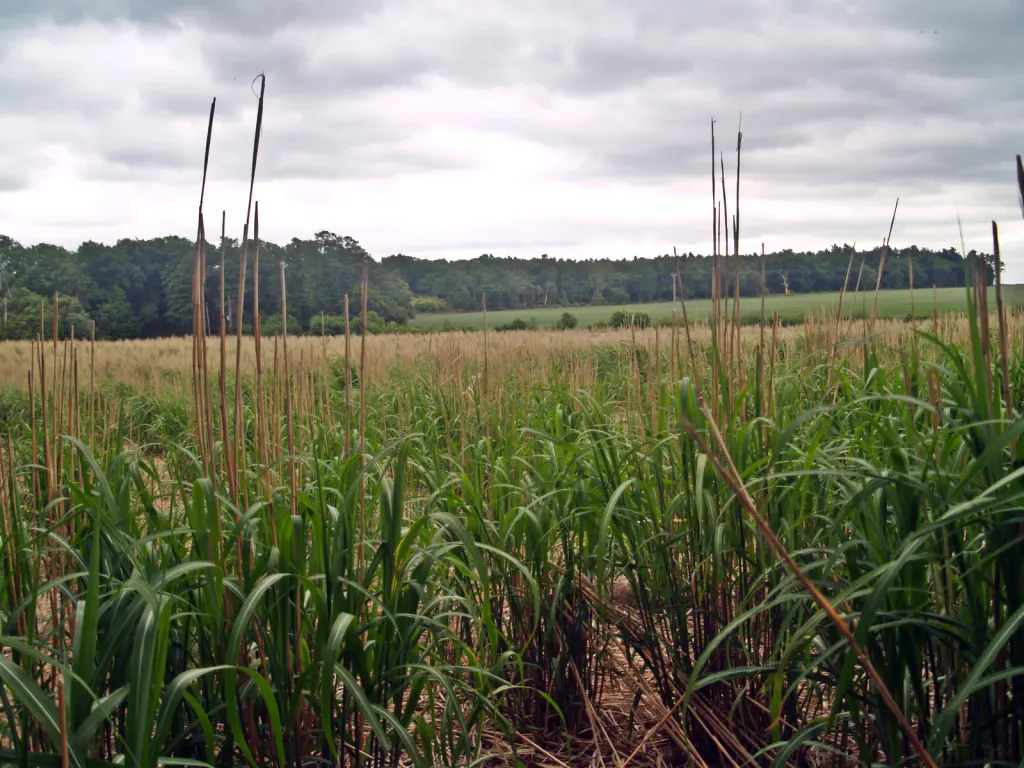

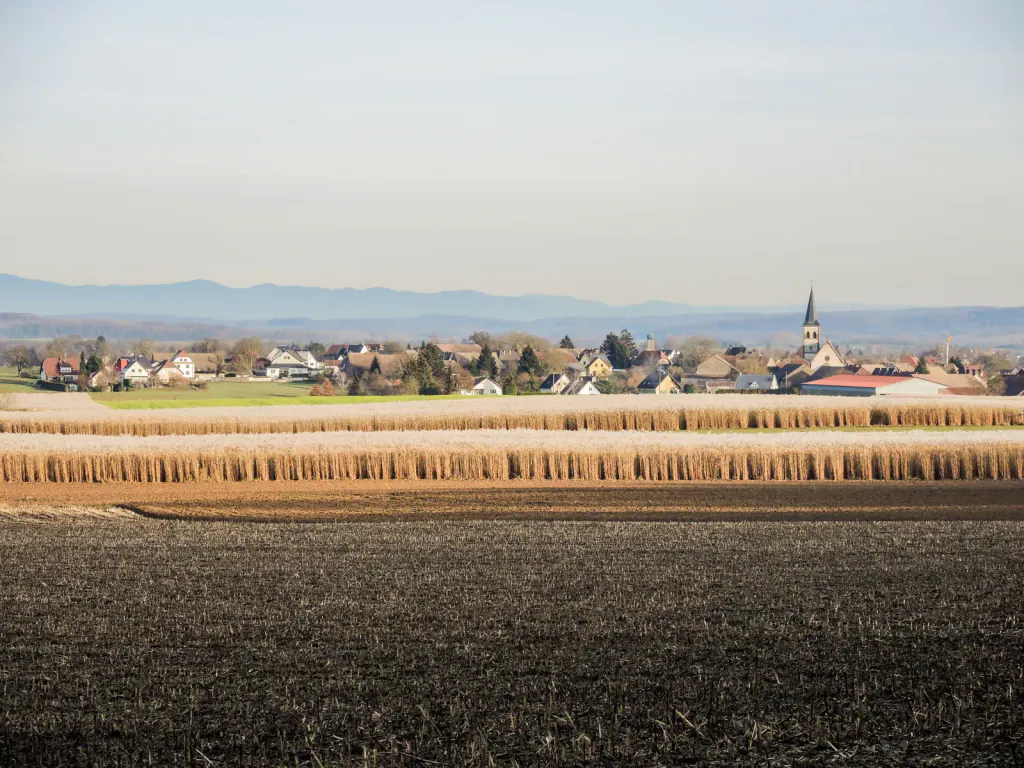

Rhizomes must be kept cold and moist from lifting until planting
Rhizomes dry out quickly once they are exposed to the air, as the Allier chamber of agriculture warns. How many of them establish depends on how long and at what temperature they are kept between lifting and planting. The storage trial reprinted in the British and Irish guidelines compared storage at ambient temperature with a cold store at 3-5 °C over six weeks, and its results are given in the table below. In Illinois, rhizomes kept at 4 °C for up to four months broke dormancy almost as quickly as fresh ones. A cold store therefore makes it possible to spread the planting over several weeks. Rhizomes kept in a yard or at the edge of a field are at ambient temperature, and their establishment falls as in the first row of the table.
| Weeks between lifting and planting | 0 | 2 | 4 | 6 |
|---|---|---|---|---|
| Kept at ambient temperature | 94% | 67% | 17% | 6% |
| Kept in a cold store at 3-5 °C | 94% | 94% | 72% | 89% |
Handling rules from the guidelines
- Rhizomes should go into the cold store within four hours of lifting and into the soil within four hours of leaving it.
- They should never lie on the soil surface for three hours or more, and stock held overnight is kept under moist sheeting.
- If the stock has to wait, the Oise chamber of agriculture advises keeping it cool, moist and dark for four or five days at most, and no more than eight hours outside a cold room.
- Rhizomes do not establish in dry soil, and in the trial gels and watering treatments were of little benefit.

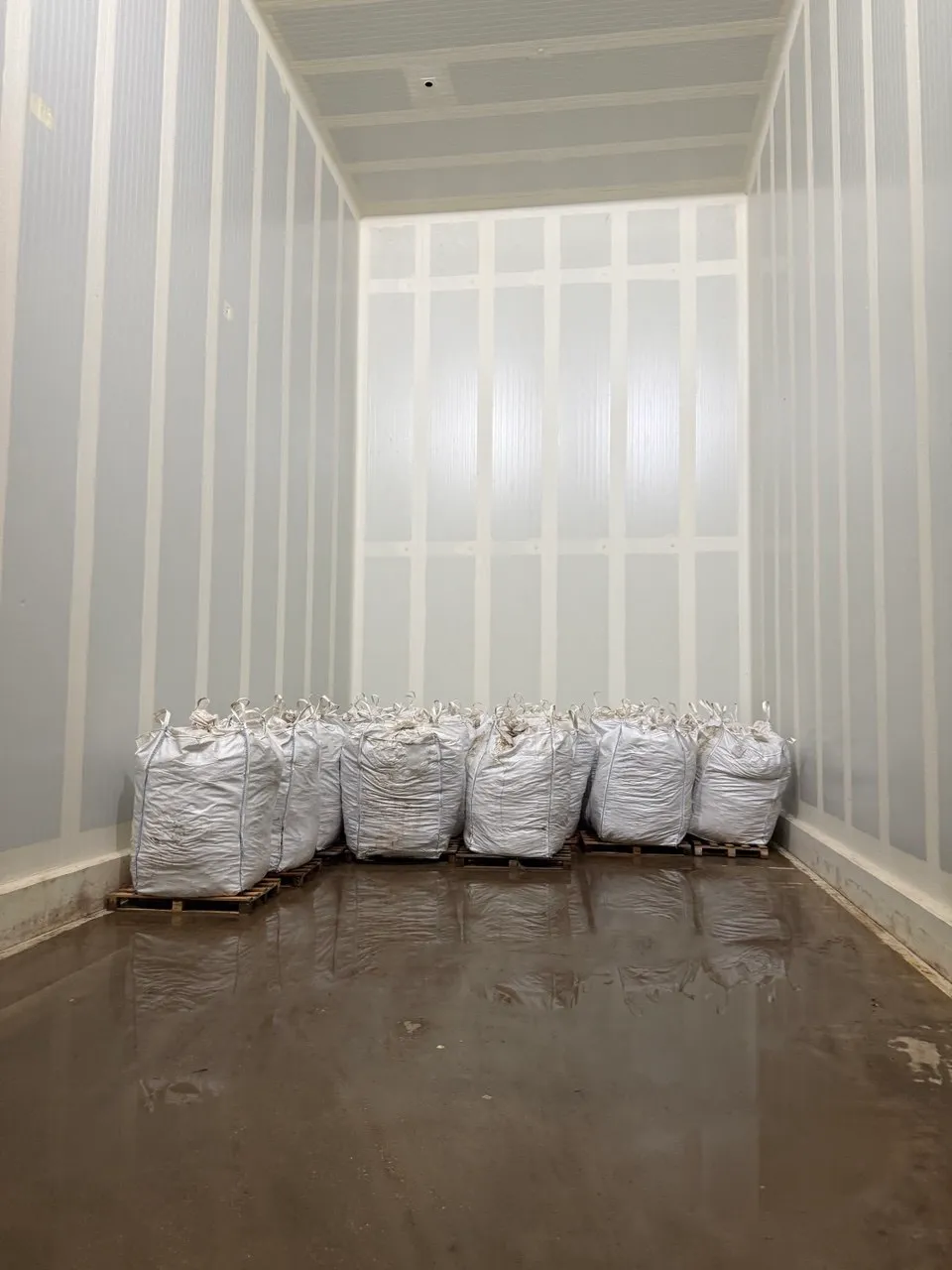
What to check on delivery
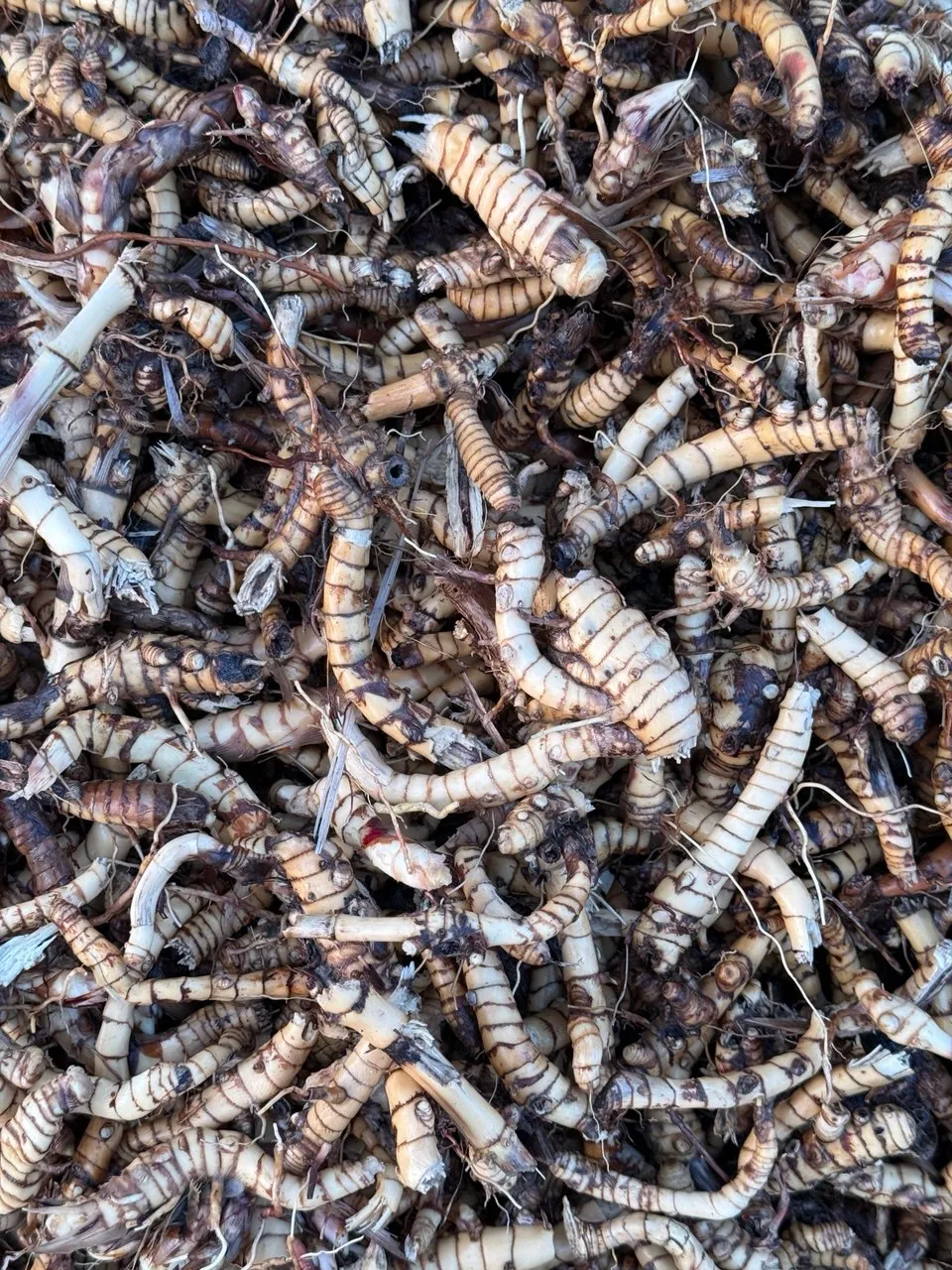
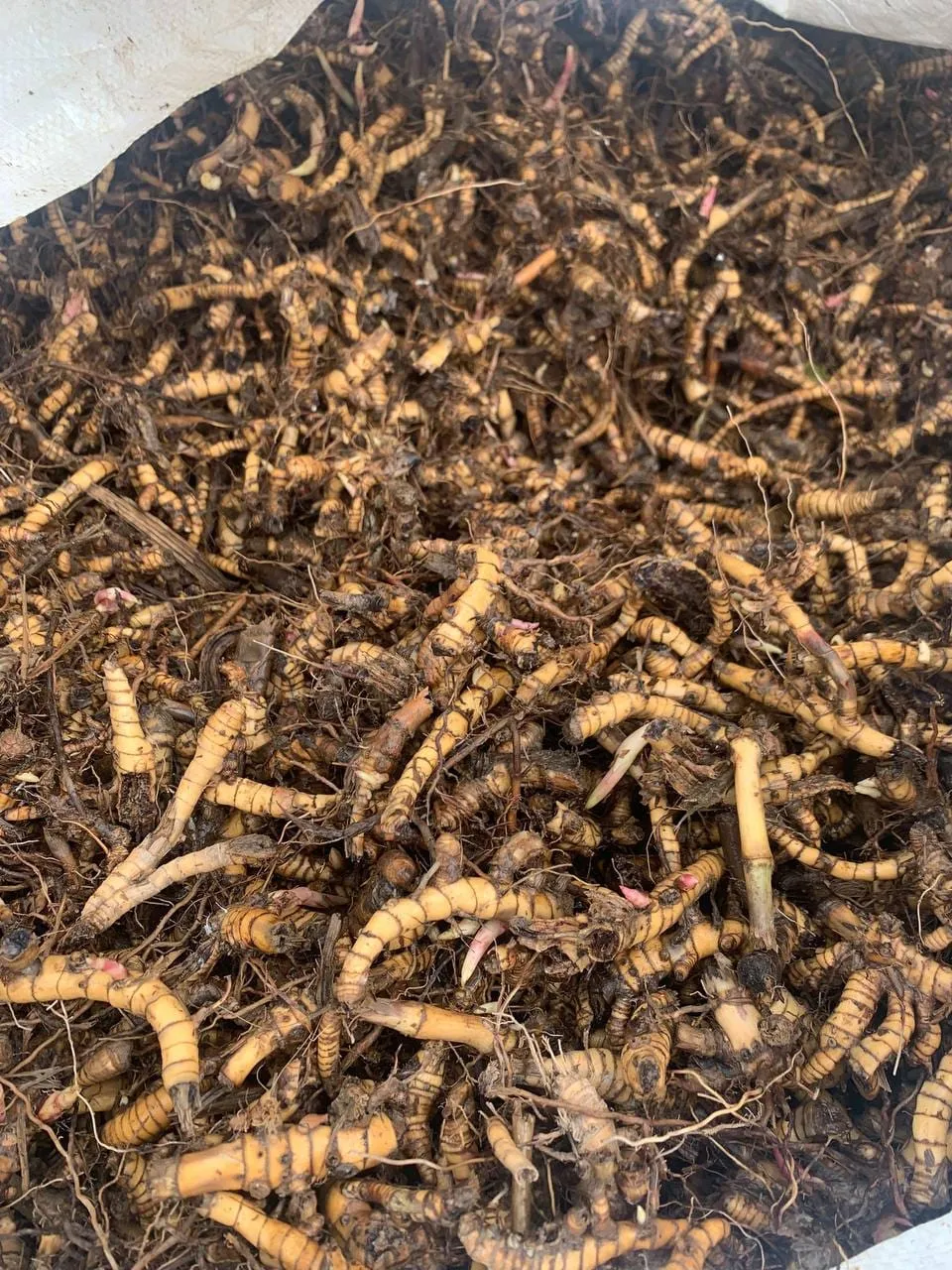
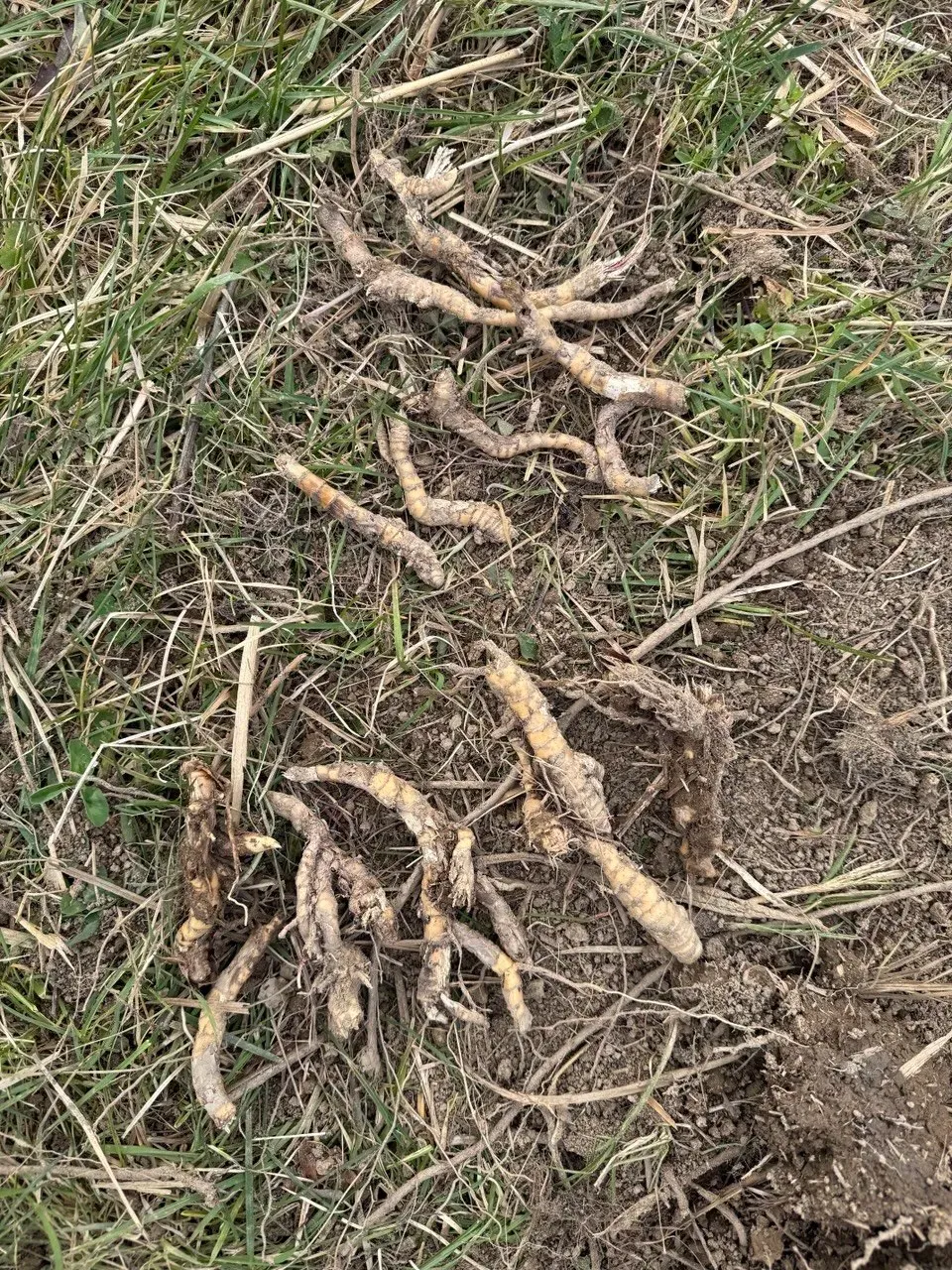
- The pieces should be firm and plump, with clean cut ends and at least two or three sharp-pointed buds. In Irish tests, viable pieces with two or three buds emerged at more than 90%.
- The stock should arrive cold, straight from a refrigerated store or lorry.
- The bags should contain no shrivelled, soft or mouldy pieces and no soil clods or weed roots.
- The rhizomes should have been lifted while dormant, before the buds broke, from a stand a few years old. The British guidelines advise against stock dug from old cane crops.
Seedbed preparation, planting depth and machines
The ground is prepared as for maize or potatoes. It is ploughed or loosened to at least 15 cm in autumn and worked in spring, immediately before planting, to a fine, level tilth of 10-15 cm, so that the seedbed keeps its moisture. The Bavarian service stresses that capillary water must reach the rhizome, which is not possible in a loose or cloddy seedbed. All the guidelines we read advise rolling the field immediately after planting, and French growers explain that rolling removes the air that would otherwise dry the rhizome.
The advisory guides differ on planting depth. The British, Irish and some French guides give 5-10 cm, the Saxon service 3-8 cm, and the Bavarian, Lower Saxon and Alsatian services 10-15 cm. The Illinois trial, which tested depths of 5-20 cm, settled on 10 cm. The Bavarian horticultural institute tried 20 cm and found that it made little difference to the overwintering of single rhizomes on an exposed site, 84-86% against 81-88% at 10 cm, while emergence fell from 32-62% to 14-50%. A rhizome planted too shallow dries out. We plant at 10-15 cm, at the deeper end of this range on light soils and where late frosts are common.
Rhizome planter
A field is planted with a planter built for rhizomes. One such machine is the four-row Sadilica Miscanthus SM 4, made by Agroservis-proizvodnja in Virovitica, Croatia. The planter is built to order, and the maker has delivered it to growers in Austria, Denmark and Germany.
Row spacing and density
A planter works at a fixed row spacing, and the density is set by the distance between rhizomes in the row. On 75 cm rows, a rhizome every 0.67 m gives about 19,900 per hectare and a rhizome every 0.87 m about 15,300. The row width makes no difference at harvest, because the maize header on a forage harvester cuts independently of the rows.
By hand
A French report gives about half a hectare an hour for a planting crew. In an Iowa project, where a two-row furrow opener cut the furrows, three people needed about three hours an acre, which is about 22 hours of labour per hectare. Hand planting is suitable for a hedge or a small field but not for a biomass plantation.
The planting stock for one hectare costs several times as much at each of the three densities (table in chapter 05).
Three planting densities, from 15,400 to 20,000 rhizomes per hectare
In an Illinois trial of 0.25 to 1.0 plants per square metre, the denser plantings closed their canopy sooner and yielded more while the stand was young, and the difference had disappeared by the time the stand was mature. In Ireland, a stand planted at 40,000 plants per hectare yielded more than one planted at 10,000 during the yield-building years, but the extra yield did not pay for the extra stock. The advisory recommendations differ: 10,000 per hectare in Germany, 10,000-15,000 in Britain, 16,000 in Ireland and 18,000-20,000 in France, where the planted number is set above the target stand to allow for establishment losses. The three densities compared below, which we call low, medium and dense, lie within this range.
1.0 × 0.65 m
0.75 × 0.75 m
1.0 × 0.5 m
| Rhizomes per hectare | Spacing, rows × in the row | Per 100 m² | Stock per ha, 3 ha price | Stock per ha, 100 ha price | Where it fits |
|---|---|---|---|---|---|
| 15,400 (low) | 1.0 × 0.65 m, or 0.8 × 0.8 m (15,600) | 154 | €2,772 | €2,310 | A field cut with a forage harvester |
| 17,800 (medium) | 0.75 × 0.75 m, or 0.9 × 0.62 m (17,900) | 178 | €3,204 | €2,670 | Just below the 18,000-20,000 of French advice |
| 20,000 (dense) | 1.0 × 0.5 m, or 0.7 × 0.7 m (20,400) | 200 | €3,600 | €3,000 | Our standard, cut with a mower or mulcher and baled |
15,400 per hectare, low density
This density has the lowest stock cost of the three and suits a field that will be chopped. In our fields the canopy closes over most of the field in the second year. The stems are thick and widely spaced, and a forage harvester cuts them at its normal work rate. We recommend this density for a forage-harvester chain.
17,800 per hectare, medium density
At 0.75 m square, this density is just below the 18,000-20,000 rhizomes per hectare that the French chambers of agriculture advise. On good soil the canopy closes fully in the second year, and the stand has a reserve against establishment losses. In our fields, a forage harvester cuts stands planted at this density or higher only with difficulty by the third year, so we harvest them with the mulcher and baler chain described in chapter 06.
20,000 per hectare, dense planting
This is our standard density and the one we plant on our own fields. In our fields, with fresh, cold-stored stock of a documented generation, the canopy closes in the second year, the second-year harvest is the largest of the three densities and no gaps have to be filled. The stand is cut with a mower-conditioner or a heavy flail mulcher and baled.
More rhizomes are planted than the target stand requires, because some of them fail to establish even when the stock is sound and the planting is done on time. In our experience, 5-15% of the rhizomes do not establish when the stock is of a traceable generation, such as ours. With stock of unknown origin, the losses at emergence can exceed 30%. The published figures lie within this range: the Irish guidelines put establishment with good stock at typically above 80%, and in Iowa 20-30% of rhizomes fail in the first year. The establishment rate depends to a large extent on the condition of the stock, as the storage trial in chapter 03 found.
Planting above the target stand also avoids gap-filling. The Irish guidelines call stitching-in during the following spring very costly, and the Saxon cost sheet budgets a 15% re-plant at about €550 per hectare for rhizomes and labour. A field with gaps also yields less in its second year.
Plants per hectare after establishment
Our calculation for losses of 5-15%: 13,100-14,600 plants from 15,400 rhizomes, 15,100-16,900 from 17,800 and 17,000-19,000 from 20,000. All three stay above the stand of 12,000 plants that the French and Irish guides aim for. At a loss of 30%, 20,000 rhizomes leave 14,000 plants.
In a meta-analysis of miscanthus trials, planting density had a significant effect on yield in the second growing season and in none of the later seasons.
The harvest chain should be chosen together with the density
Miscanthus is cut in late winter with ordinary farm machinery, but it is a harder material than maize or grass, and its stems are rich in silica. The Irish guidelines warn of more wear and tear than in forage crops, and a US growing guide advises sharpening forager blades every few hours. A French grower describes a forage harvester that slows down as the crop gets taller, and a review of harvest systems reports lower work rates in miscanthus because of the density and hardness of the stems. None of these sources relates wear or work rate to planting density. Our recommendations on density in this chapter are based on our own field experience, and the figures on losses and costs come from the published sources.
| Harvest chain | Product | Harvest losses | Cost, published | Our recommendation |
|---|---|---|---|---|
| Self-propelled forage harvester with a row-independent maize header | Chips of 25-50 mm, about 75 kg/m³ | 4-7% | £28 per tonne at 4.1 ha/h with a 7.5 m header, UK 2015; €105 an hour with driver in maize, NRW 2024 | Stands planted at the low density of 15,400 |
| Mower-conditioner into a windrow, then a round or square baler | Bales of about 200 kg/m³ | 9-14% | £41 per tonne at 12.7 t of dry matter per hectare, UK 2015; €8.80 a square bale of straw, NRW 2024 | Any density; for dense stands, the variant with a forage harvester and a conditioning drum has a higher capacity |
| Heavy flail mulcher into a swath, then a baler | Short, chopped material in bales | Not measured in the literature | Mulcher €48-71 per hectare on maize and CCM stubble, NRW 2024; a new 3 m heavy mulcher about €10,000 before VAT | Our chain for stands planted at 17,800-20,000 |
Our own fields are planted at 20,000 and cut from the third year with a heavy flail mulcher, followed by a baler that picks up the swath. We changed to this chain because in these dense fields the forage harvester's knives and feed rollers were under the heaviest load, and because the machine is inexpensive: a new 3 m heavy mulcher costs about €10,000 before VAT, far less than a forage harvester, and used ones are advertised for €3,000-7,500. The mulcher chain has two known drawbacks. First, chopped material picked up from the ground carries leaf litter and some soil, which the Irish guidelines warn against for fuel quality, so the swath is laid high and the pick-up is set high. Second, a mower-and-baler chain loses two to three times as much as chipping, and we expect the losses of a mulcher chain to be no lower.
Where the buyer of the harvest wants chips, or where the only machinery available is a contractor's forage harvester, we recommend planting at the low density of 15,400 rhizomes per hectare. In the published figures, chipping costs less per tonne than baling and has the lowest field losses, and in a thinner stand the forage harvester can work at about the rate it reaches in maize.
In the same study, serrated or angled blades reduced the cutting energy by 14-27%. Blunt blades raise the cutting energy markedly.
Harvest cost per hectare
The Saxon cost sheet gives €530-830 per hectare for a chip chain at 20 t of fresh matter, including transport, and the French chambers give about €300 per hectare for chopping. Our own harvest figures are in the hectare budget of the fuel article.

Establishment: the first year needs weed control and water, and its growth is not harvested
Before the first harvest the stand has to establish, and weed control in the planting year has a lasting effect on yield. A French survey of farmers' fields found weed cover of 35-92% in the planting year, and the fields with the most weeds had the lowest yields in the second and third years. In Illinois, dry weight and shoot numbers were more than 40% lower in unweeded plots. The first-year growth of 1-2 t of dry matter per hectare is not worth harvesting. It is cut or mulched in the following spring, or left standing, which according to the Bavarian service does not hinder regrowth.
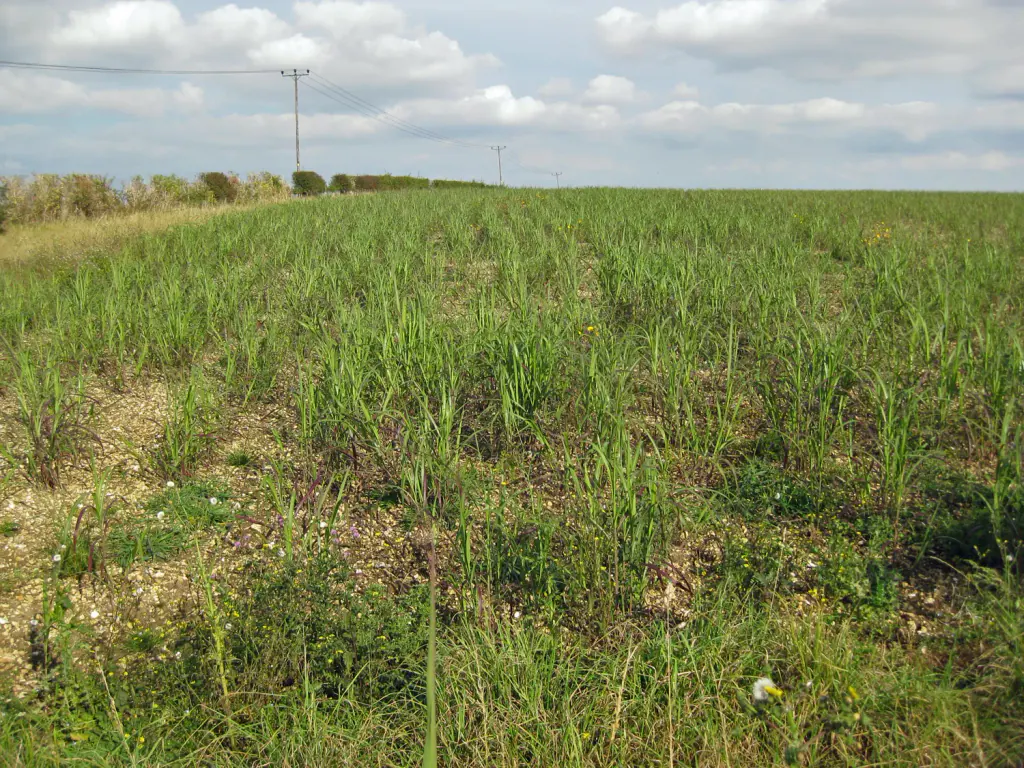

What can go wrong in the first year
- Dry or warm-stored rhizomes. Rhizomes that have dried out or been kept warm establish poorly (see the storage table in chapter 03).
- Planting late. A late planting has too short a season before the first frost and tends to go into drier soil.
- Drought in the planting year. Establishment depends on soil moisture from May to August, and the French chambers advise planting before a forecast rain of 15 mm or more.
- Weeds. A pre-emergence herbicide is applied within two weeks of planting, before the shoots appear, and is followed by hoeing or a harrow-comb, which young miscanthus tolerates.
- Frost on the shoots. A late spring frost after emergence can kill the young shoots (see chapter 02), and the risk is reduced by not planting too early.
- Pests after grassland. On former grassland or fallow, wireworms attack the rhizomes in the first weeks, and rabbits graze the shoots.
- Nitrogen in the planting year. It delays the ripening of the young plant, raises the risk of winter loss and benefits the weeds more than the crop, so none is applied.
The second year, the harvest and the years to full yield are described in the cultivation guide.
Miscanthus fields from the young stand to the harvest and the regrowth
- Summer
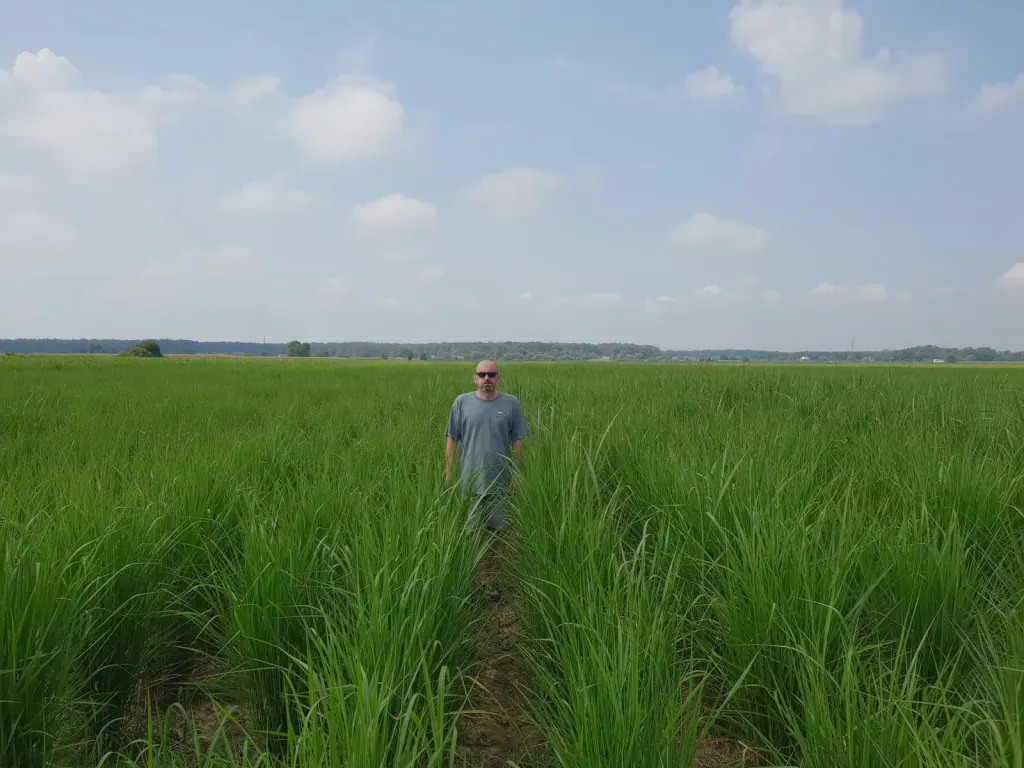
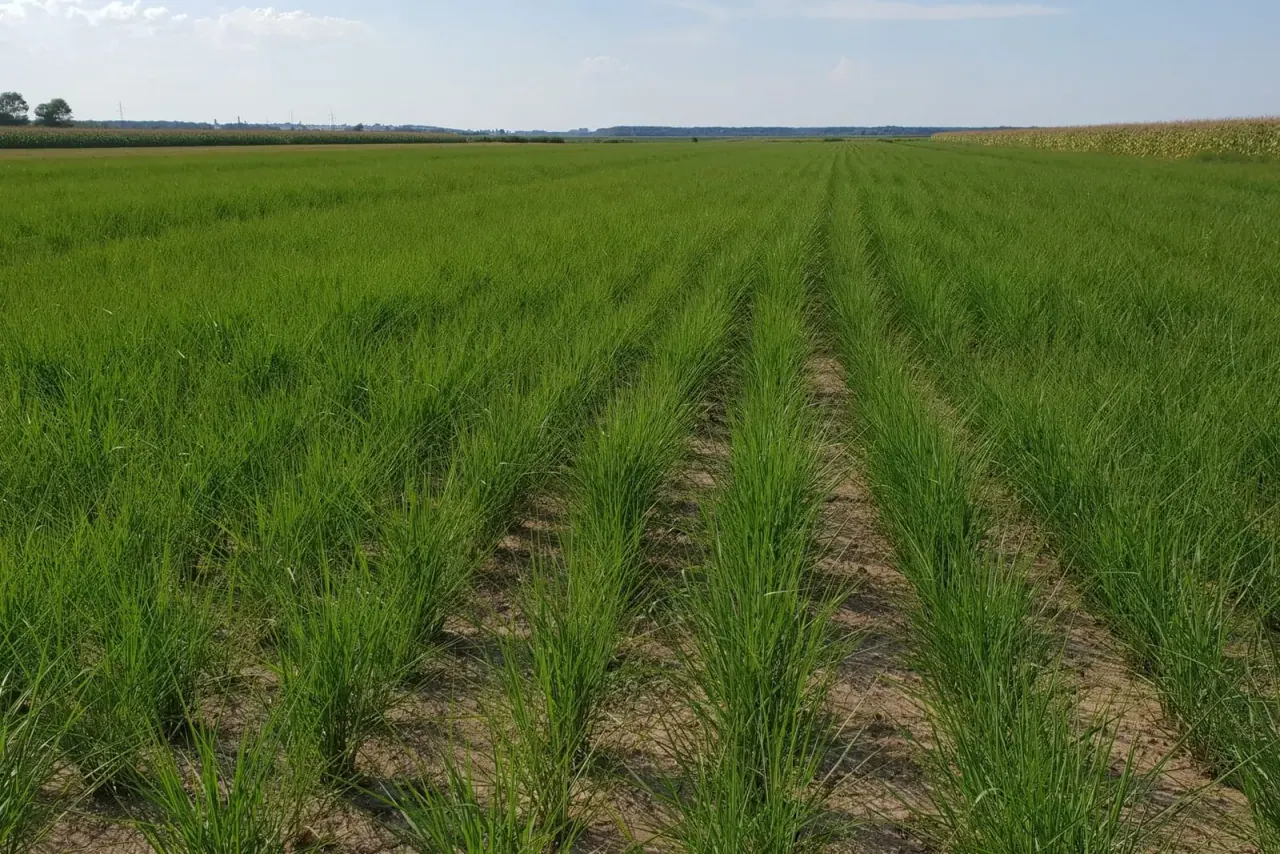
A young field
One of our young fields in summer, with the rows still open between the plants. Photo: Zelena Biomasna Energija.
- Summer
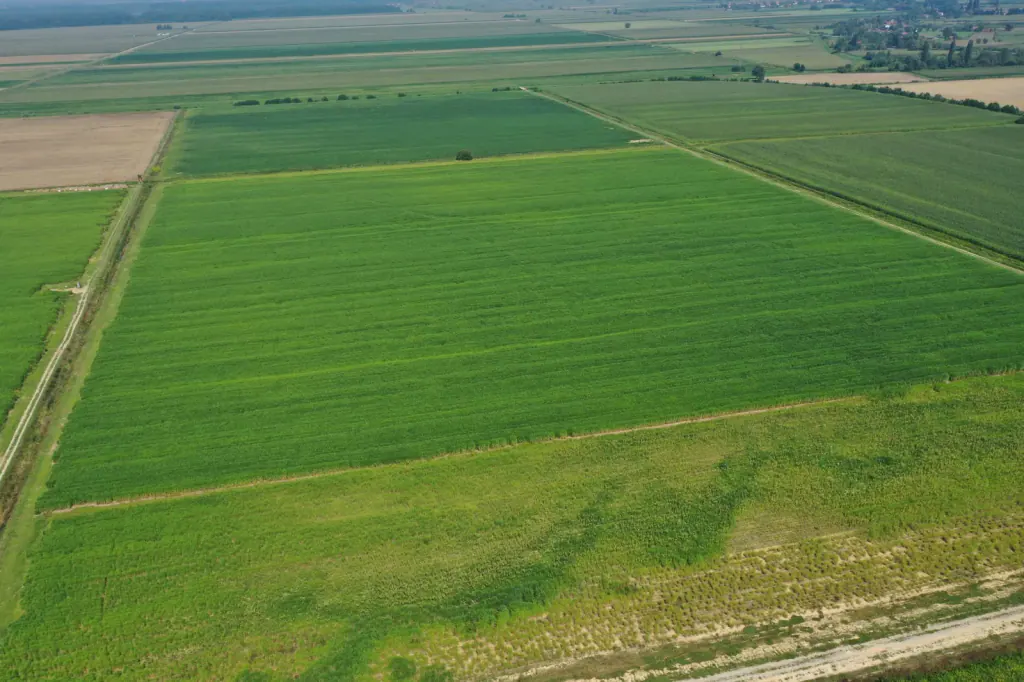
Established fields from the air
Our established fields from the air in summer. Photo: Zelena Biomasna Energija.
- September
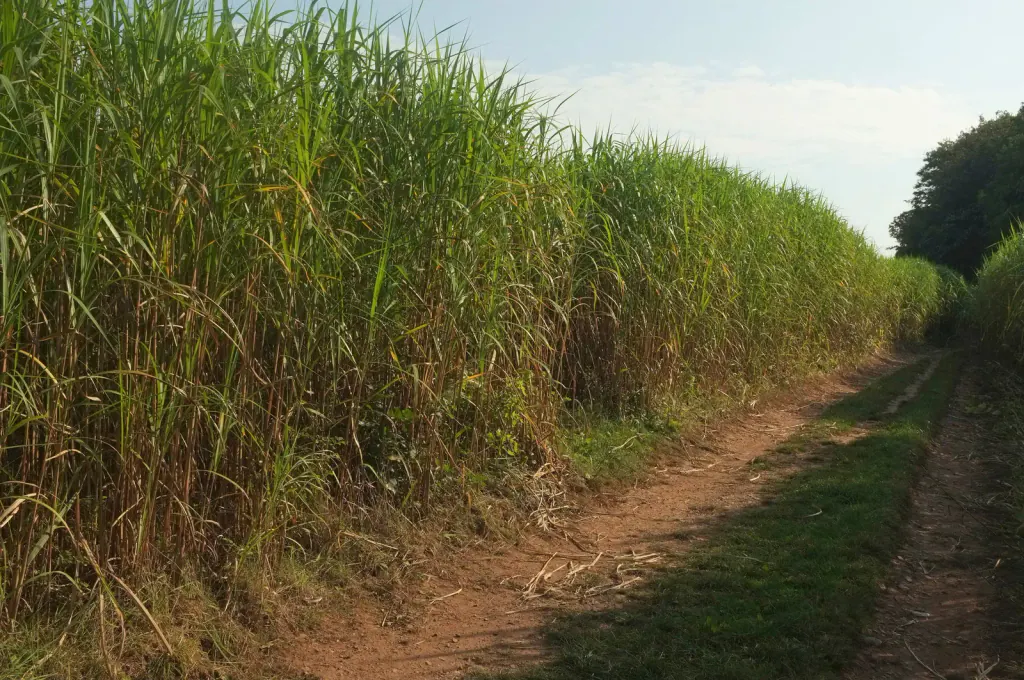
A mature stand
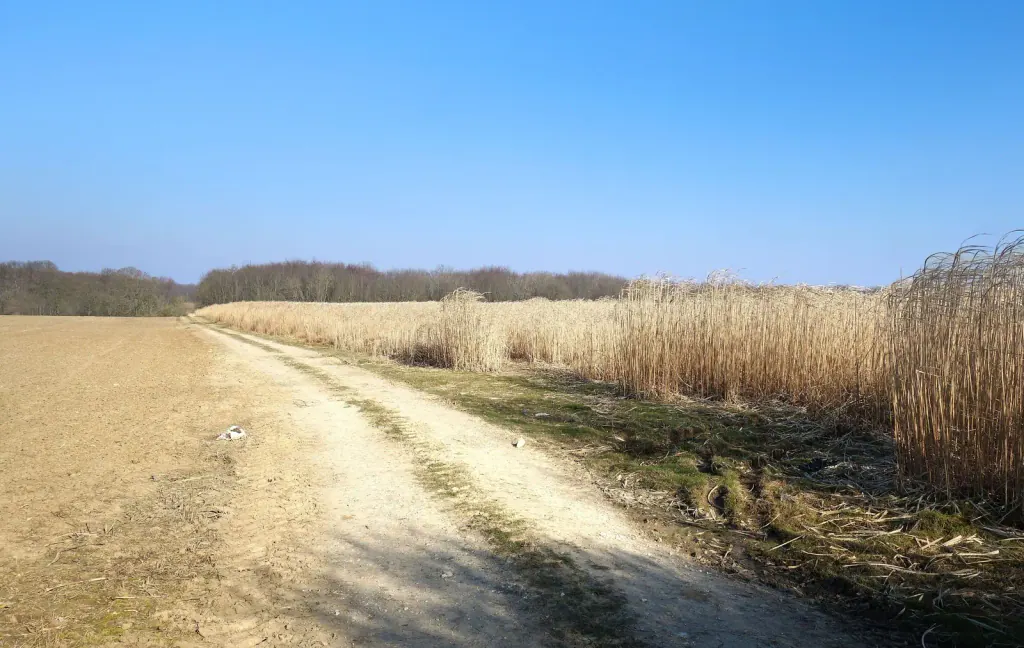
A mature miscanthus stand beside a farm track east of Netherton House, Devon, in September 2020. Photo by Derek Harper, via Wikimedia Commons, CC BY-SA 2.0.
- Winter
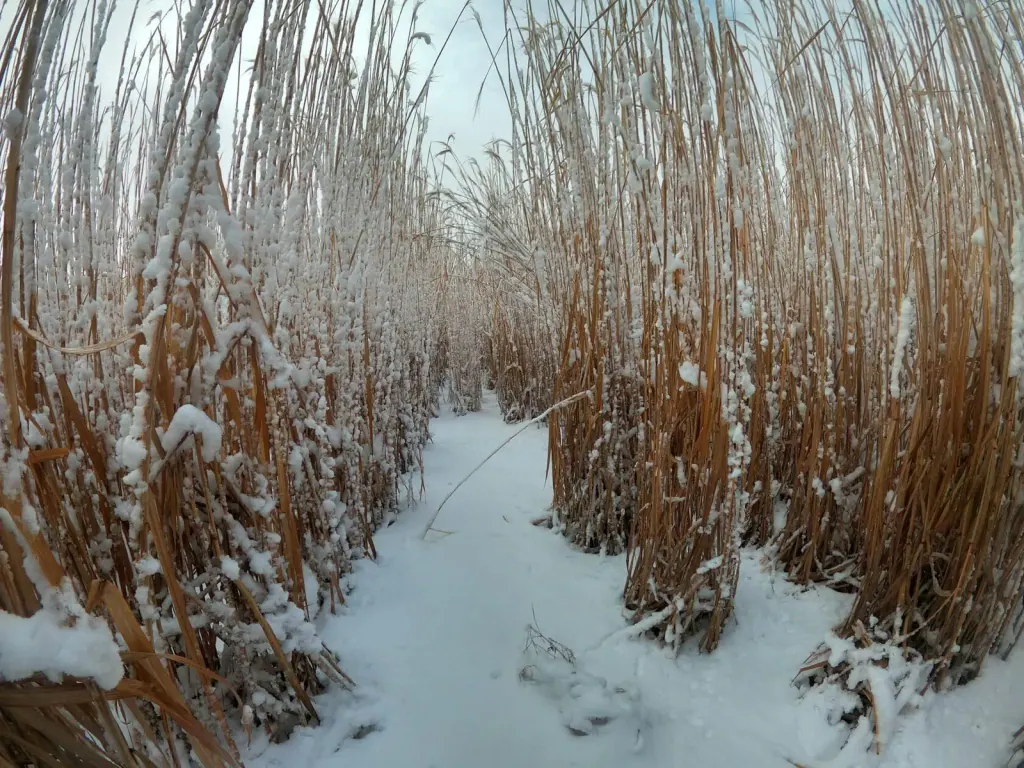
The stand under snow
One of our stands under snow, with the dry stems standing until the harvest. Photo: Zelena Biomasna Energija.
- April
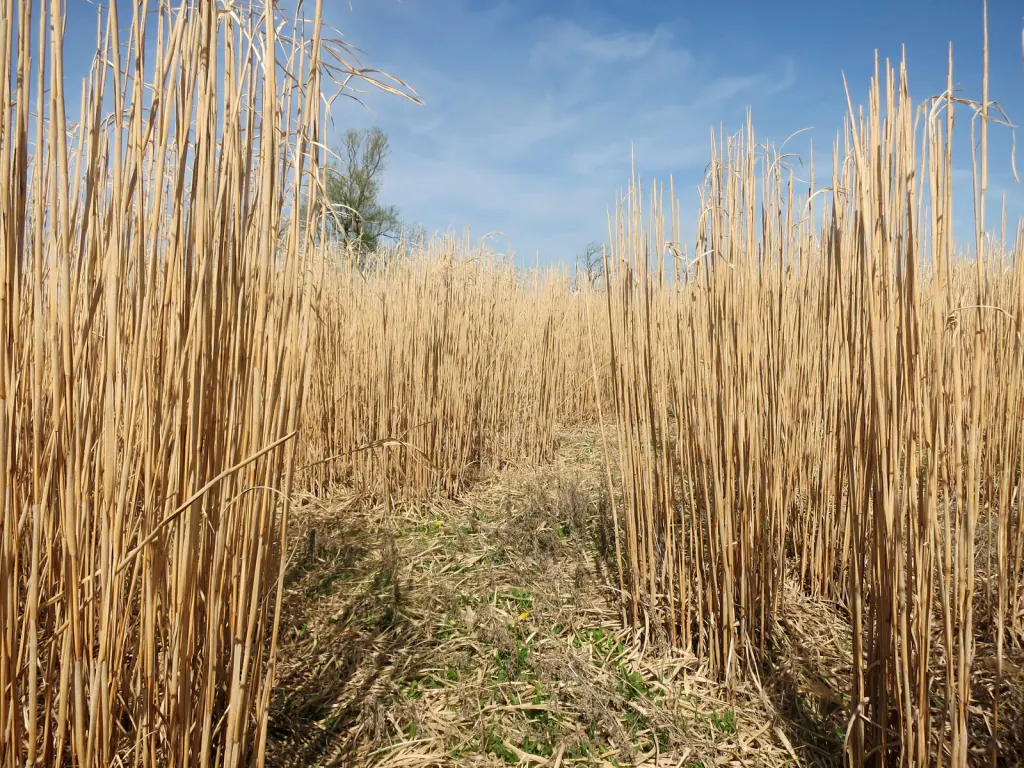
Dry canes before the harvest
Dry miscanthus canes near Aston, Oxfordshire, in April 2015, ready to be harvested. Photo by Des Blenkinsopp, via Wikimedia Commons, CC BY-SA 2.0.
- Before the harvest
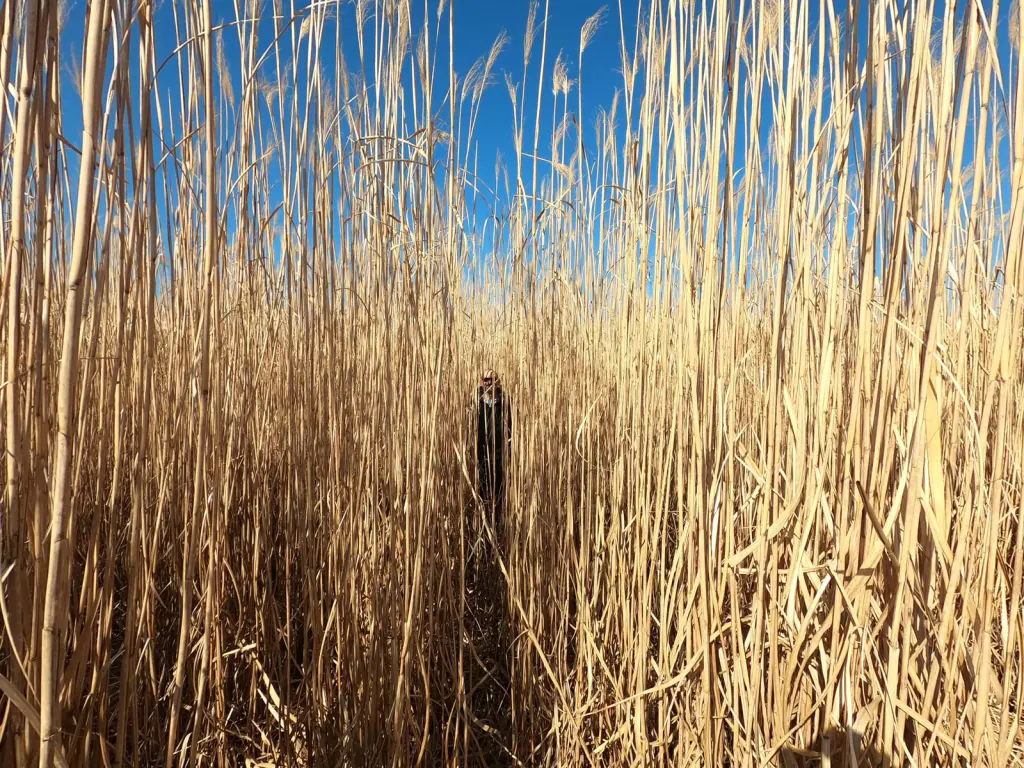
Inside the stand
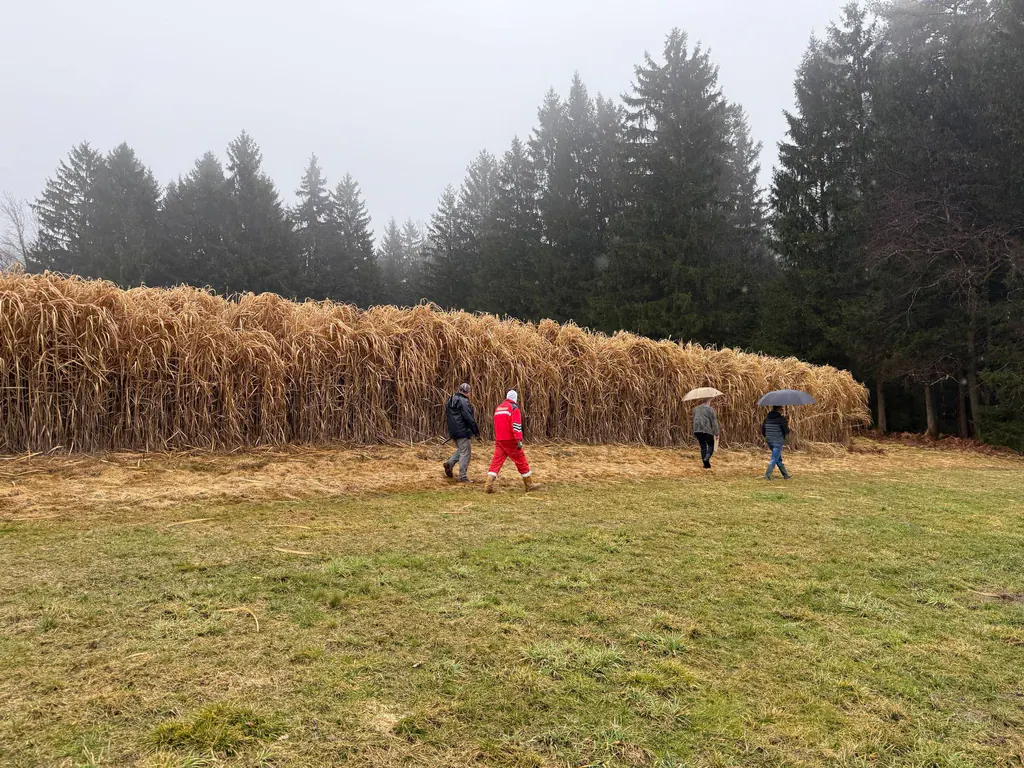
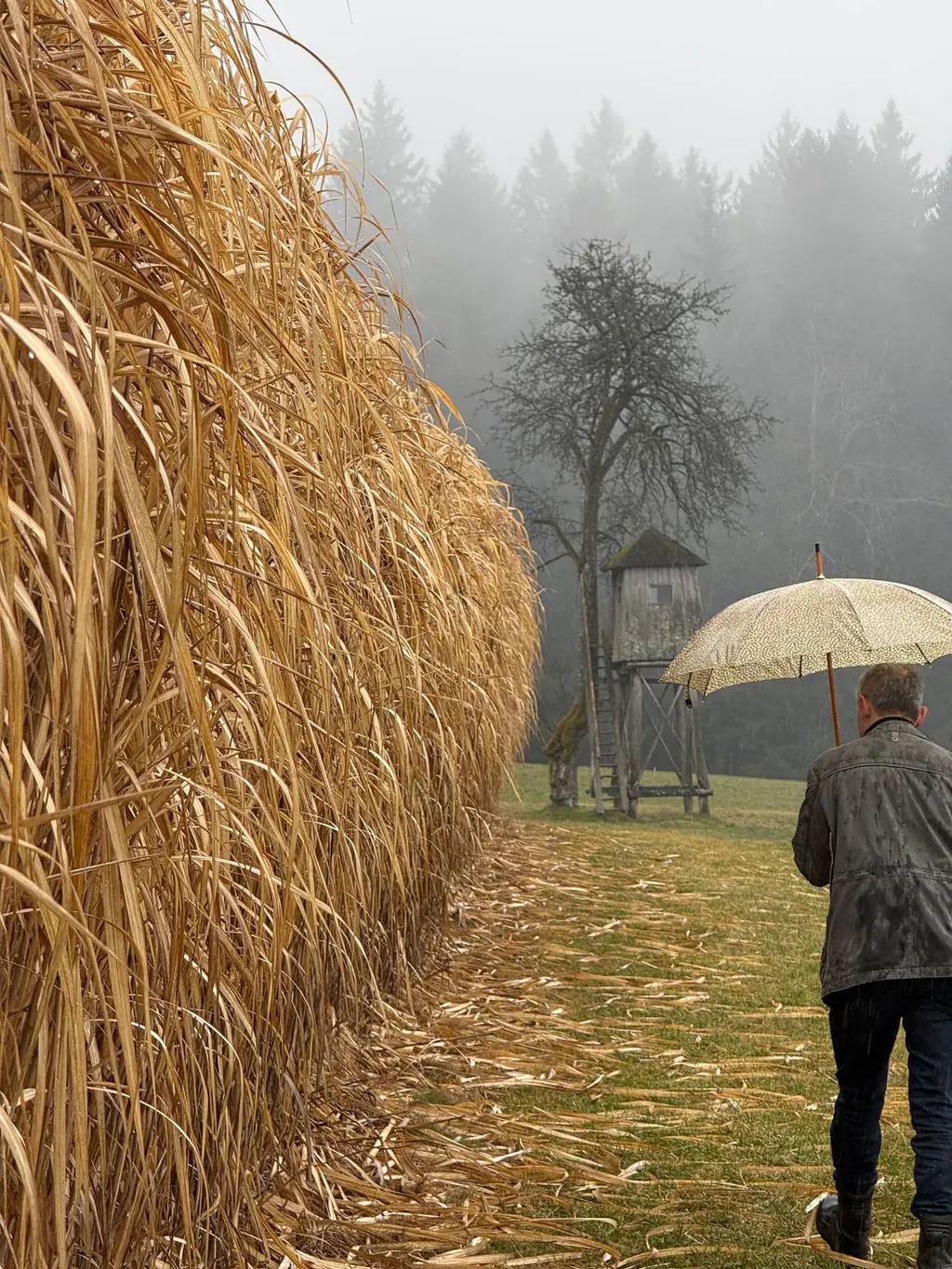
Inside one of our stands before the harvest, with a person among the stems for scale. Photo: Zelena Biomasna Energija.
- Harvest

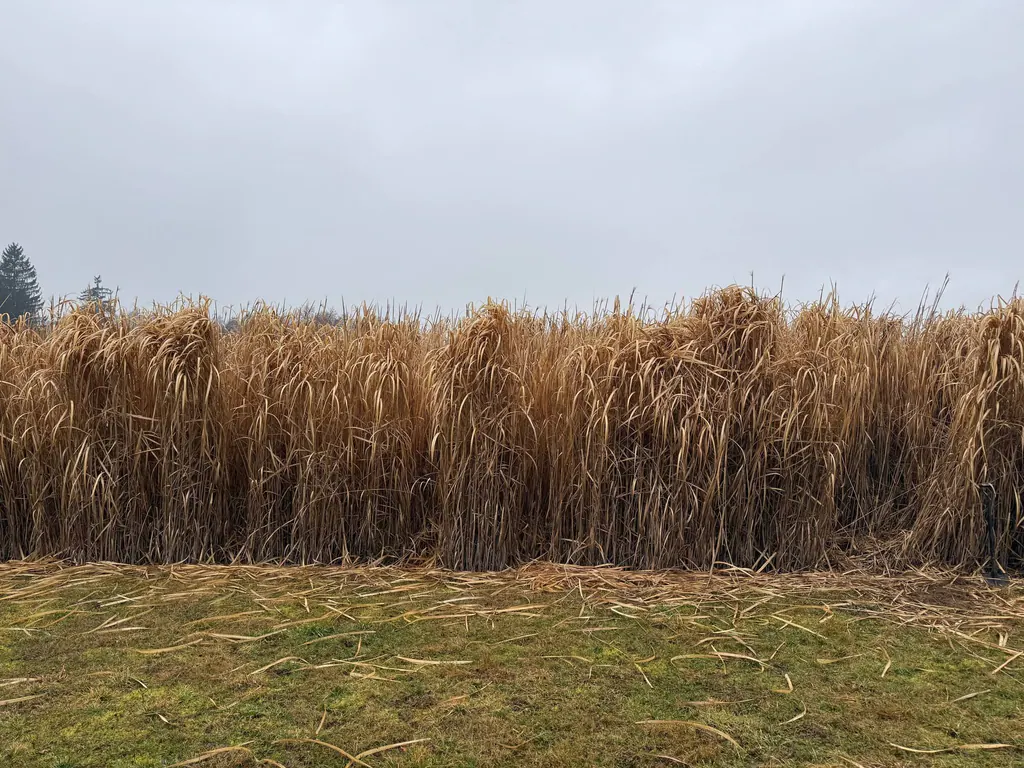
A cut strip
A strip cut through one of our stands at the harvest. Photo: Zelena Biomasna Energija.
- April
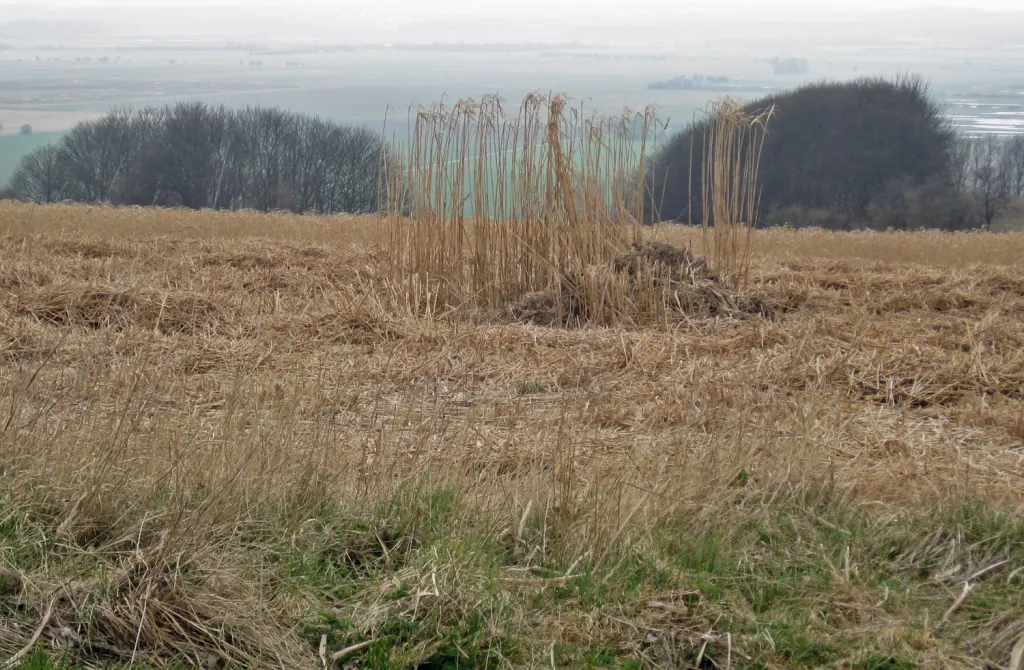
After mowing
A field near Bonby, North Lincolnshire, after mowing in April 2013, with one clump the mower missed standing at full height. Photo by David Wright, via Wikimedia Commons, CC BY-SA 2.0.
- May
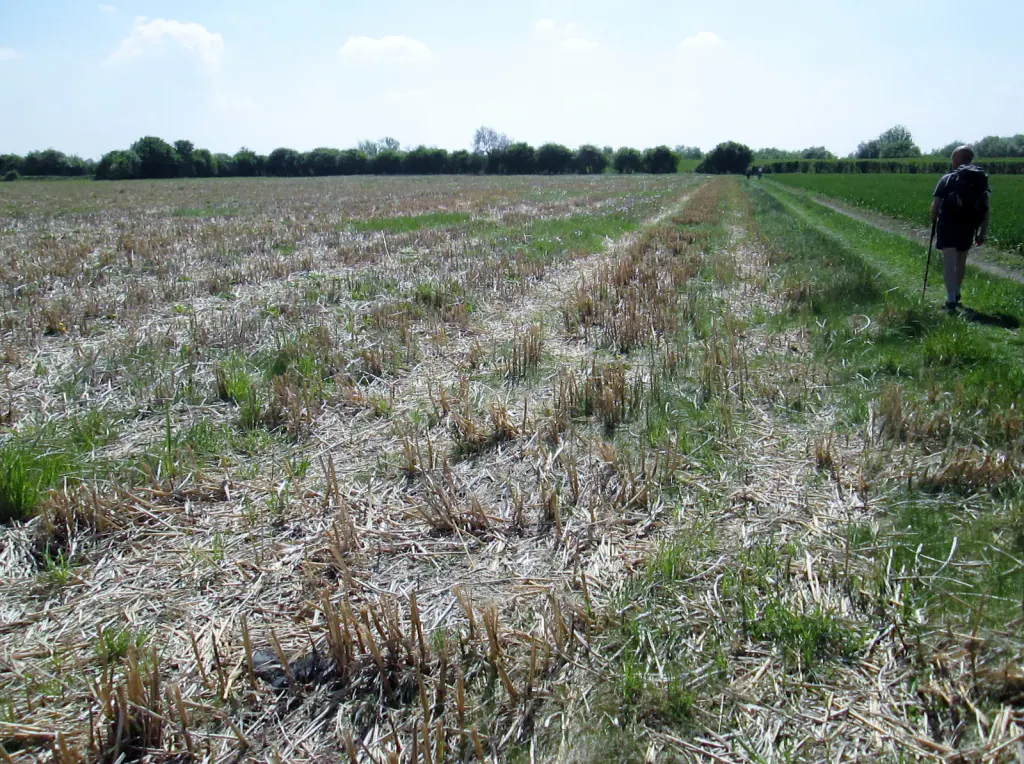
New shoots in the stubble
A harvested field near Riccall, North Yorkshire, in May 2017, with new shoots coming through the stubble. Photo by Martin Dawes, via Wikimedia Commons, CC BY-SA 2.0.


What we need to know before the stock is lifted
A new field
We need the area in hectares, the planting date you aim for and the harvest chain you expect to use. From these we work out the density and the number of rhizomes, and we plan the lifting so that the rhizomes leave the cold store on the day they are planted.
A planting contractor
We need to know the planter and its row spacing. We grade the stock for the machine and agree the in-row setting that gives the density you have chosen.
A green hedge
Our minimum order is three hectares. For a green hedge, the layouts, the number of rhizomes per metre and the growth of the clumps by age are given in the hedge article. Write to us with the length of the hedge, and we will tell you what we can supply.
The cultivation guide, the hedge article and the hectare budget
The guide covers the choice of site, the years to full yield, the harvest and the most common problems in new stands.
Read it Green hedgeA miscanthus hedge: layouts from one to five rowsThe article covers the layouts and spacing, how the hedge changes through the year, the legal distances from the boundary and the use of the canes cut each winter.
Read it EconomicsMiscanthus as fuel: the value of a tonne of balesThe article includes the twenty-year hectare budget with the planting, the harvest and the years to payback.
Read itFrequently asked questions
Rhizomes are planted in spring, once the soil in the top 10-15 cm has warmed to about 10 °C and no hard frost is expected. In Southern and Central Europe that is in March or April, and in Northern Europe and upland areas in late April or May. Advisers in Saxony set the latest date at 20 May, because a later planting leaves too short a season before the first autumn frost.
We plant in spring only and advise our customers to do the same. An autumn-planted rhizome enters the winter without roots or a shoot, at a depth where the soil can fall below the temperature that kills a rhizome, about -3 to -5 °C. The advisory guides in the United Kingdom, Ireland, Germany, France and the United States recommend spring planting, although a short Bavarian leaflet allows autumn planting. One Ukrainian trial on chernozem found October planting better than May planting, but it covered a single site with mild winters, and we do not take that risk with a customer's stock.
We plant at 10-15 cm, as the Bavarian and Lower Saxon services advise. British and Irish guides give 5-10 cm and the Saxon service 3-8 cm. In a Bavarian trial, planting at 20 cm made little difference to overwintering and reduced emergence sharply. A rhizome planted too shallow dries out. On light soils and where late frosts are common, we plant at the deeper end of the range.
Rhizomes keep for weeks in a cold store at 3-5 °C and lose viability within days in the open. In a British trial, cold-stored rhizomes established at 94% after two weeks and 72% after four. The same rhizomes kept at ambient temperature established at 67% after two weeks and 17% after four. Plant them within about four hours of taking them out of the store, and never leave them lying on the soil surface for three hours or more.
Our standard is 20,000 per hectare, which gives a closed canopy in the second year and, with good stock, needs no gap-filling. The lower densities of 15,400 and 17,800 per hectare cost less in stock, and the canopy closes more slowly. The number per hectare is 10,000 divided by the product of the row spacing and the in-row spacing, both in metres.
Some rhizomes fail to establish even when the stock is sound and the planting is done on time. In our experience, 5-15% of the rhizomes do not establish when the stock is of a traceable generation, such as ours. With stock of unknown origin, the losses at emergence can exceed 30%. For this reason more rhizomes are planted than the stand requires: of 20,000 rhizomes planted per hectare, 17,000-19,000 establish at losses of 5-15%.
A spacing of 1.0 m between rows and 0.5 m in the row gives 20,000, and 0.7 m by 0.7 m gives about 20,400. On 75 cm rows, a rhizome every 0.67 m gives about 19,900.
A field is planted with a planter built for rhizomes. One such machine is the four-row Sadilica Miscanthus SM 4 of Agroservis-proizvodnja in Virovitica, Croatia, which the maker builds to order and has delivered to growers in Austria, Denmark and Germany. Small areas and hedges are planted by hand. In either case the field should be rolled immediately after planting so that the soil closes around each rhizome.
At 20,000 rhizomes per hectare with fresh, cold-stored stock of a documented generation, we have not needed to fill gaps. The Irish guidelines call gap-filling in the following spring very costly, and the Saxon cost sheet budgets a 15% re-plant at about €550 per hectare for rhizomes and labour.
In our experience, the low density of 15,400 rhizomes per hectare suits a forage harvester. A self-propelled forage harvester with a row-independent maize header has the lowest harvest losses of the chains that have been measured, but miscanthus is harder than maize and rich in silica, and in a dense stand the knives and feed rollers carry the heaviest load. For our own dense stands we use a heavy flail mulcher and bale from the swath.
The Irish guidelines of 2015 put contract planting at €485 per hectare. The planting stock costs considerably more: about €2,800-3,600 per hectare at our list price for three hectares, depending on the density.
About this article
We wrote this article ourselves. We grow miscanthus and sell planting stock, and we used the sources listed below and our own figures.
The information was current when the article was published. Prices and rules change, and errors are possible, so please check the figures before you rely on them.
If you find an error or have more accurate figures, write to us at info@miscanthus.eu or use the form below.

Sources
- Caslin, B., Finnan, J. & Johnston, C. (eds) (2015). Miscanthus Best Practice Guidelines. Teagasc and AFBI: planting window, the ADAS storage table and handling rules, bud counts, planters and work rates, 16,000 rhizomes per hectare, the 10,000 versus 40,000 trial, harvest chains, wear, losses and the cost of gap-filling. Teagasc (2020). Miscanthus Energy Crop, fact sheet Energy 18.
- DEFRA (2007). Planting and Growing Miscanthus: Best Practice Guidelines for Applicants to Defra's Energy Crops Scheme: March-April window, reasons for early planting, 5-10 cm depth, 10,000-15,000 rhizomes per hectare, stock from young stands, first-year yield.
- TFZ Straubing (2007, 2018). Anbauhinweise Chinaschilf (Miscanthus), Merkblatt 09/07; Miscanthus: Ausführliche Anbaubeschreibung, TFZ-Merkblatt 18PHz007: 10 °C soil, maize seedbed and capillary water, 10-15 cm, one plant per square metre, no nitrogen in the planting year, row-independent maize headers. TFZ-kompakt 5: Miscanthus (autumn planting allowed).
- LfULG Sachsen (2014). Miscanthus: Anbau auf landwirtschaftlichen Flächen: 8-10 °C, not after 20 May, depth 3-8 cm, cost tables incl. planting €456/ha and a 15% re-plant; harvest €530-830/ha. 3N Kompetenzzentrum Niedersachsen (2012). Miscanthus-Kurzinformation.
- Jodl, S., Eppel-Hotz, A. & Kuhn, W. (2008). Miscanthus als Nachwachsender Rohstoff: Ergebnisse aus 20-jähriger Forschungsarbeit. Veitshöchheimer Berichte 126, LWG: frost periods and losses, -5 °C critical temperature, depth 10 vs 20 cm, straw cover and earthing-up, rhizome-grown vs micropropagated plants, late-autumn planting of plantlets.
- Chambre d'agriculture de l'Oise (2025). Le Miscanthus en pratique; Chambre d'agriculture de l'Allier / SMEA (2022). Note technique Miscanthus; Chambre d'agriculture d'Alsace (2020). Fiche Miscanthus: soil temperature, 15 mm rain rule, 8 h outside a cold room, 18,000-20,000 rhizomes per hectare, 75 cm and 1 m rows, crews and work rates, harvest cost, wireworms.
- Carmenate, P., Clark, D. M. & Heaton, E. (2019). Let's plant some miscanthus! Iowa State University ICM; Heaton, E. & Boersma, N. (2012). Is it too late to dig Miscanthus for spring planting? ICM; Connell, M. & Heaton, E. (2020). How cold weather impacts Miscanthus. ICM: 50 °F, frost tolerance before emergence, 4 °C storage, 20-30% first-year loss, 12,000-30,000 planted per hectare.
- Clifton-Brown, J. C. & Lewandowski, I. (2000). Overwintering problems of newly established Miscanthus plantations can be overcome by identifying genotypes with improved rhizome cold tolerance. New Phytologist 148: 287-294: rhizome LT50 -3.4 °C. Zub, H. W. & Brancourt-Hulmel, M. (2010). Agronomy for Sustainable Development 30: 201-214: young shoots killed below -8 °C.
- Peixoto, M. M., Friesen, P. C. & Sage, R. F. (2015). Winter cold-tolerance thresholds in field-grown Miscanthus hybrid rhizomes. Journal of Experimental Botany 66(14): 4415-4425: LT50 -4.4 °C for the 'Illinois' clone, first-winter survival by site, snow cover and soil minimum.
- Pyter, R. J., Dohleman, F. G. & Voigt, T. B. (2010). Effects of rhizome size, depth of planting and cold storage on Miscanthus x giganteus establishment in the Midwestern USA. Biomass and Bioenergy 34: 1466-1470; Pyter, R. & Voigt, T. (2007). Propagating Miscanthus x giganteus, ASA-CSSA-SSSA abstract 268-16: depths of 5-20 cm, 10 cm recommended, four months at 4 °C.
- Ashman, C. et al. (2023). Improving field establishment and yield in seed propagated Miscanthus through manipulating plug size, sowing date and seedling age. Frontiers in Plant Science 14: 1095838: survival and first-year yield by planting date (plug plants). Davies, M. J., Longbottom, H. & Atkinson, C. J. (2011). Biomass and Bioenergy 35: 4268-4279: cold storage and soil moisture.
- Lee, J. W. et al. (2026). Propagation method and planting density influence canopy developmental transition and biomass productivity in Miscanthus x giganteus. Industrial Crops and Products 240: 122611. Miguez, F. E. et al. (2008). Meta-analysis of the effects of management factors on Miscanthus × giganteus growth and biomass production. Agricultural and Forest Meteorology 148: 1280-1292.
- Branitskyi, Y. et al. (2026). The effect of planting dates and density on biomass and energy yield of giant miscanthus. Ecological Engineering & Environmental Technology 27(4): 137-147: October versus May planting near Vinnytsia, 20,000 and 25,000 rhizomes per hectare.
- Lesur-Dumoulin, C. et al. (2016). Analysis of young Miscanthus × giganteus yield variability: a survey of farmers' fields in east central France. GCB Bioenergy 8: 122-135. Maksimović, J. et al. (2016). Planting density impact on weed infestation and the yield of Miscanthus grown on two soil types. Plant, Soil and Environment 62(8): 384-388.
- Bilandžija, N. et al. (2020). Harvest systems of Miscanthus x giganteus biomass: a review. Journal of Central European Agriculture 21(1): 159-167: losses by chain, work rates, blade wear and serrated blades, mulcher chains. Hastings, A. et al. (2017). Economic and environmental assessment of seed and rhizome propagated Miscanthus in the UK. Frontiers in Plant Science 8: 1058: chip and bale costs and work rates.
- Maschinenring Westfalen-Lippe / Landwirtschaftskammer NRW (2024). Erfahrungssätze für Maschinenring-Arbeiten 2024: contractor rates for planters, foragers, mulchers and balers. American Farmland Trust. Perennial Bioenergy Growing Guide: Miscanthus: silica and blade sharpening. Dealer listings, October 2026: new and used 3 m flail mulchers.
- Agroservis-proizvodnja d.o.o., Virovitica (2022-2024). Sadilica Miscanthus SM 4 (Miscanthus transplanter SM 4), product page and delivery reports, agroservis-proizvodnja.eu: built to order, deliveries to Austria, Denmark and Germany.
- Zelena Biomasna Energija: our planting density, establishment losses, harvest chain, cold chain and prices (miscanthus.eu/buy).