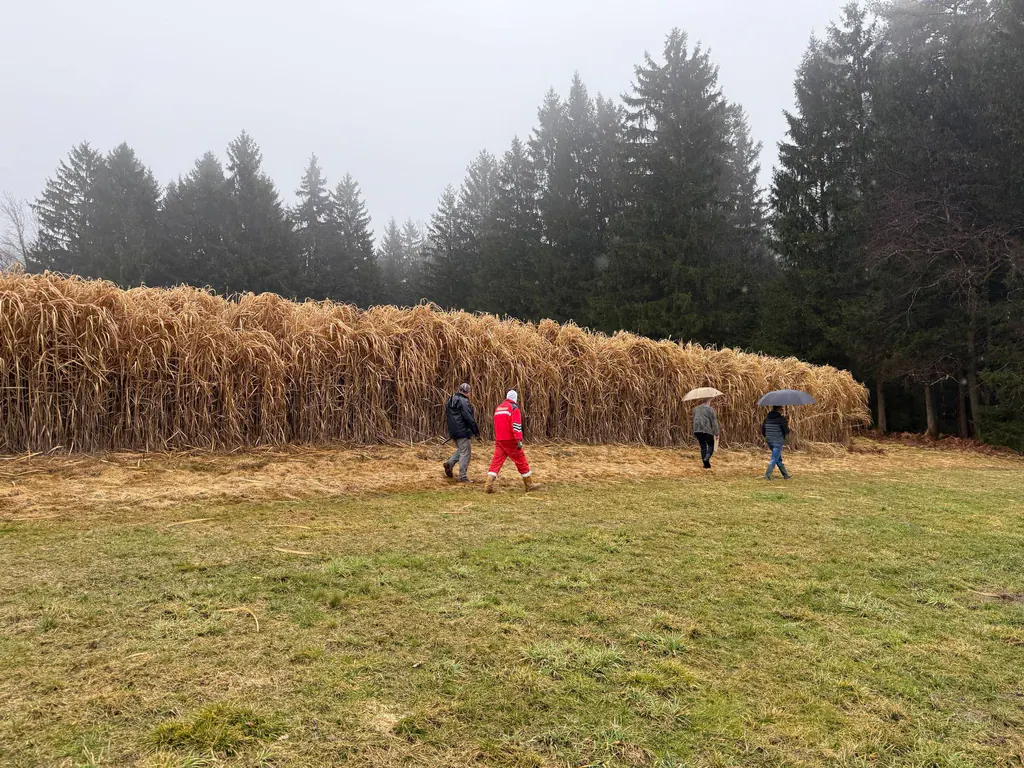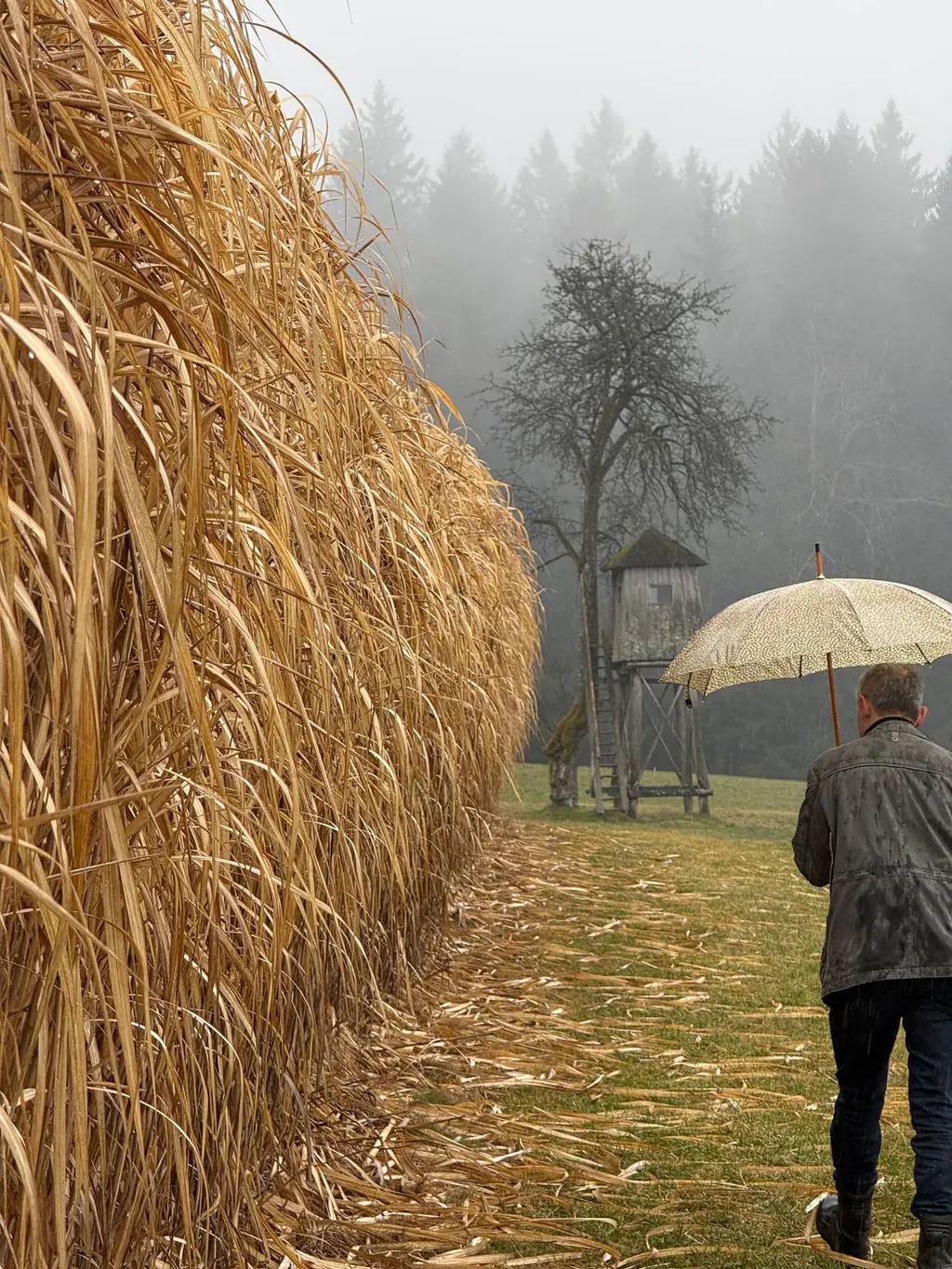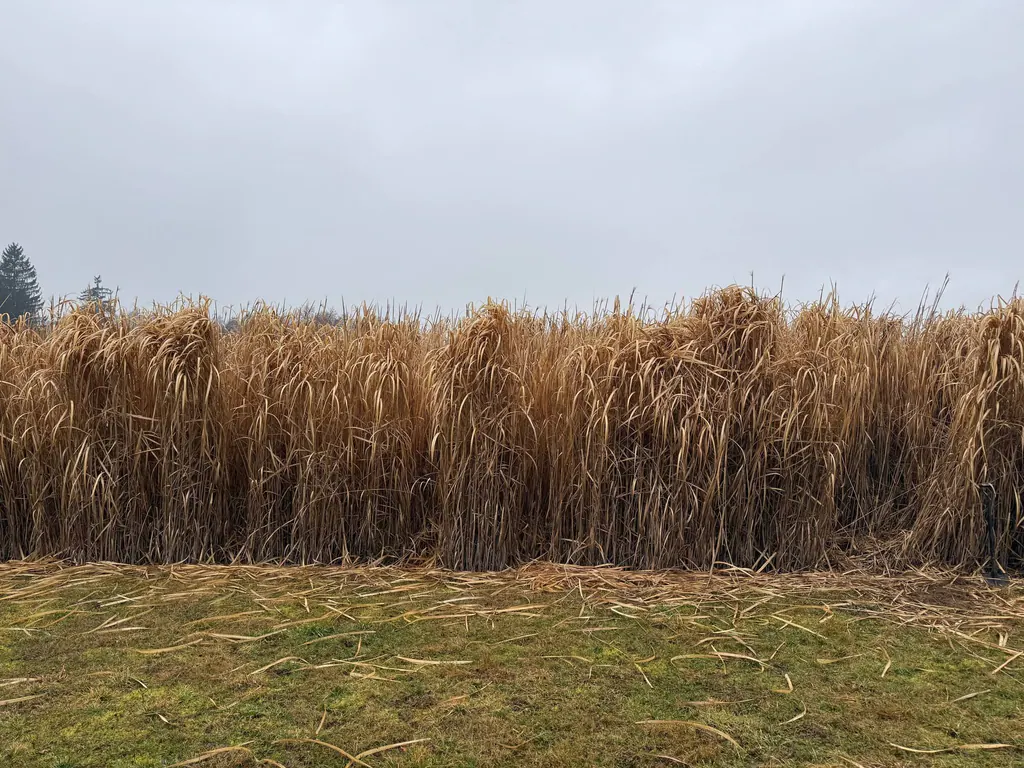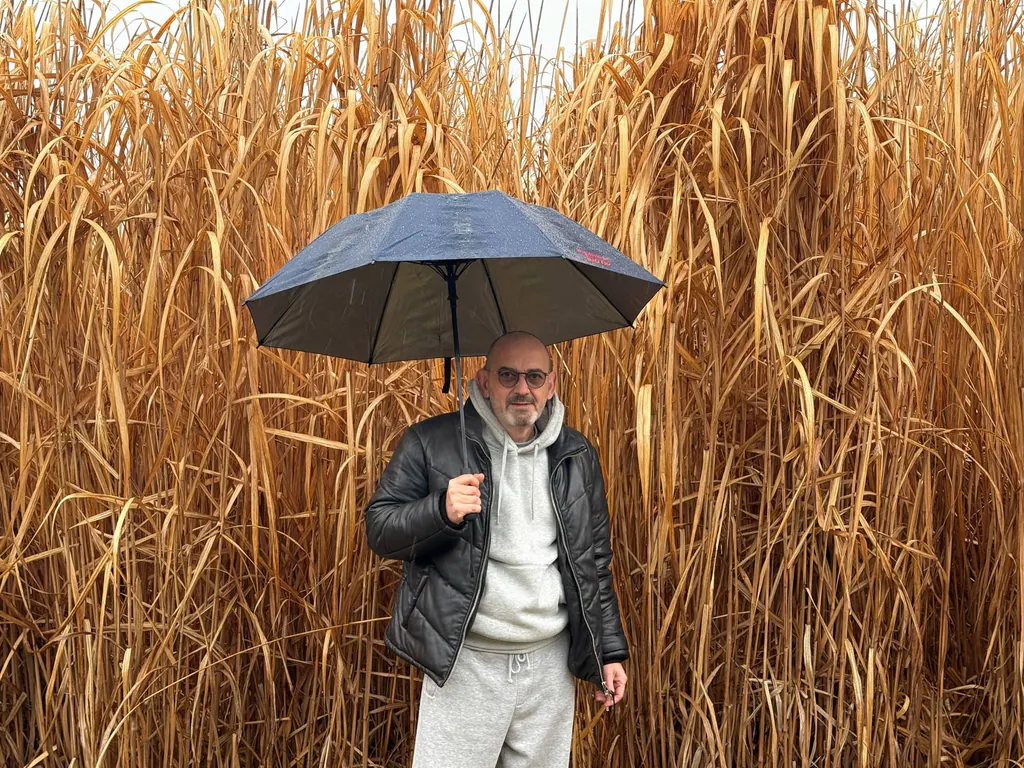




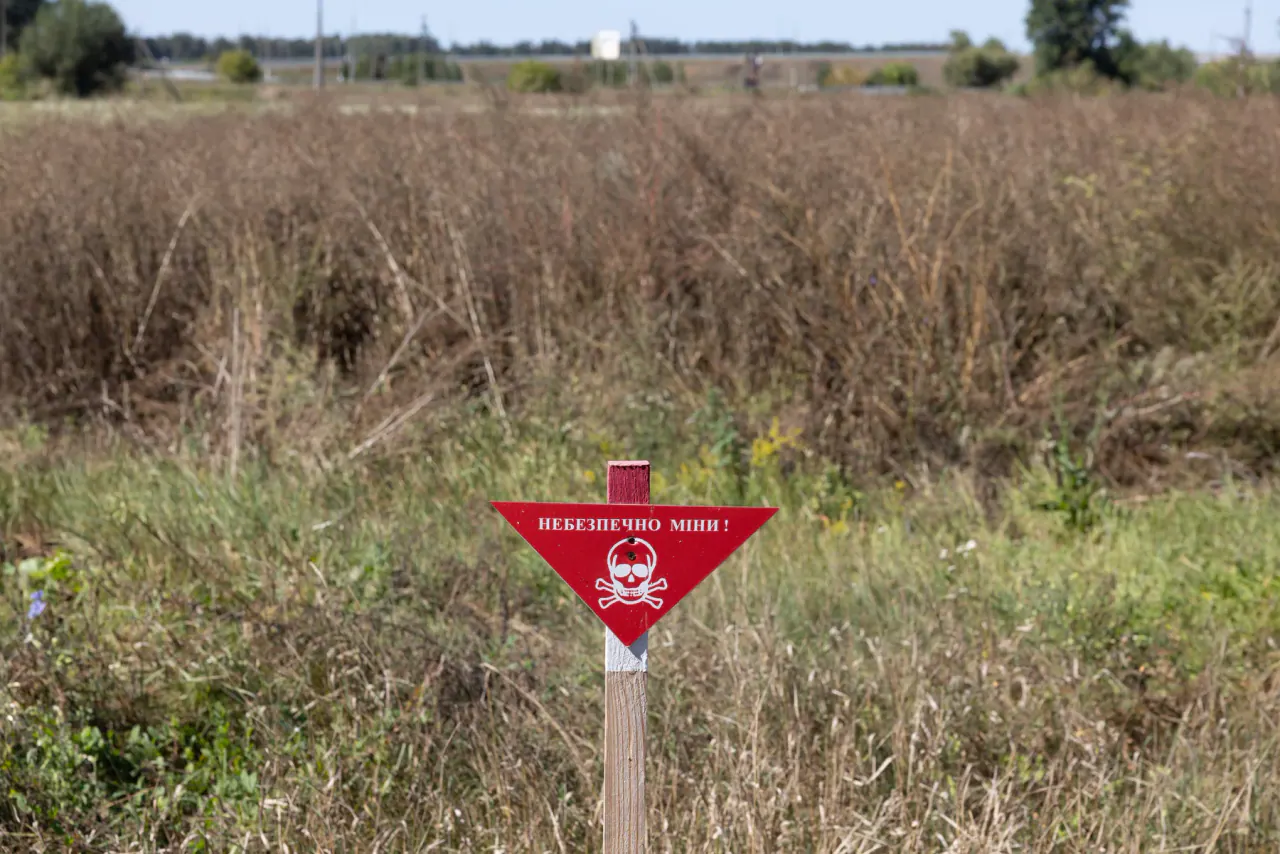
Miscanthus on marginal and contaminated land
Contaminated or war-damaged land costs its owner money and produces no income. Remediation is expensive, and only a small share of such sites has been cleaned up. A non-food perennial crop can be grown on this land instead. It is planted once and harvested every year from the second year on. Trials have found that most of the metal the crop takes up stays in its roots, so the cane can often be sold, provided that an analysis of the site confirms this.
The main conclusions
-
Miscanthus can be grown on land that is unsuitable for food crops.
It tolerates metals, stabilises the soil surface and gives a non-food harvest every year from the second year on, after a single planting. Its value on such land lies in this harvest. -
On marginal land it is best suited to poor soil.
On cold, waterlogged, stony and steep ground its suitability depends on the site, and salty ground is unsuitable. In interviews carried out in nine regions for a European Commission study, most of the reasons given for farmland going out of use were economic or social, so the market for the harvest needs to be assessed as carefully as the soil. -
In pot trials most of the metal taken up stayed in the roots.
The trials used soils from former military sites and from around a former smelter. The cane, which is the part that is harvested, contained less metal than the roots. -
Radioactive contamination is also expected to stay in the soil, but we found no measurement on contaminated ground.
Caesium binds to soil minerals, so little of it is available to roots. The only direct measurement in miscanthus that we found was made on uncontaminated farmland, where caesium was below the detection limit. -
It removes only a small share of the contamination.
The amounts it takes up are measurable but small compared with the total in the ground. -
The harvest can be burned, fermented or made into fibre products.
Combustion concentrates the metal content of the cane in the ash, fermentation separates it into an effluent, and in boards and blocks it remains bound in the product. -
The first year is the most difficult.
Weeds and drought cause most stand losses, mainly in the first season. After the canopy closes, it suppresses weeds, and the stand needs little more than an annual harvest. -
It needs enough rain or irrigation.
Where rainfall is above about 500 mm a year, the stand needs no irrigation except in drought years. On drier sites irrigation has to be planned and budgeted from the start.
Few contaminated sites in the EU have been cleaned up
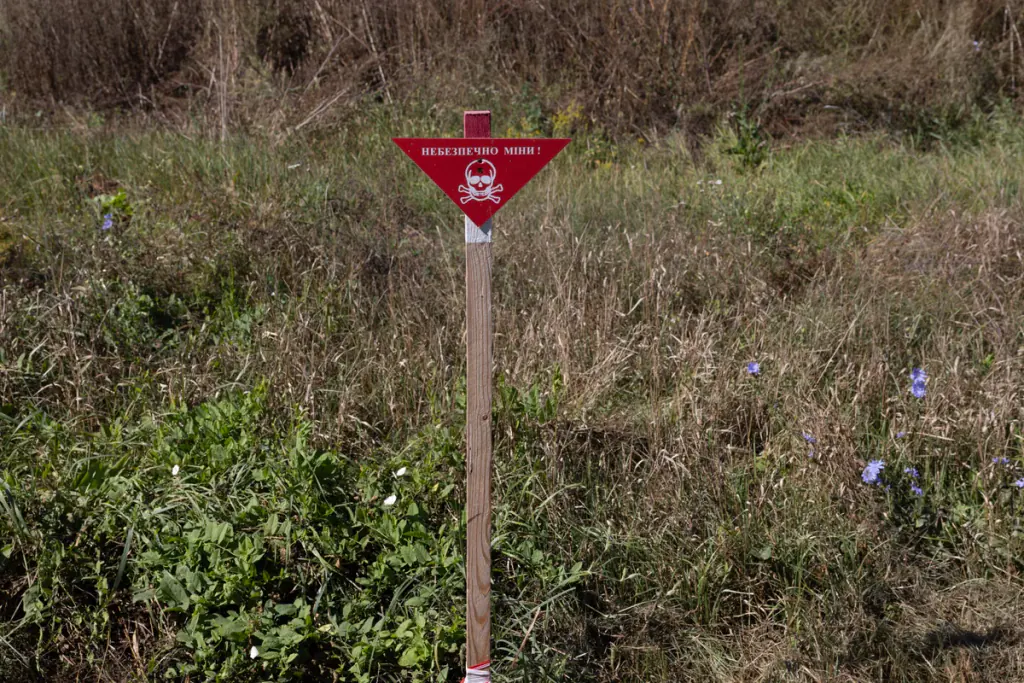
Before the EU Soil Monitoring Law, which came into force on 16 December 2025, no EU rule set a date by which these sites had to be assessed. The law is the first EU-wide legislation on soil. It sets no binding targets and introduces no bans, but it requires member states to monitor soil health, including contamination. The first assessments are due in 2031.
In Ukraine, much of the war-damaged land is farmland. The potentially mined fields lie in liberated territory, and about a fifth of the country's agricultural land has been lost because of the war, most of it to occupation. Some of the land that has returned to Ukrainian control will not be safe for food crops for years.
Farmland goes out of use mainly for economic and social reasons
Contaminated sites are one kind of marginal land. The larger kind is ordinary farmland that can no longer be farmed at a profit. The EU-funded MAGIC project mapped how much farmland has severe natural limits, and a study for the European Commission examined why it goes out of use.
Share of farmland with severe natural limits
Farmland lost, 1975-2016, % of the 1975 area
Natural limits and the suitability of miscanthus
| Limit | Share | Miscanthus |
|---|---|---|
| Shallow, stony or sandy soilMachine work and establishment are difficult; pure sand is unsuitable | 12% | Depends |
| Cold or dry climateThe first winter is critical on cold sites; on dry sites it depends on rainfall | 11% | Depends |
| Waterlogged soilTolerates flooding once established; peat is unsuitable | 8% | Depends |
| Steep slopesLimited by harvest machinery | 6% | Depends |
| Low fertilityMost suitable; acid soil needs liming first | 2% | Yes |
| Salt or natural toxicityUnsuitable for salty ground | 1% | No |
farmland lost, EU-28
The steepest falls came in the east after 1990, when state farms broke up and ownership stayed unclear. The total has held level since 2005.
answers named social or economic causes
These answers came from interviews in nine regions and cited low incomes, small scattered plots, unclear ownership and rural flight. Of the remaining answers, 27 named natural limits and 9 named policy.
Missing markets and low returns
When asked why abandoned land is not farmed again, the experts most often cited the lack of a market and low returns, and they did so in every region. Unclear ownership came second. According to the study, markets are thinnest for grass and wood crops such as miscanthus, which are the crops best suited to such land.
Planting on recently farmed or fallow land
The study also points out that clearing old scrub, woodland, grassland or wetland for a perennial crop releases much of the carbon stored there. For this reason the crop should be planted on land that was farmed until recently or is lying fallow, before scrub has grown up on it.
Read the detailDefinitions, EU law, Ukraine and how the land was counted
The definition depends on the use
In the usual definition, from FAO and CGIAR (1999), marginal land is land whose limits are severe for a given use, so that the return on extra inputs barely covers their cost. The term is therefore relative, and land that is marginal for wheat can be suitable for grazing, forestry or a perennial crop.
Four kinds of marginal land
The MAGIC project distinguishes four kinds of marginal land: land with natural constraints, fragile land, degraded land and contaminated sites. The MAGIC shares of farmland with severe natural limits given in this chapter refer to the first kind, and the contaminated sites discussed in the rest of the article belong to the fourth.
Definitions in EU biofuel law
Unused land is land that has not been used for food, feed or energy crops or for substantial grazing for five consecutive years, and abandoned land is unused land that was once farmed. Severely degraded land is land that is salinated, or poor in organic matter and badly eroded. Biofuel made from crops grown on such land receives an emissions bonus if the land was not in use in January 2008.
How the MAGIC project counted
The project mapped six groups of severe natural limits, using the thresholds the EU applies to its areas with natural constraints, and excluded land already improved by drainage, irrigation or terracing. The base is all land shown as farmed in any CORINE land-cover map from 1990 to 2012, so it includes land already abandoned.
Gaps in the statistics
Unused and abandoned land is not recorded in any statistic. Land out of production for several years loses its status as farmland and drops out of the count, and only fallow land is recorded systematically. The 1975-2016 series is the Eurostat farm structure survey, with gaps filled from FAOSTAT. The 1975 areas of Croatia, Slovenia and Slovakia are shares of Yugoslavia and Czechoslovakia, and the Baltic states are left out of the chart because their series starts in 1990.
Ukraine
Neither source covers Ukraine. In 2018, before the full-scale war, FAO put the country's degraded and unproductive arable land at more than 6.5 million hectares, which was over a fifth of the arable area.
Land that cannot be cleaned
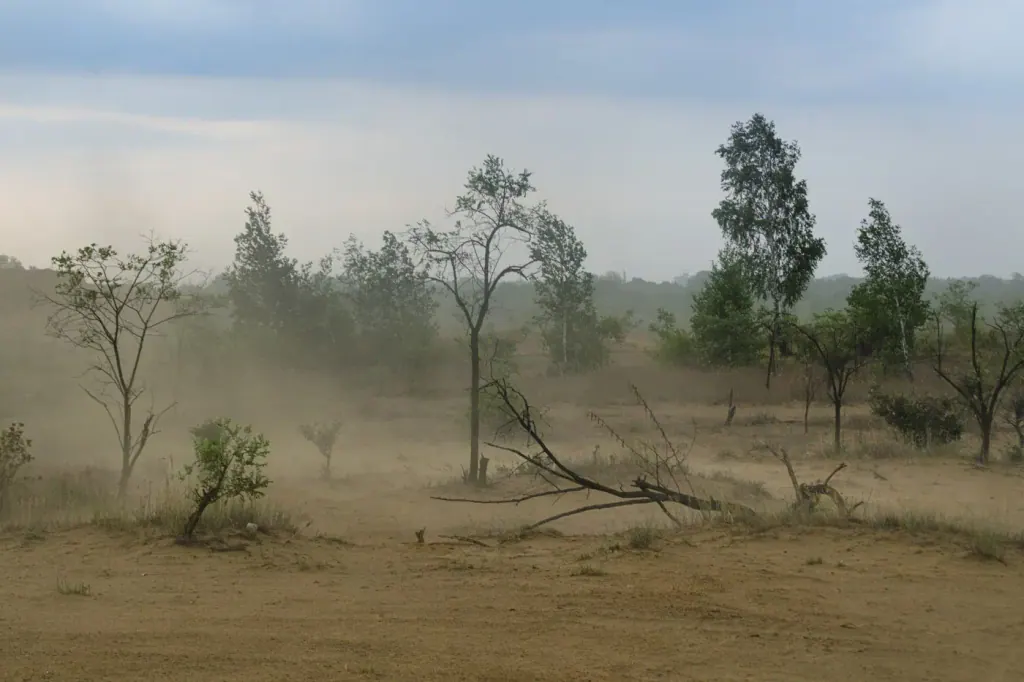
For most contaminated land the practical question is who will manage it for as long as it cannot be cleaned up.A harvested crop covers the ground as scrub does, and in addition the site is managed and yields a saleable product.
Four options for land that cannot be farmed
For a contaminated parcel, the choice between them depends on how severe the contamination is, how large the area is and who is exposed.
Excavate and landfill
Removal This is the most expensive of the four options, and the contaminated soil ends up in a landfill. It suits small hotspots of severe contamination.
Hotspots onlyCap and contain
Isolation The capital cost is high, and the cap has to be maintained permanently. It suits sites where exposure must stop at once.
Ongoing costDo nothing
No treatment Scrub comes back and nobody manages the site. This is acceptable only where nobody is exposed.
No incomeProductive reuse
Stabilise, contain, harvest Establishment costs money at the start, and income follows once there is an outlet for the harvest. It suits large areas with low to moderate contamination.
Suits large areas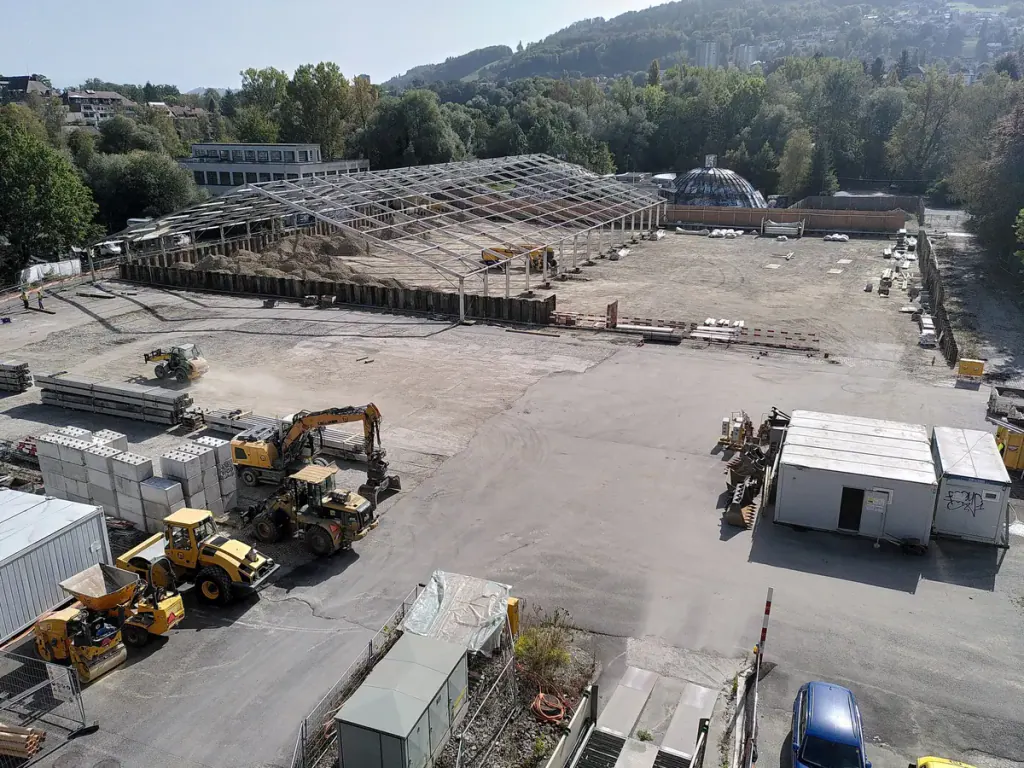
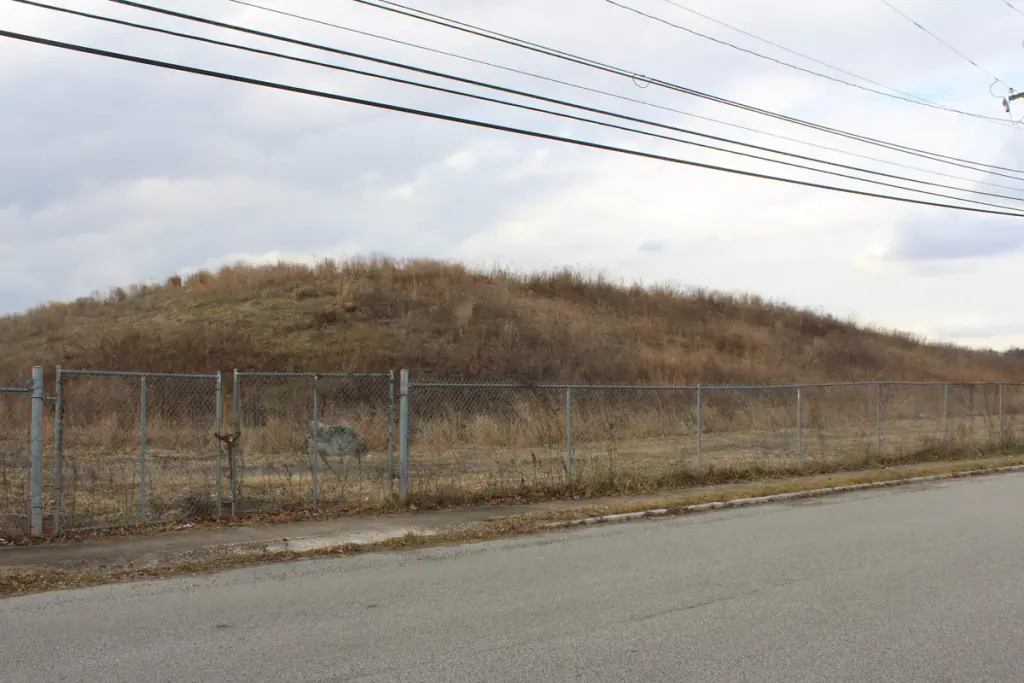
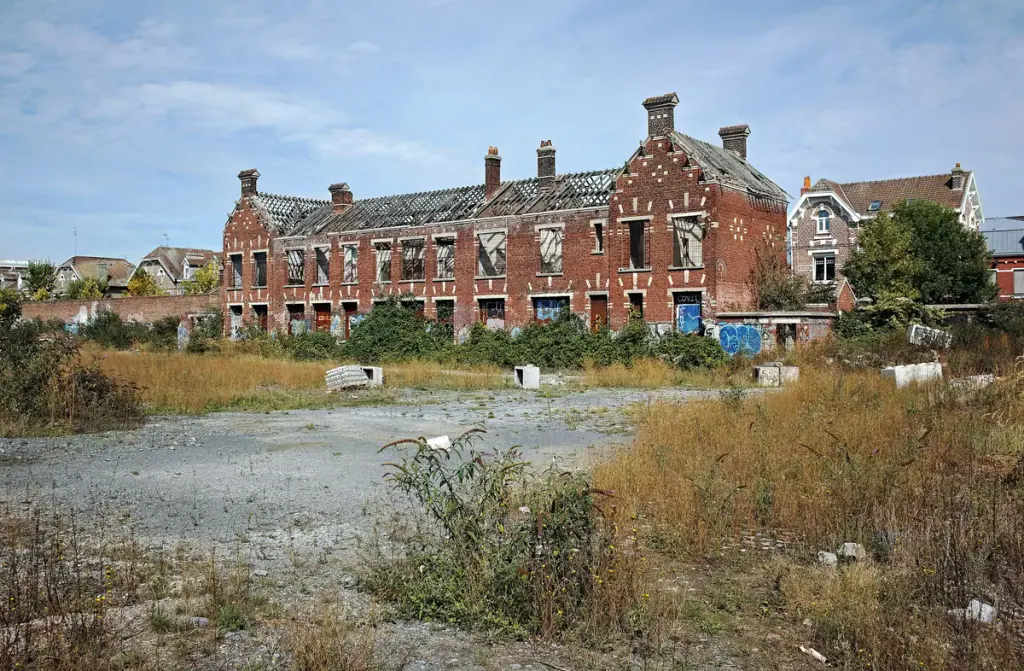
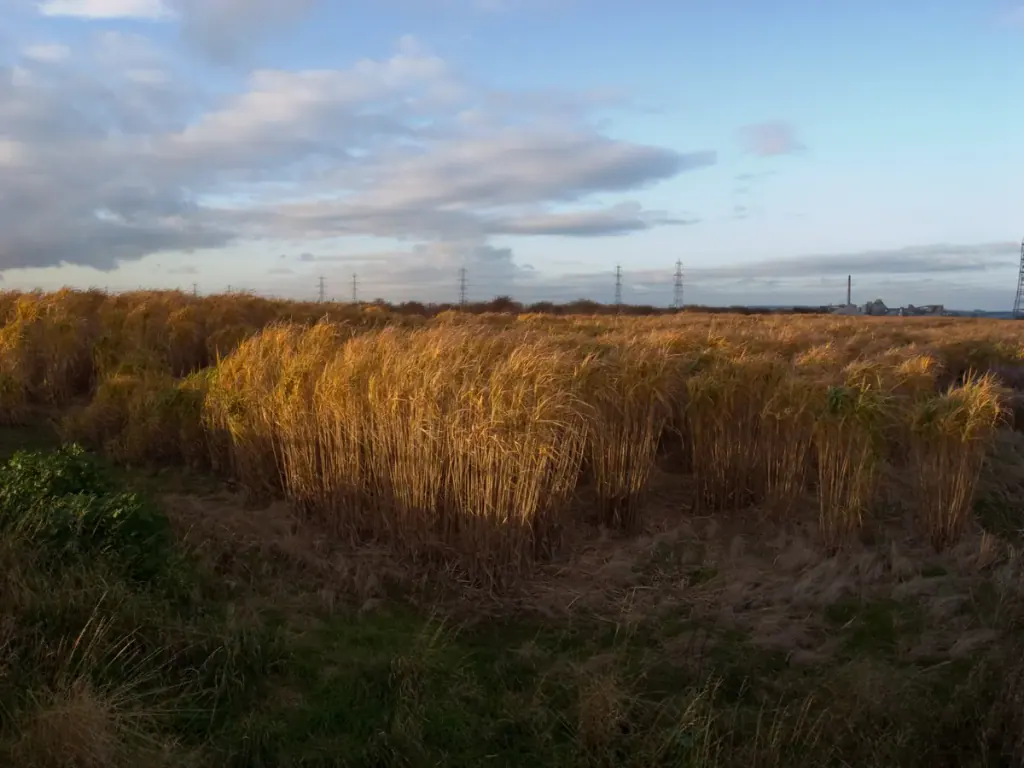
In the United States a federal programme already promotes renewable energy on contaminated land, and a federal report estimates the potential scale of energy crops.
US EPA · RE-Powering America's Land
This standing federal initiative promotes renewable energy, including biomass, on contaminated land, landfills and mine sites. More than 190,000 sites have been pre-screened.
US DOE · 2023 Billion-Ton Report
The report models purpose-grown energy crops at about 398 million dry tons a year on some 76 million acres of ordinary cropland and pasture.
Pot and field trials on former military land
Research on growing this crop on damaged land goes back about a decade. Much of it has been funded by NATO, and a large part was carried out in pots with soil taken from contaminated sites.
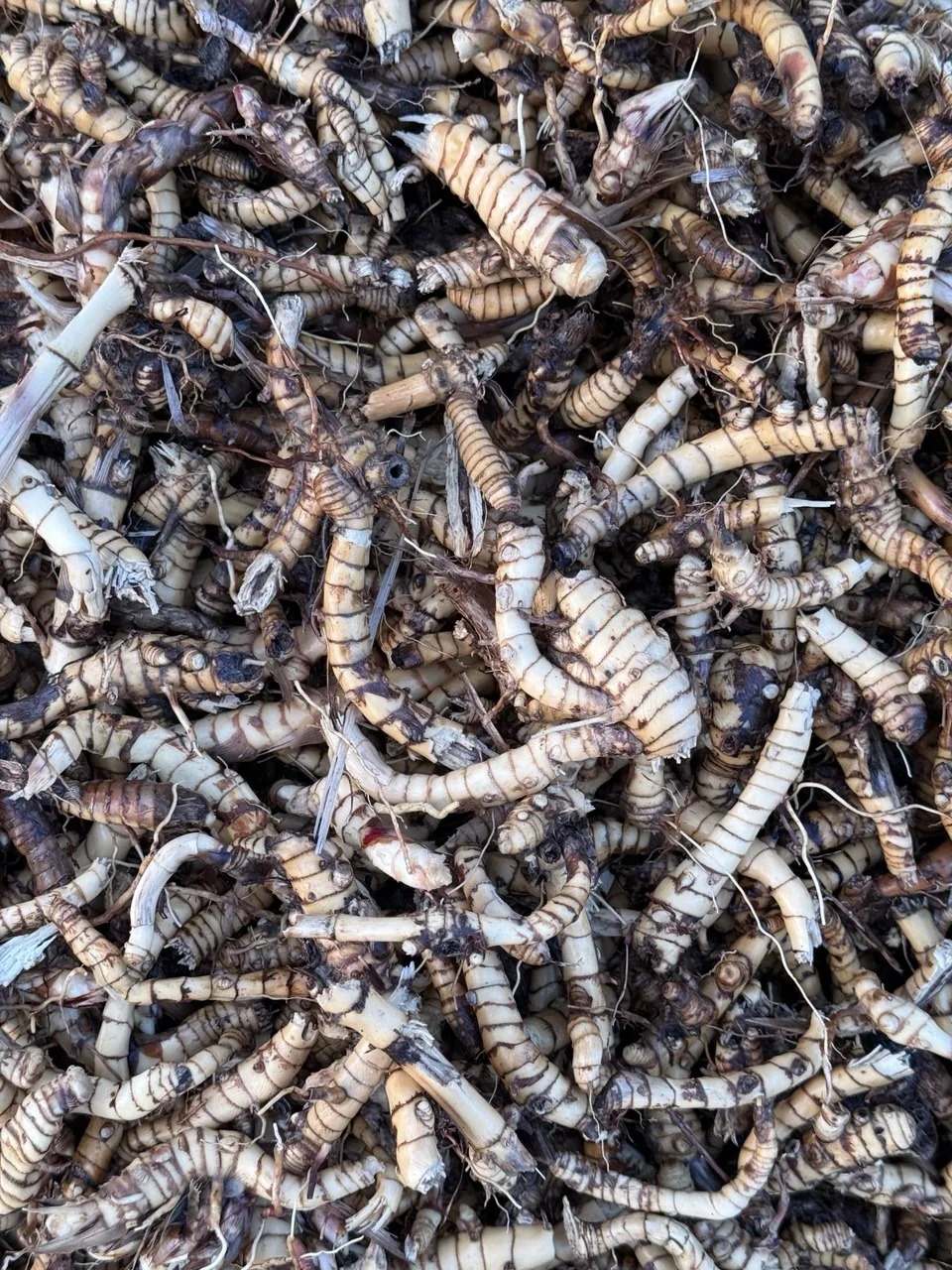
In two-year pot trials, M. × giganteus was grown in soil from former military sites at Kamianets-Podilskyi in Ukraine and Sliač in Slovakia, with elevated levels of iron, manganese, copper, zinc, lead, strontium, titanium and arsenic. The crop established and grew taller in its second year. It held the greater part of the metals it took up in its roots, with less in its stems and leaves, and arsenic in the leaves stayed below the detection limit.
The same research group is now growing the crop on liberated Ukrainian land under NATO project G6094.
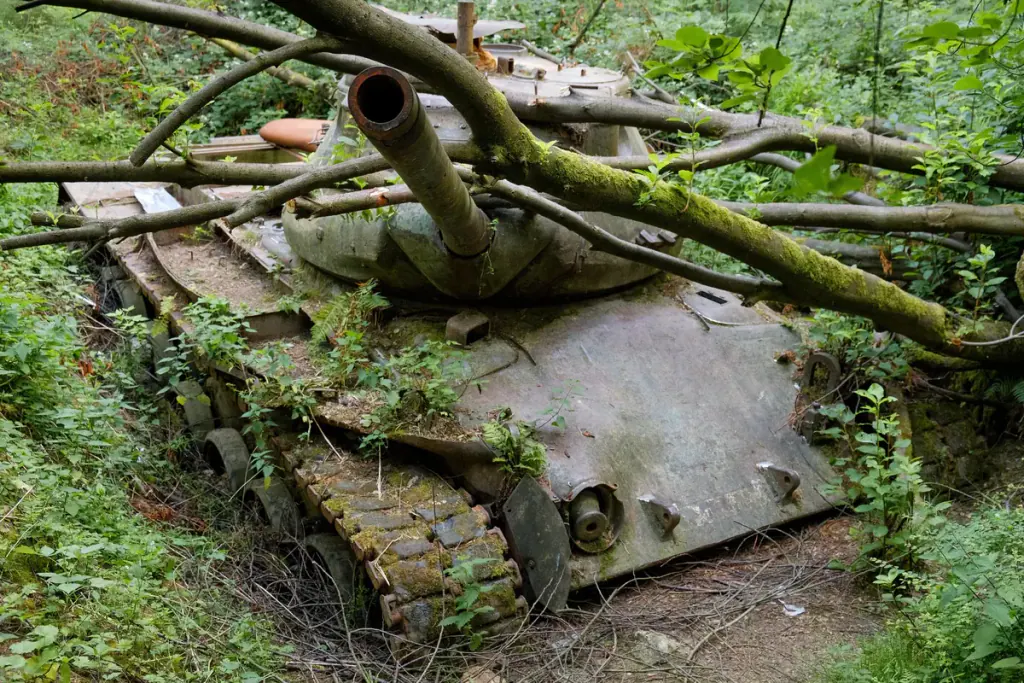
The project is led by Professor Valentina Pidlisnyuk of Jan Evangelista Purkyně University in Ústí nad Labem, and aims to regenerate former military sites with giant miscanthus. One of its plantations is at Vorzel, which was occupied in the first weeks of the full-scale invasion in 2022 and has since been cleared.
NATO SPS · “MilClimATech”
September 2023 to September 2027
Vorzel & Dolyna, Ukraine
a liberated settlement in the Kyiv region, and a former tank training ground in the Ivano-Frankivsk region, planted in 2017
partner institutions
in Czechia, Ukraine, the USA and Canada, with a linkage institution in Kazakhstan
Four findings that qualify the pot trials
The pattern described above was found in pot trials. One of the four findings below comes from a field study.
In some samples, organs above the root held more lead than the root
In that trial the upper translocation factor for lead was above 1.0, so in some samples an organ above the root held more lead than the root did. The authors still class the crop as an excluder, because little lead entered the plant at all. A pot study in Kazakhstan on soils from military and mining sites came to the same conclusion for arsenic, lead and zinc.
Arsenic moved into the shoots under stress in the field
At three polluted sites in Belgium, a field study found that the crop's stomata stayed open under stress instead of closing to protect the plant, which increased the movement of metals and arsenic into the shoots. The pot trials described above did not show this effect.
Tolerance depends on the metal
In a two-year pot trial in Greece, Italy and Portugal, the height of miscanthus was not reduced as the levels of cadmium, lead, nickel and zinc rose, and its yield fell only at the highest zinc dose. It tolerated cadmium less well than switchgrass or sorghum did.
Results differ between genotypes, including our clone
In a 2025 study, two genotypes of M. × giganteus were grown in soil dosed with arsenic. ‘Illinois’, the clone we supply, showed the stronger stress response, although its growth losses were limited. This is one reason why soil analysis must include arsenic before this clone is planted. Results for one genotype should not be applied to another.
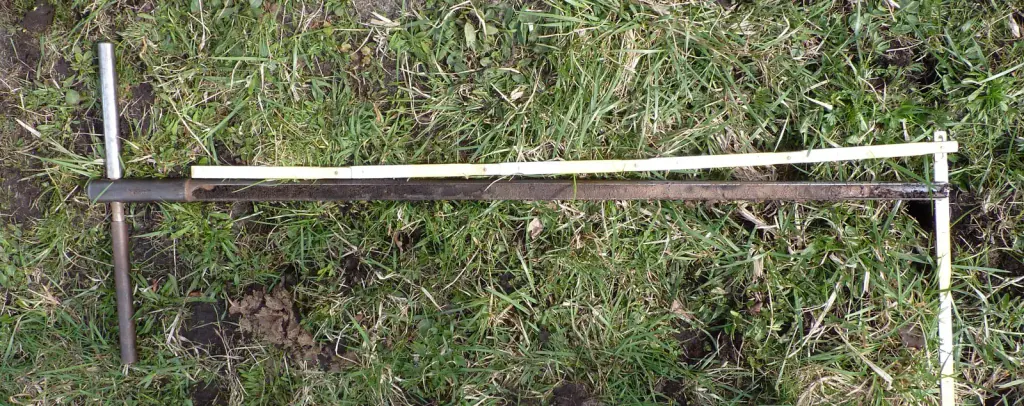
Taken together, these studies show that, for most of the metals and soils tested, the greater part of the metal taken up stays below ground. The extent depends on the element, the dose, the site and the genotype.
Arsenic under stress and lead at the top of its range are the documented exceptions, and only an analysis of the site can establish whether either applies to it.
for each site, before the harvest is sold or used
results from one soil cannot be applied to another without measurement
The evidence for miscanthus on radioactive land is indirect
Miscanthus is often mentioned in connection with Chernobyl, usually with the suggestion that the crop can clean radioactive ground.
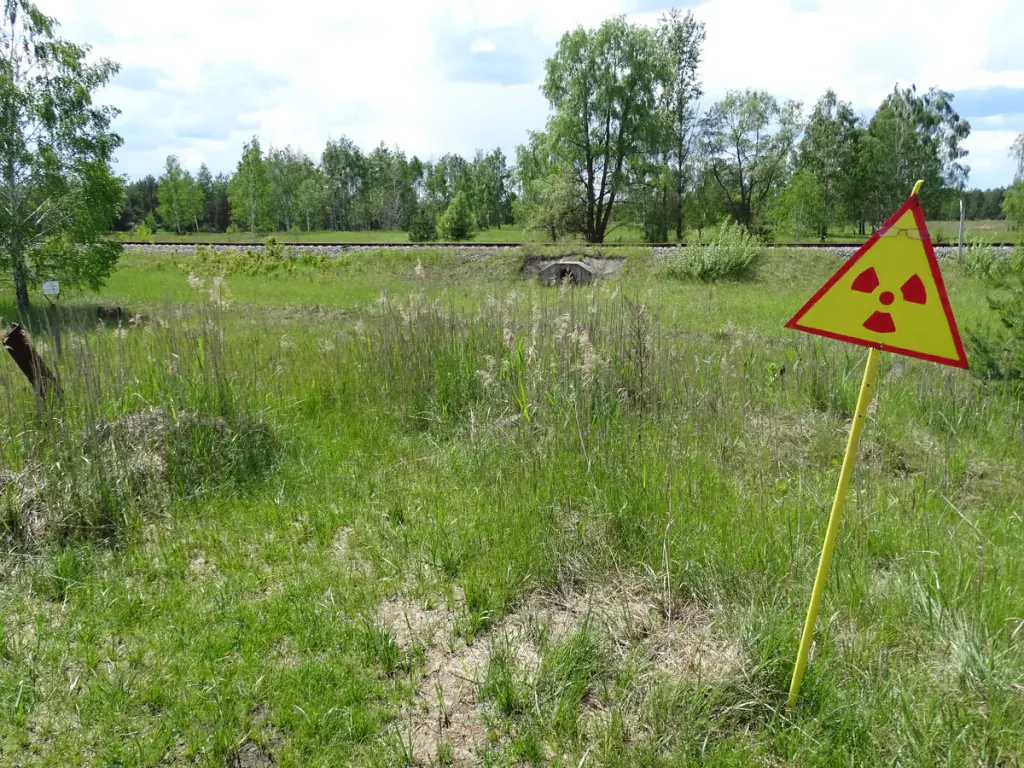
Radiocaesium binds tightly to soil minerals, and little of it is available to roots. In the foundational study in the zone, soil amendments were needed to release it, and of the twenty amendments tested, ammonium salts worked best. Miscanthus was not among the species screened, so the study is relevant here only for what it found about the behaviour of caesium.
In the EU-funded PHYTOR project of the same period, on the Pripyat floodplain, willow yielded only 70 to 100 kg per hectare a year, and less than 0.1% of the caesium and under 1% of the strontium ended up in the wood. At such a low yield the share taken up could only be very small. Willow could not clean such ground, and the small share does not prove that its wood was free of contamination.
This is the only study we found that measured radionuclides in miscanthus itself, and it gives a baseline for the crop we sell. The trial was on uncontaminated ground, however, so caesium below the detection limit is weak evidence for what happens on contaminated land. Of the four radionuclides, natural uranium passed into the plant most readily, so the harvest from any site should be analysed together with its soil.
We found no published field measurement of M. × giganteus on radiologically contaminated land. The mechanism, the willow data and the single measurement on uncontaminated ground all suggest that the radionuclides stay in the soil, but a field measurement on contaminated land is still needed to confirm this.
We also found no authority that has endorsed the idea. The closest to an endorsement is a 1998 workshop at Slavutych, sponsored by the US Department of Energy, which concluded that the concept had “technical and possibly economic merits”, while technical, economic and risk questions remained unresolved.
of radiologically contaminated land
the crop stabilises the ground and gives an industrial harvest, and the radionuclides remain in the soil
The first year needs weed control and water
Rhizomes are planted once in prepared ground, and there is no annual sowing or replanting after that. On damaged ground this is an advantage, because the people who run programmes there are often not agronomists.
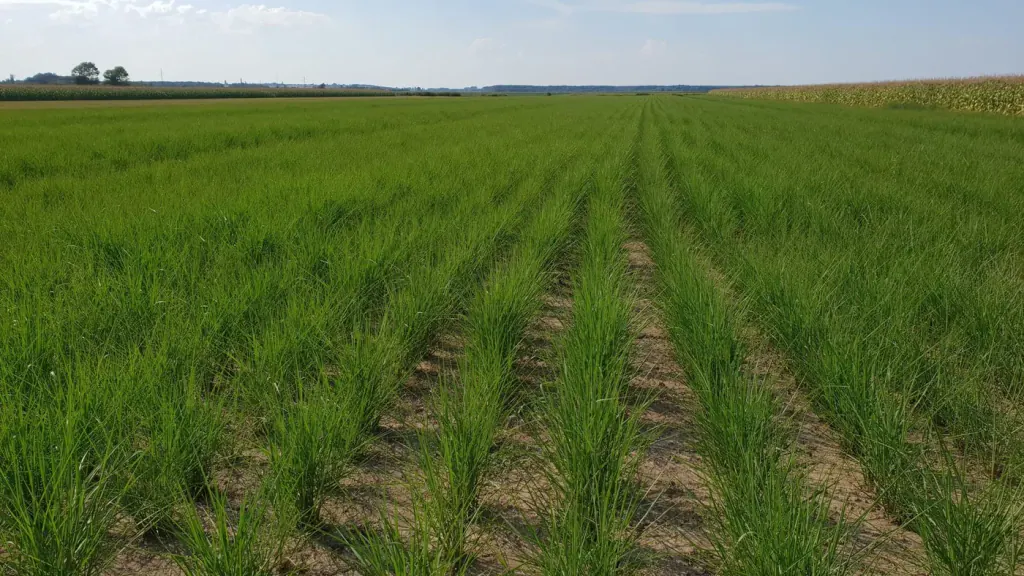
A young plant is small, shallow-rooted and slow to compete with whatever already grows on the site. Weeds and drought cause most stand losses, mainly in the first season. In that season the stand needs weed control and enough moisture, and it gives almost no yield. Field preparation, planting and the first year are described in our cultivation guide.
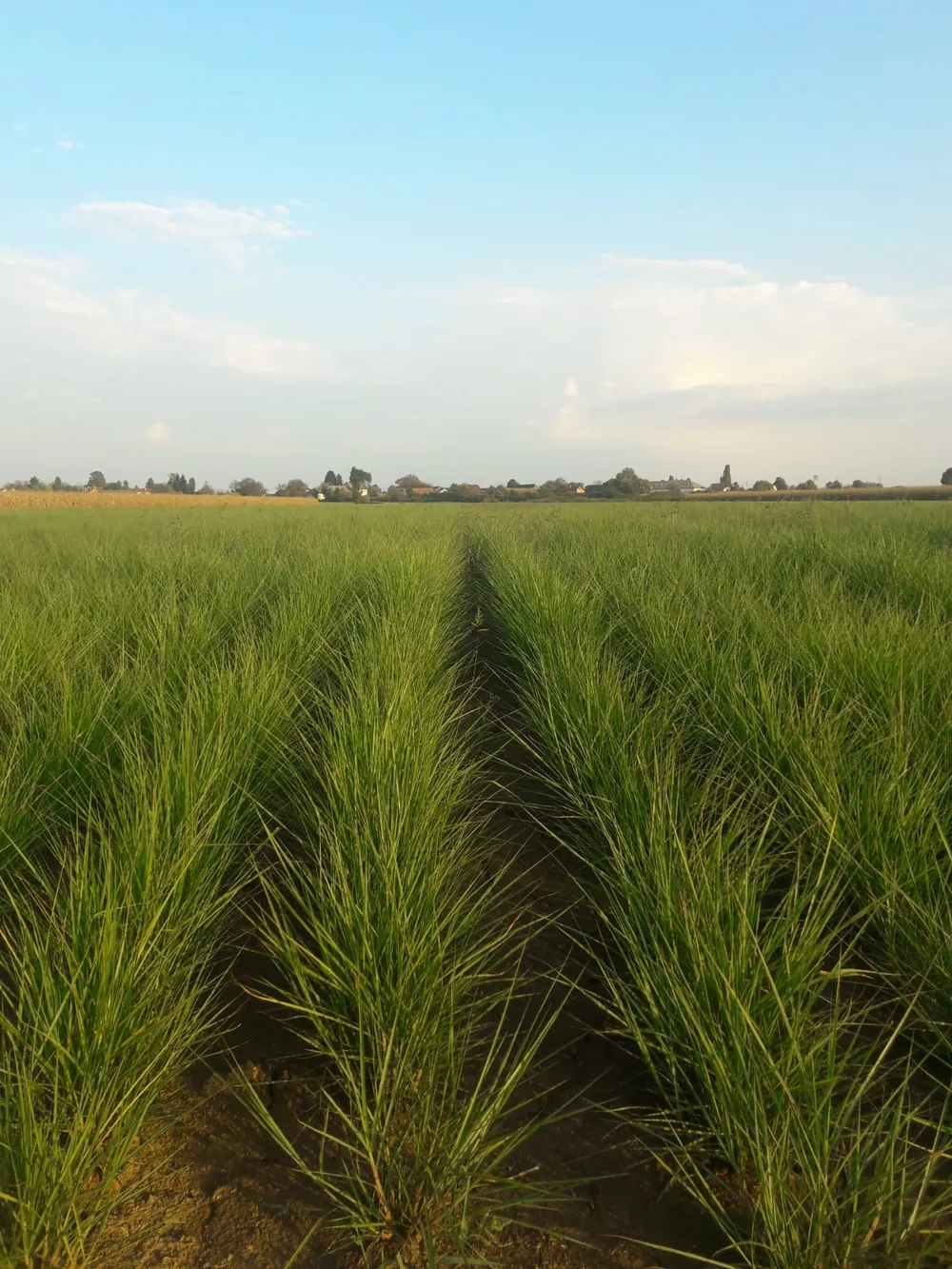
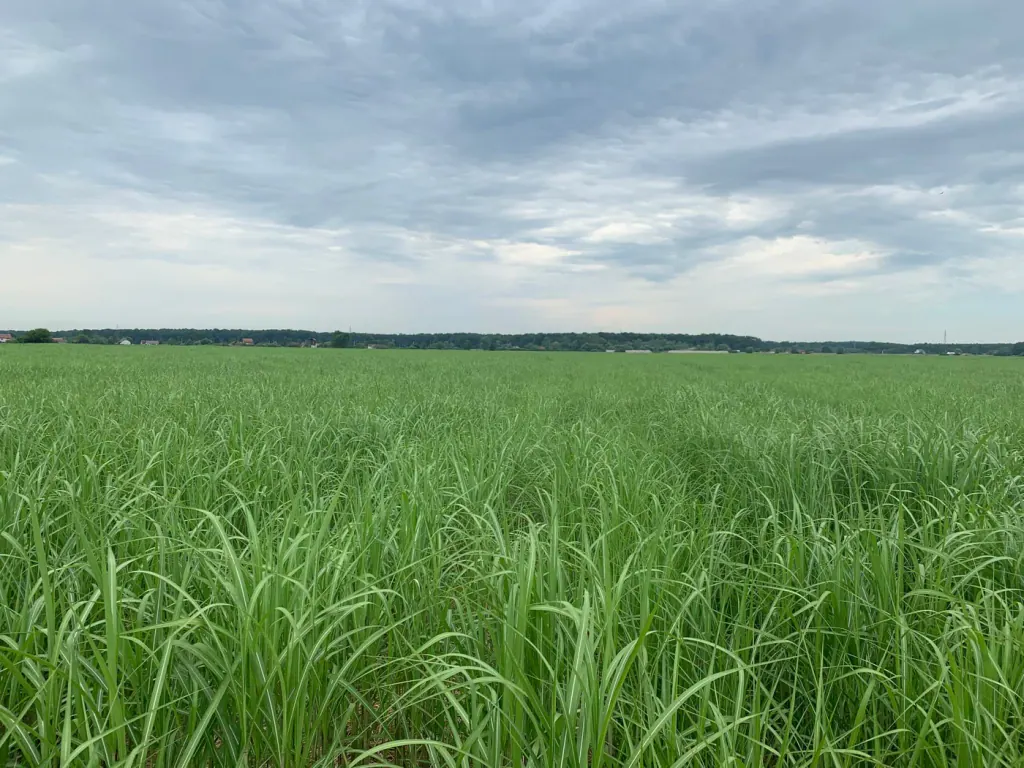
The ground is prepared as it would be for maize, and planting stock costs about €3,000 per hectare, an approximate figure from our own plantings. Weed control in the first year and, where needed, irrigation are additional costs. Only this first year has to be financed before there is any income from the harvest.
The stand closes over the next season or two. The rhizome mat spreads and the canopy shades the soil surface, so weeds are suppressed, herbicide use falls away and the soil surface stops eroding.
Under the canopy, fallen leaves stay on the ground, the cane is cut after senescence once nutrients have moved back into the rhizomes, and an organic layer builds up year by year. Organic matter is one of the soil-health indicators that the EU Soil Monitoring Law will assess.
Ten years of a closed, harvested stand on a parcel that previously produced no income is already a good outcome, and a period of ten years fits within normal budget planning.
then annual harvests
No replanting is needed during the life of the stand. A properly planted stand lasts twenty to twenty-five years, but a programme does not have to commit to the whole period.
Miscanthus is not suited to dry regions without irrigation
In our fields the stand needs no irrigation where rainfall is above about 500 mm a year, except in drought years.
Once the stand closes, the canopy shades the soil and reduces evaporation from its surface. In our experience an established stand withstands a dry spell that would set back a first-year stand.
Irrigating contaminated ground raises its own questions about leaching and runoff, so the hydrology of the site should be assessed together with its soil.
below this, irrigate or do not plant
In that case irrigation has to be included in the capital plan from the start, alongside the planting.
A site needs a buyer for its harvest
or a use for it on site.
The route for the biomass should be decided before the planting plan is drawn up.
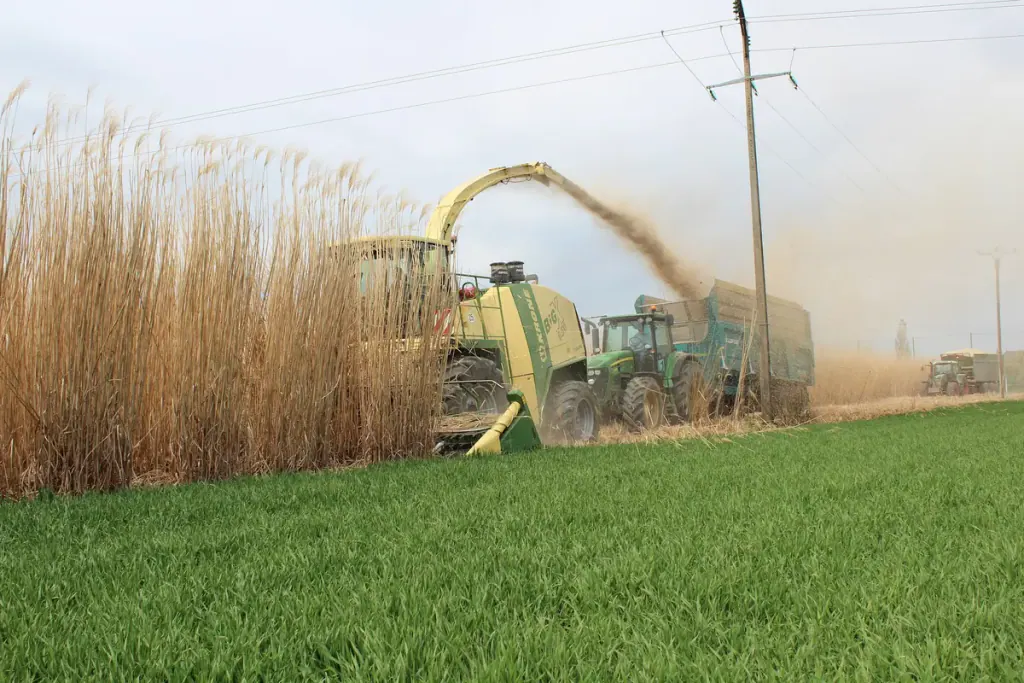
Three uses for the harvest: combustion, fermentation and fibre products
Most of the metal stays below ground, but the cane still carries some. In each of the three uses this metal ends up in a different place, and the choice depends on the buyers and permits available in the parcel's region.
Combustion
concentrates the metalsin the ash
Non-volatile elements collect in the bottom ash, and volatile ones such as cadmium, lead and zinc in the fly ash. A peer-reviewed study of woody biomass from a closed ore-mining site concluded that its ash had to go to hazardous-waste disposal.
A permitted route for the ash is needed from the start
Fermentation
separates the metalsinto an effluent during pretreatment
Acid pretreatment has been reported to remove up to 90% of the zinc and manganese before hydrolysis. Ethanol distils at 78°C, and the metal salts are left behind. The lignin residue is usually burned for process heat.
The effluent needs a permitted route, and the process has been tested only at laboratory scale
Fibre products
retain the metalsin boards and blocks; pulping separates them
In pressed insulation board, particle board, lime-bound blocks and bio-concretes, the fibre and whatever it carries stay bound in the product. A pulp mill, by contrast, separates the non-fibre fraction into its cooking liquor. All of these are established uses of clean miscanthus.
Product limits and end-of-life rules still apply
Combustion needs a permit for the ash, fermentation needs a plant built for this feedstock, and fibre products need a buyer and a product test. If an outlet is needed from the second year on, the fibre route is the only one of the three that does not depend on new facilities being built.
The owner of a site who wants to sell the bales has to find a buyer. Without a buyer, the harvest can still be burned on site if grain dryers, workshops or houses there need heat.
At today's fuel prices we consider this the cheapest use of the harvest, once the route for the ash described above is settled. Our fuel article compares the cost of that heat with gas, oil and pellets.
clean bales at the field edge
per tonne in our own trade; we know of no price yet for biomass from contaminated land
Read the detailAsh regulation, fermentation, fibre, Annex IX and Kazakhstan
Ash under EU law
EU waste law sets no specific threshold for ash from biomass grown on contaminated soil, so each site's ash is classified case by case. The authors of the Croatian trial described in the radiation chapter classed miscanthus ash, even from uncontaminated ground, as naturally occurring radioactive material that can be used in construction products under controlled conditions, as coal ash is.
Fermentation: one published test
The only published test we found is the 2025 study described in chapter 06, in which miscanthus was grown in soil dosed with arsenic. The biomass fermented normally, and no arsenic was detectable in the distilled ethanol. We found no results for biomass from a real contaminated site or for production at scale. The EU-funded CERESiS project used supercritical water gasification instead, and every run ended early because salt and coke deposits built up.
The fibre route
A pulp mill would separate the non-fibre fraction into its cooking liquor, which the mill burns to recover chemicals, so the metals would end up in the mill's ash. This is our inference from the process, and we found no measurement of it. Boards, blocks and packaging are subject to their own product limits, such as the EU cap on heavy metals in packaging.
An Annex IX feedstock
For the purposes of fuel incentives, the EU renewable energy directive classes miscanthus as non-food cellulosic material, which Annex IX Part A lists as a feedstock for advanced biofuels and aviation fuel, whatever land the crop grows on. The open questions for a contaminated site are the directive's sustainability criteria and the metal content of the fuel.
Kazakhstan: test-site land and a planned jet-fuel plant
A 2023 law aims to return the conditionally clean part of the 18,000 km² Semipalatinsk Test Site to economic use. The country's first alcohol-to-jet plant, in process design since July 2026, is planned to run on grain ethanol, which ReFuelEU excludes from the aviation fuel that counts towards the European targets (see our work on aviation fuel). Grass grown on that land could supply the plant instead, if it were planted and, on the dry steppe, irrigated.
Next steps · 11
Each project should start with soil analysis
Governments & land agencies
With a non-food perennial crop, contaminated and marginal land that is now a liability can become managed, harvested ground. A planting programme can be justified as reclamation and productive reuse, provided it is backed by soil testing and a settled route for the biomass. For a ministry the first step is a programme-level screening, carried out by its own soil laboratories, to establish which parcels are candidates at all.
Reconstruction bodies
The crop suits farmland on which food crops cannot yet be grown safely, and NATO-funded trials are already running on liberated Ukrainian land. Planting should be funded as a monitored programme on cleared land.
Owners of industrial, mine and brownfield sites
The crop can stabilise a closed site and produce a harvest from land that would otherwise only cost money. If a soil survey already exists, it is the starting point.
For each of them, the work on a parcel follows the same three steps, in this order.
FAQ
Frequently asked questions
Such land is not suitable for food crops. The realistic options are non-food industrial crops: short-rotation willow and poplar, and perennial grasses such as Miscanthus × giganteus, grown for fuel, board or fibre. These crops stabilise the ground and produce a harvest that can be sold, but they remove only a small share of the contamination.
Marginal land is land whose natural limits mean that the return from a given use barely covers the cost of the inputs. Typical limits are shallow or stony soil, a cold or dry climate, waterlogging, steep slopes, and poor or salty soil. Whether land is marginal depends on the use, so land that is marginal for wheat can still be suitable for grazing, forestry or a perennial crop. Contaminated sites are one kind of marginal land.
According to the EU-funded MAGIC project, about 29% of the agricultural land of the EU-28, including the UK, has severe natural limits. The share ranges from 14% in the continental zone to 71% in the northern zone. Separate figures show that the same 28 countries farmed about 36 million hectares less in 2016 than in 1975, a fall of 18% from the 1975 area.
It can be grown on some marginal land, and it is best suited to poor soil with enough rain. On cold, waterlogged, stony or steep ground its suitability depends on the site, and pure sand, salty ground and peat are unsuitable. In interviews carried out for the European Commission, most of the reasons given for farmland going out of use were economic or social, so the market for the harvest needs to be assessed as carefully as the soil.
It takes up measurable amounts, and in one pot trial the mobile fraction of some metals in the planted soil decreased. It removes only a small share of the total, however. Its value lies in stabilising the ground and producing a non-food harvest.
Pot trials with soils from former military sites and from around a former smelter found that most of the metal the crop took up stayed in the roots. There are exceptions. A field study in Belgium found arsenic moving into the shoots under stress, and in one pot trial some organs above the root held more lead than the root did. Each site therefore needs its own analysis.
It is not automatically safe. Metals concentrate in the ash, and a peer-reviewed study of woody biomass from a former mining site concluded that its ash had to go to hazardous-waste disposal. Combustion requires emission controls and a permitted route for the ash.
Combustion gives heat and power, and fermentation gives cellulosic ethanol, which can be processed further into aviation fuel. The fibre can be made into materials such as pulp, insulation board, particle board and lime-bound blocks. Combustion and the fibre products are established uses of clean miscanthus. On a contaminated site each use also requires laboratory testing and a route for whatever the process separates out.
In principle it can. Acid pretreatment has been reported to transfer most of the zinc and manganese into an effluent before fermentation, and in one study of miscanthus grown in soil dosed with arsenic, no arsenic was detectable in the distilled ethanol. We found no published results for biomass from a real contaminated site or for production at scale.
The feedstock should count. The EU renewable energy directive names miscanthus as non-food cellulosic material, which is an Annex IX Part A feedstock, whatever land it grows on. The open questions are the sustainability criteria and the metal content of the fuel, so a legal opinion should be obtained before a programme is built on it.
No, it cannot. Radiocaesium binds to soil minerals, so little of it is available to roots, and on contaminated ground near Chernobyl less than 0.1% of it ended up in willow wood. The only direct measurement in miscanthus that we found showed caesium-137 below the detection limit, but that trial was on uncontaminated ground. A harvest from contaminated land is therefore expected to carry little of the contamination, although we found no measurement that confirms this.
The crop is planted once, and the first year is the difficult one. A young stand left without care can be lost to weeds and drought, and in the first year it yields almost nothing. Once the canopy closes, a season or two later, it suppresses weeds, and the field needs little more than an annual harvest.
The ground is prepared as for maize, and planting stock costs about €3,000 per hectare. Weed control is needed in the first year, and harvesting starts in the second. In our own trade clean bales sell for €110-115 a tonne at the field edge, but the owner of the site has to find a buyer. Without a buyer, the harvest can be burned as fuel for the site's own grain dryers or to heat its buildings, once the route for the ash is settled.
Where rainfall is above about 500 mm a year, the crop needs no irrigation except in drought years. Drier sites need irrigation, and it should be budgeted from the start. In our experience a closed stand withstands a dry spell that would set back a first-year stand, partly because the canopy shades the soil.
The land has to be demined first. On cleared land the question is one of land use. The crop is sterile and is not a food crop, and it is already being grown in NATO-funded trials on liberated Ukrainian land. People working on contaminated ground still need protection against soil and dust.
The sterile Miscanthus × giganteus clone sets no viable seed, so it cannot seed itself into neighbouring land, and its rhizomes widen the stand only slowly at the field edge. Floods can carry pieces of rhizome downstream, so plantings should be kept off stream banks and ditch sides that flood. Miscanthus raised from seed is a different plant, with a risk of spreading by seed that the clone does not have.
A note from us
Who wrote this
We wrote this article ourselves. We grow miscanthus and sell planting stock, and we used the sources listed below and our own figures.
The information was current when the article was published. Research continues, errors are possible, and a few figures are taken from the summaries of papers. Please check the figures before you rely on them.
If you find an error or have more accurate figures, write to us at info@miscanthus.eu or use the form below.
Sources
- European Environment Agency / JRC. Progress in the management of contaminated sites (2016 data): ≈2.8 M potentially contaminated sites; 1.38 M registered; ~115,000 remediated; ≥166,000 expected to need remediation; €100,000/site working assumption, €16.6 bn in total.
- Directive (EU) 2025/2360, the EU Soil Monitoring Law, in force 16 December 2025.
- Ministry of Agrarian Policy and Food of Ukraine, Minister V. Koval (March 2025): ≈20.5% of agricultural land lost; ≈2 M ha of farmland potentially mined. CSIS, Demining Ukraine's Farmland (December 2024).
- Elbersen, B., van Eupen, M., Mantel, S., Verzandvoort, S., Boogaard, H., Mucher, S. et al. Methodological approaches to identify and map marginal land suitable for industrial crops in Europe. MAGIC project (Horizon 2020, grant 727698), deliverable D2.6 (2018), Tables 7-8; it quotes the FAO-CGIAR (1999) definitions of marginal, fragile and degraded land. DOI 10.5281/zenodo.3539311, CC BY 4.0.
- Elbersen, B., Hart, K., Koper, M., van Eupen, M., Keenleyside, C., Verzandvoort, S., Kort, K., Cormont, A., Giadrossi, A. & Baldock, D. Analysis of actual land availability in the EU; trends in unused, abandoned and degraded (non) agricultural land and use for energy and other non-food crops. Final report for the European Commission, ENER/C2/2018-440, Wageningen, 16 October 2020: Table 9.5 (utilised agricultural area 1975-2016) and sections 3.3 and 4.4 (case-study interviews).
- Commission Delegated Regulation (EU) 2019/807, Art. 2 (unused and abandoned land); Directive (EU) 2018/2001 (RED II), Annex V Part C, points 8-9 (severely degraded land and its emissions bonus).
- FAO. FAO kicks off project aimed at tackling land degradation in Ukraine (10 May 2018): degraded and unproductive arable land above 20%, more than 6.5 million hectares.
- US EPA. RE-Powering America's Land (>190,000 sites pre-screened for renewable energy on contaminated land).
- US Department of Energy, Bioenergy Technologies Office. 2023 Billion-Ton Report, ch. 5 (≈398 million dry tons/yr of purpose-grown energy crops on ≈76 M acres of cropland and pasture).
- Pidlisnyuk, V., Erickson, L., Stefanovska, T., Popelka, J., Hettiarachchi, G., Davis, L. & Trögl, J. Potential phytomanagement of military polluted sites and biomass production using biofuel crop Miscanthus × giganteus. Environmental Pollution 249:330-337 (2019). DOI 10.1016/j.envpol.2019.03.018. Two-year pot experiment with soils from Sliač (SK) and Kamianets-Podilskyi (UA).
- NATO Science for Peace and Security. Project G6094 “MilClimATech” (27 Sept 2023 - 26 Sept 2027), led by Jan Evangelista Purkyně University (Pidlisnyuk). Partners: Ternopil V. Hnatiuk National Pedagogical University, Lviv Polytechnic, NULES, Hendrix College (USA), Royal Military College of Canada; linkage institution Al-Farabi Kazakh National University. Sites: Vorzel (Kyiv region) and Dolyna (Ivano-Frankivsk region). milclimatech.cz.
- Nsanganwimana, F., Al Souki, K. S., Waterlot, C., Douay, F., Pelfrêne, A., Ridošková, A., Louvel, B. & Pourrut, B. Potentials of Miscanthus × giganteus for phytostabilization of trace element-contaminated soils: ex situ experiment. Ecotoxicology and Environmental Safety 214:112125 (2021). DOI 10.1016/j.ecoenv.2021.112125. 93-day pot experiment; average root-to-organ translocation factors 0.01-0.06 Cd, 0.11-1.15 Pb, 0.09-0.79 Zn.
- Nurzhanova, A., Pidlisnyuk, V., Abit, K., Nurzhanov, C., Kenessov, B., Stefanovska, T. & Erickson, L. Comparative assessment of using Miscanthus × giganteus for remediation of soils contaminated by heavy metals: a case of military and mining sites. Environmental Science and Pollution Research 26(13):13320-13333 (2019). DOI 10.1007/s11356-019-04707-z.
- Lutts, S. et al. Heliyon (2024). DOI 10.1016/j.heliyon.2024.e25943; PMC10878947. Field study of M. × giganteus at three polluted sites in Belgium; stomatal opening under stress increased metal and arsenic translocation to the shoots.
- Testa, G. et al. Harnessing lignocellulosic crops for phytomanagement of contaminated soils: a multi-country study. Plants 13(19):2671 (2024). DOI 10.3390/plants13192671. Two-year pot experiment.
- Cerazy-Waliszewska, J., Wojciechowska, Z., Białas, W., Mleczek, M., Niedzielski, P., Proch, J. & Pniewski, T. Effect of arsenic speciation on growth, physiology, and bioethanol yield in two Miscanthus × giganteus genotypes. Journal of Environmental Management 394:127343 (2025). DOI 10.1016/j.jenvman.2025.127343.
- Dushenkov, S., Mikheev, A., Prokhnevsky, A., Ruchko, M. & Sorochinsky, B. Phytoremediation of radiocesium-contaminated soil in the vicinity of Chernobyl, Ukraine. Environmental Science & Technology 33(3):469-475 (1999). DOI 10.1021/es980788+.
- Victorova, N., Voitsekhovitch, O., Sorochinsky, B., Vandenhove, H., Konoplev, A. & Konopleva, I. Phytoremediation of Chernobyl contaminated land. Radiation Protection Dosimetry 92(1-3):59-64 (2000). DOI 10.1093/oxfordjournals.rpd.a033285. Results of the EC INCO-COPERNICUS project PHYTOR.
- Jurišić, V., Rašeta, D., Kontek, M., Clifton-Brown, J., Trindade, L. M., Lamy, I., Guerin, A., Kiesel, A., Matin, A., Krička, T. & Petrinec, B. Assessment of the radionuclide remediation potential of novel miscanthus hybrids. Heliyon 10(6):e27788 (2024). DOI 10.1016/j.heliyon.2024.e27788. Replicated field trial at Šašinovec, Croatia, on soil at global background radioactivity; ¹³⁷Cs below detection in all plant samples; transfer factors ²³⁸U ≤0.92, ⁴⁰K ≤0.39, ²³²Th ≤0.21, ²²⁶Ra ≤0.07. Not a contaminated-site study.
- Pacific Northwest National Laboratory for US DOE. Proceedings of the Chernobyl Phytoremediation and Biomass Energy Conversion Workshop, Slavutych, 23-25 February 1998. PNNL-SA-29991.
- Grzegórska, A. et al. Remediation of soils on municipal rendering plant territories using Miscanthus × giganteus. Environmental Science and Pollution Research 30(9):22305-22318 (2023). DOI 10.1007/s11356-022-23724-z; Correction 32(23):14277 (2025), DOI 10.1007/s11356-025-36532-y. First-season yield 1.24-2.31 t DM/ha.
- Kovács, H., Szemmelveisz, K. & Palotás, Á. B. Solubility analysis and disposal options of combustion residues from plants grown on contaminated mining area. Environmental Science and Pollution Research 20:7917-7925 (2013). DOI 10.1007/s11356-013-1673-2.
- Giannopoulos, D., Katsifis, I., Katsourinis, D., Rentizelas, A. & Founti, M. An assessment of liquid biofuel value chains from heavy-metal contaminated feedstock. Fuels 3(3):509-532 (2022). DOI 10.3390/fuels3030031.
- Xie, J., Weng, Q., Ye, G., Luo, S., Zhu, R., Zhang, A., Chen, X. & Lin, C. Bioethanol production from sugarcane grown in heavy metal-contaminated soils. BioResources 9(2):2509-2520 (2014).
- Dutzi, J., Boukis, N. & Sauer, J. Investigating salt precipitation in continuous supercritical water gasification of biomass. Processes 12(5):935 (2024). DOI 10.3390/pr12050935. CERESiS (H2020, grant 101006717).
- Regulation (EU) 2025/40 on packaging and packaging waste (PPWR), Art. 5: combined Pb, Cd, Hg and Cr(VI) in packaging ≤100 mg/kg. The regulation applies from 12 August 2026 and repeals Directive 94/62/EC.
- Directive (EU) 2018/2001 (RED II), Art. 2(42) (“non-food cellulosic material” includes miscanthus) and Annex IX Part A; Commission Delegated Directive (EU) 2024/1405 amending Annex IX.
- Regulation (EU) 2023/2405 (ReFuelEU Aviation): food- and feed-crop biofuels excluded from eligible aviation fuel.
- Law of the Republic of Kazakhstan on the Semipalatinsk Nuclear Safety Zone (2023).
- LanzaJet, KMG-Aero and KazFoodProducts feasibility study (April 2025); KMG-Aero, KazFoodProducts and KBR process design package and PURESAF licence agreements (July 2026).
- Photography: hero and §02 (Yahidne), U.S. Department of State, public domain; §07, Adam Jones via Wikimedia Commons, CC BY-SA 2.0, cropped. The other Wikimedia Commons photographs are credited in their captions. The rhizome, stand and row photographs are our own.