



Heating with miscanthus: bales from three hectares cover a farm's heat
Three hectares, our minimum order, yield about 64 tonnes of bales a year, enough to heat a farmhouse, a workshop and the barns. Including the boiler, this heat costs a little over half as much as heat from gas bought at small-business prices. A 150 m² house needs a third of a hectare; whether its owner saves money depends on the price of the boiler and on the federal grant.
Part one: the reference page · Part two: grain dryers and factories · If you have no field of your own, start here
What a farm, a house or an estate can expect from bales
-
On a farm that plants three hectares, heat from bales costs a little over half as much as heat from gas.
On a normal field, the three hectares of our minimum order yield about 64 tonnes of bales a year, or 212 MWh of heat. Including a straw-type boiler system and its running costs, that heat costs €61-70 a megawatt-hour (MWh, 1,000 kWh). Heat from gas bought at small-business prices costs €115 a megawatt-hour before VAT. Only the gas is counted, because the farm already has a gas boiler. According to our planning model, which includes the field but not the boiler, the cost of planting is recovered in the third year. -
In a house, bales cost far less than gas, but whether the whole system costs less depends on the price of the boiler.
Heat from your own bales, priced at their growing cost, comes to €21-27 a megawatt-hour if only the fuel is counted. German household gas cost €147 for the same heat in 2025. With a €20,000-38,000 chip boiler paid off over 15 years, the two systems cost about the same. Miscanthus is clearly cheaper where the boiler price is near the bottom of that range, or where the federal grant covers part of it, as it does for an owner who replaces an oil boiler. -
An estate that replaces heating oil with bales pays less for its heat, including the boiler, and the difference is larger at 2026 prices.
A 300 m² estate uses 40 MWh of heat a year, twice as much as the house. With a €20,000-38,000 chip boiler paid off over 15 years, heating with its own bales costs €3,300-5,800 a year in total. Heating with oil, including the oil boiler, costs €5,100-5,900 at 2025 prices and €6,600-7,400 at the average price for January-August 2026. -
Miscanthus must be burned in a boiler built for straw, with a moving grate, a protective lining and a filter.
Its ash softens at about 970 °C, and the fuel contains several times as much chlorine as wood pellets. A grate that moves or steps carries the ash away before it can fuse. As of 2021, only Ökotherm held a German type-test certificate for miscanthus below 100 kW, and German rules require such a certificate before a small boiler may burn the fuel. -
Without a field of your own, it is better to keep a gas boiler or a pellet stove.
Bales are traded between farms by the truckload. At 2025 prices, miscanthus pellets cost about as much per tonne as wood pellets, but they give less heat and form clinker in a pellet boiler. A household that buys bales still needs a barn and a boiler built for straw, which in Germany must be a model type-tested on the fuel. For a house without land, the practical option is a village boiler supplied by local growers, as in Alsace.
A 150 m² house needs six tonnes of miscanthus a year, grown on a third of a hectare
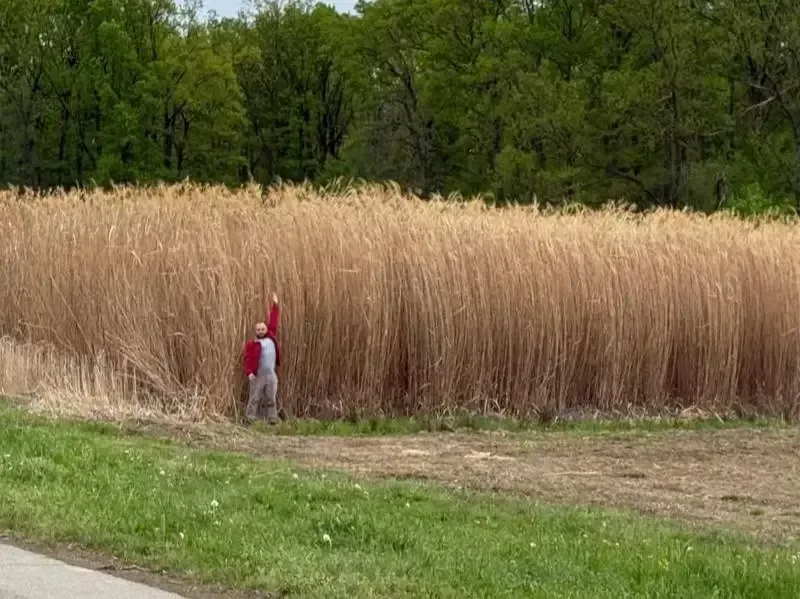
Miscanthus is a tall perennial grass, cut dry in late winter and baled like straw. The calculations on this page start with a 150 m² house, and the farm in chapter 03 is treated in the same way. The house needs 20,000 kWh of heat a year for space heating and hot water, slightly more than a typical German single-family house heated with gas. In a boiler of 82% efficiency, this requires six tonnes of miscanthus a year. For a house, the crop is cut with a forage harvester instead of a baler and burned as chips in a chip boiler. Boilers that take whole bales start at about 100 kW, the size needed for an estate.
Euros a year for 20,000 kWh of heat, 2025 prices
The gas price has changed little since the war on Iran began: German households paid 11.6 cents a kilowatt-hour in the first half of 2026, compared with 12.2 in 2025.
The price of heating oil rose by about half, so at 2026 prices bales are clearly cheaper than oil for the estate in chapter 03.
The heat pump is priced on the heat-pump tariff; at the ordinary household electricity price, the same heat would cost about €2,570 a year. A dealer selling into Germany lists miscanthus pellets at €340-360 a tonne, about as much as wood pellets cost in 2025. A tonne of miscanthus pellets gives less heat, so a year's heating with them costs about €2,000, compared with €1,620 for wood pellets.
Your house
- Gas per year
- €2,940
- Bought bales per year
- €810
- Own bales per year, at a growing cost of €92/t with German rent
- €550
- Bales per year
- 6.0 t
- Storage needed
- 40 m³
- Hectares, at 18 t of dry matter per hectare
- 0.3
The calculator assumes boiler efficiencies of 92% for gas and 82% for bales, and 4,080 kWh per tonne of bales at 15% moisture. The stack density is 150 kg/m³, and bales weigh 18% more than their dry matter. German gas bills are based on the gross calorific value of the gas, so the gas for 20,000 kWh of heat appears on the bill as about 24,000 kWh. The default gas price is the 2025 average reported by Eurostat, 12.2 cents a kilowatt-hour, which is €147 a megawatt-hour of heat after the boiler's losses. "Growing cost" is the full cost of growing a tonne over the 20-year life of a stand, as calculated in our planning model, a budget for one hectare. It is €70 a tonne without land costs and €92 with the average German rent for arable land, €407 a hectare. In the 82% boiler, that comes to €21-27 a megawatt-hour of heat. The model is set out in the growing-cost card on the reference page, and the full basis under the calculation basis on the same page. The calculator counts the fuel only; the costs of the boiler, electricity and attendance are given in the next chapter.
Read the detailCalculation basis and sources
Calculation basis: the boiler and the gas
A tonne of bales at 15% moisture contains 4,080 kWh. A bale or chip boiler converts 82% of this into heat, a gas boiler 92% of the energy in its gas and an oil or pellet boiler 88%. For 20,000 kWh of heat the house therefore needs 6 tonnes of bales, or 2,300 m³ of gas at 9.5 kWh a cubic metre. German gas bills are based on the gross calorific value of the gas, the Brennwert, so the same gas appears on the bill as about 24,000 kWh. Stored as bales, the fuel takes up about 40 m³, or 12 large square bales; as chips it takes up 60 m³.
Calculation basis: the field
A normal field of ours yields 18 tonnes of dry matter a hectare a year, which is 21 tonnes of bales. Dry matter is the weight of the crop without its water. The house therefore needs a third of a hectare. On the best deep soils it needs a quarter of a hectare, and on ordinary European land, at the yields reported in published trials, 0.4 hectares. The three yield levels are given in the hectare chapter of the reference page. Our minimum order is larger than one house needs, as chapter 07 explains.
How the bars are priced
Miscanthus from your own field is priced at €92 a tonne, its growing cost with German rent, as explained under the calculator. Bought and delivered, it costs €135 a tonne: about €120 ex farm, the German price that agrarheute reported in April 2026, plus the cost of a 50 km haul. Bought as pellets, it costs €340 a tonne. The heat pump is assumed to produce three units of heat for each unit of electricity, at 26.2 cents a kilowatt-hour, the average that German households with a heat pump paid in 2025.
Including the boiler, heat from bales costs about as much as gas in a house and a little over half as much on a farm
The bars in chapter 02 show fuel costs only, as does the price chart on the reference page. A household also pays for the boiler and for the time spent running it. The table below gives the full cost of both systems for the house, in euros per megawatt-hour of heat at 20 MWh a year. The figures for the estate and the farm follow the table.
| Bales at growing cost, from €70 a tonne without land costs to €124 on land rented at €1,000 a hectare | €21-37 |
|---|---|
| A stepped-grate chip boiler, €20,000-38,000 repaid over 15 years at 6%, on 20 MWh of heat a year | €103-196 |
| Electricity for feeders and fans, and attendance | ≈ €10 |
| Total cost of heat | €134-243 |
| Household gas, Germany 2025 | €147 |
|---|---|
| A gas boiler, €8,500-16,000 repaid over 15 years | €44-82 |
| Gas connection charge, servicing and chimney sweeping | not counted |
| Total cost of heat | €191-229 |
For a house, the yearly boiler instalment is larger than the cost of the fuel. Bales are clearly cheaper where the boiler price is near the bottom of its range, or where a grant covers part of it. An owner who lives in the house and replaces an oil boiler, or a gas boiler at least 20 years old, can claim 46% of costs up to €28,000 under the federal grant described in chapter 05. This lowers the boiler instalment to €56-129 a megawatt-hour and the total cost of heat from bales to €87-176, which is below the cost of gas.
At German household gas prices and without a grant, the two systems cost about the same.
Equipment and labour
A gas boiler costs less than half as much as a chip boiler and runs unattended. Miscanthus has to be grown or bought, kept dry and fed into the boiler, and its ash has to be removed.
In a larger building the result is different, because the boiler instalment is spread over more heat. A 300 m² estate heated with oil uses 40 MWh of heat a year, twice as much as the house. Its oil costs about €4,200 a year at 2025 prices and €5,700 at the average price for January-August 2026. With an oil boiler paid off over 15 years, the total is €5,100-5,900 at 2025 prices and €6,600-7,400 at the 2026 average. Heating with its own bales costs €1,200-1,900 including electricity and attendance, and €3,300-5,800 including the chip boiler.
On a farm that plants our minimum order, the boiler cost is spread over even more heat. Three hectares yield about 64 tonnes of bales a year, or 212 MWh, as much heat as ten houses use. With the full cost of a straw-type boiler system included, that heat costs a little over half as much as the farm would pay for gas at small-business prices.
Heating with bales costs the estate less than oil at 2025 prices, and the difference is larger at 2026 prices.
The bale figure includes the boiler system and its running costs; the gas figure is the fuel alone, burned in the farm's existing boiler. Both are before VAT.
Read the detailHow the table is calculated
The basis
The bales are priced at their growing cost. Each boiler is counted as a yearly instalment, with its price spread over 15 years at 6% interest. The bale side also includes the electricity for feeders and fans and the hours of attendance. The table does not include the gas connection charge, servicing, chimney sweeping or, if you do not already have one, a barn.
The bale row and the boiler price
The range in the bale row is wider than the fuel-only range in the summary, because it extends to land rented at €1,000 a hectare, more than the rent in the chapter 02 basis. The boiler price is that of a wood-chip system. The next chapter names the boiler that is type-tested for miscanthus; ask its manufacturer for a price. Chapter 05 sets out the boiler prices and the running costs.
The farm on three hectares
Three hectares of a normal field yield about 64 tonnes of bales a year, which gives 212 MWh of heat in an 82% boiler. A Guntamatic Powercorn 75 with its dust filter, fuel store and feed system is listed at €37,000-40,000 before VAT in 2026; for the system installed with a buffer tank, we assume €50,000-60,000. Repaid over 15 years at 6%, this adds €24-29 a megawatt-hour to the €27 for the bales and the €9-13 of running costs. We use the Powercorn price only as an indication. Guntamatic lists miscanthus as a fuel but holds no type-test certificate for plant fuels. In Germany the farm therefore needs a boiler type-tested on the fuel, such as Ökotherm's, or a permit for a plant of 100 kW of fuel input or more.
The farm's gas and the permit
The gas price is Eurostat's figure for German businesses that use less than 1,000 GJ a year: 9.6 cents a kilowatt-hour before VAT in 2025 and 9.2 in the first half of 2026. The farm already has a gas boiler, so no boiler is counted on the gas side. The permit threshold is 100 kW of fuel input. Below it the boiler must be type-tested on the fuel; at or above it the plant needs a permit, as chapter 06 explains.
Miscanthus ash softens about 450 degrees lower than spruce ash, so the fuel requires a boiler built for straw
Miscanthus leaves more ash than wood, and its ash begins to deform at 835-890 °C. In a chip or pellet boiler built for wood, the ash fuses into hard lumps, called clinker or slag, on the grate on which the fuel burns. A boiler for miscanthus therefore has to be built for straw.
In a boiler built for straw, the same fuel burns without forming slag. Its grate moves or steps, so that the ash is carried off before it fuses. The ash pan is two to three times the size of a wood boiler's, and the lining is stainless steel or refractory brick. A filter is needed because a grass fuel releases several times as much dust as wood. On this fuel the boiler delivers less than its rated output: Guntamatic's 30 kW Powercorn gives 25 kW on grain and grass.
Wheat straw ash softens at 998 °C and spruce ash at 1,426 °C. The grate of a wood boiler runs above 973 °C, so a straw boiler is built to keep its grate cooler.
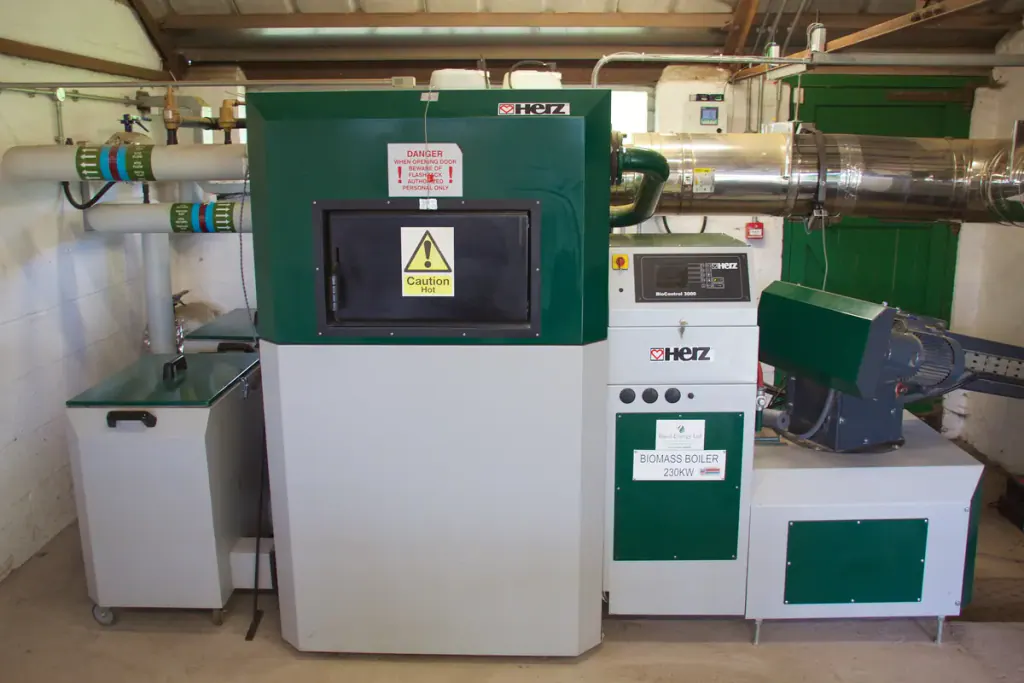
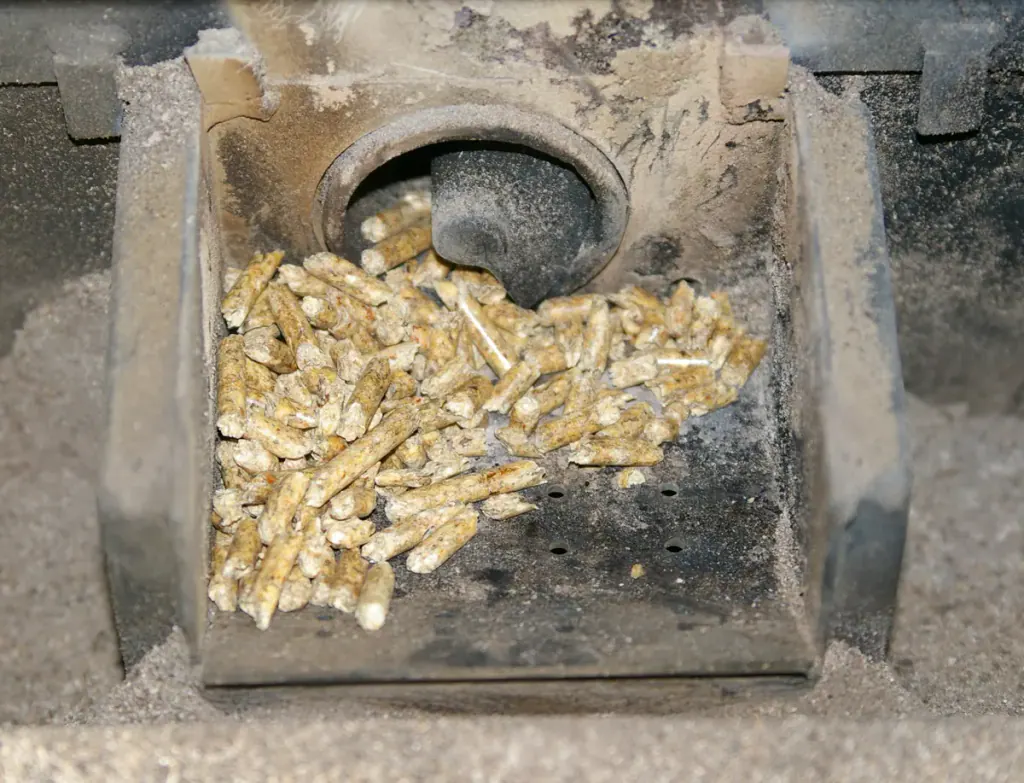
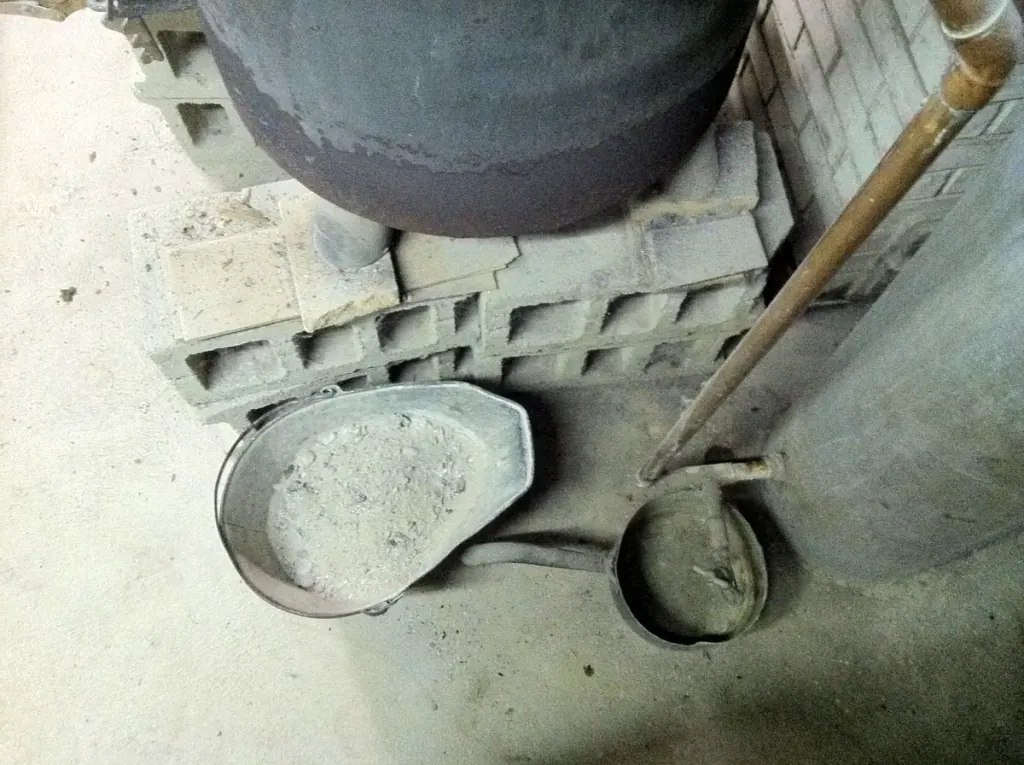
Manufacturers that list miscanthus as a fuel
Guntamatic lists it for the Powercorn and Powerchip, Hargassner for the Eco-HK and Ökotherm for the Compact. The Ökotherm Compact, fitted with a fabric filter to catch the dust, was the only boiler below 100 kW type-tested for miscanthus in Germany as of 2021.
Boilers that run on miscanthus without a listing
ETA does not list it, although two Cornish farms have run its segment-grate Hack boilers on miscanthus for years. A German grower on the LandTreff forum has done the same with an 85 kW Fröling Turbomatic. In Germany neither a manufacturer's listing nor years of operation can replace the type test.
Straw-fired plants built to order
Linka and Reka build straw-fired plants that burn shredded bales, with outputs from a few hundred kilowatts to 15 MW. Neither lists miscanthus as a fuel. For a village boiler of a few hundred kilowatts, these are the manufacturers to ask.
Read the detailAsh, chlorine and the type test
Ash and chlorine
A stem cut late leaves 1-3% ash, and a whole plant baled with its leaves nearer 4%, compared with 0.6% for wood. Grasses accumulate potassium and chlorine in their stems, and the two form a glass that melts at a low temperature. The fuel contains 0.04-0.37% chlorine in its dry matter, whereas the wood-pellet standard allows 0.02-0.03%. The full fuel specification is in chapter 02 of the reference page.
In a wood boiler
In a boiler designed for wood, hard clinker forms on the hot grate, the flue gas is acidic and the output falls below the rated value. On the LandTreff forum in 2022, German growers reported extreme amounts of slag in wood boilers and said that most people who had tried burning miscanthus in them had given up.
The type test
A test institute carries out the type test on one boiler model with one named fuel. The certificate shows that the model meets the emission limits on that fuel, and the chimney sweep checks it at the acceptance inspection of a new boiler.
Farms and villages that heat with miscanthus, and what a boiler costs to buy and run
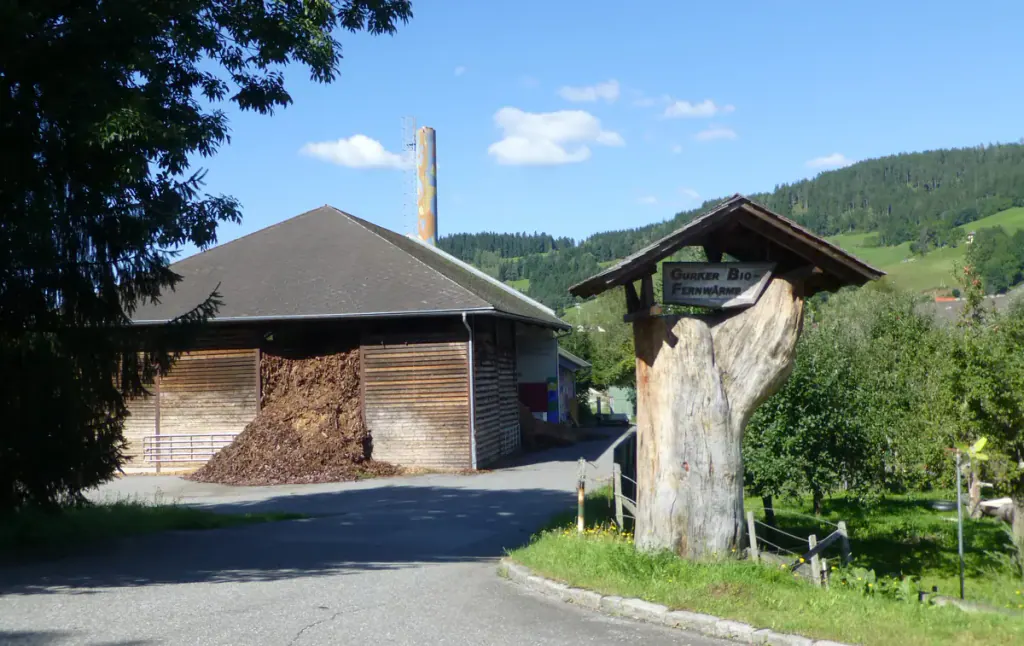
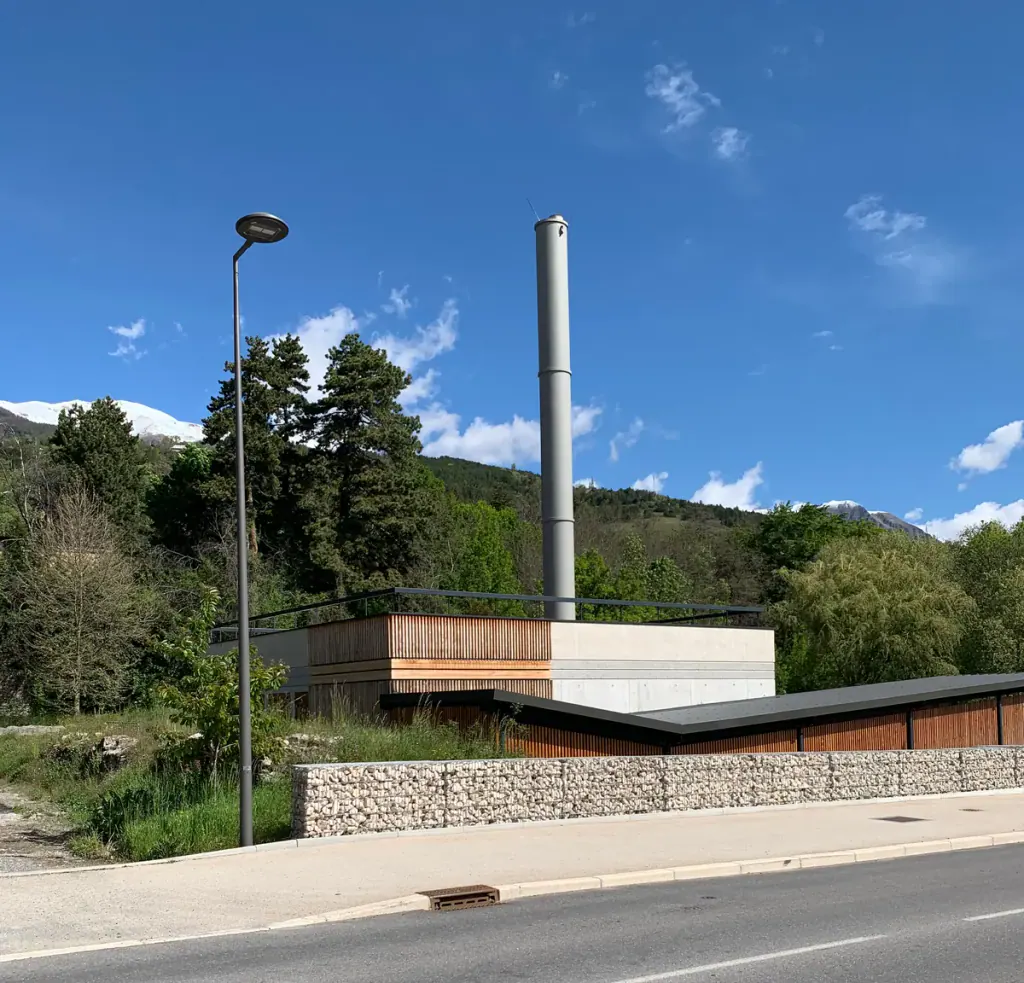
All the boilers we found that have run on miscanthus for years are fed from fields within a few kilometres of them.
Case studies, with the failures last
- Alsace · village boiler · since 2011
Bernwiller and Ammertzwiller
27 ha · 400 kWA dozen farmers grow the crop for the village boiler. In 2023 they were paid about €110 a tonne delivered, and a resident with a 180 m² house pays about €1,500 a year for heat and hot water.
- Cornwall · two ETA boilers
Burlerrow Farm
2.75 p/kWhThe farm grows 50 hectares of miscanthus, which yield 12 t a hectare, and burns its own chips in two ETA boilers of 90 and 130 kW. The chips cost 2.75 pence a kilowatt-hour, compared with 4.8 pence for bought wood chips and more than 10 pence for oil.
- Bavaria · Hargassner 90 kW · since 2007
The Lechermann family
30 haThe family makes pellets from its own crop and uses them to heat a house, the farm and a car dealership.
- Lower Austria · 70 kW
The Schützenhofer family
20 ha · 80%The family's 70 kW boiler burns a fuel mix that is 80% miscanthus, and the crop comes from 20 hectares. The ash is emptied every four weeks.
- Upper Austria · planted 2005
The Hebenstreit family
0.2 haThe crop is enough for all of the family's hot water.
- North Rhine-Westphalia · straw-fired plant
Haus Düsse
130,000 litres of oilThe 400 kW Linka plant replaced 130,000 litres of heating oil a year. It supplies heat for 650 sows, a grain dryer and four flats, burns 364 t of the farm's own straw and needs about 200 hours of labour a year.
- Germany · wood boilers
The failures
50% slagAll the failures we found occurred in boilers built for wood. One user burned miscanthus briquettes in a log-gasifier boiler; half of the fuel remained as hard slag, and he stopped. Several other users in the LandTreff thread on chip boilers report the same problem.
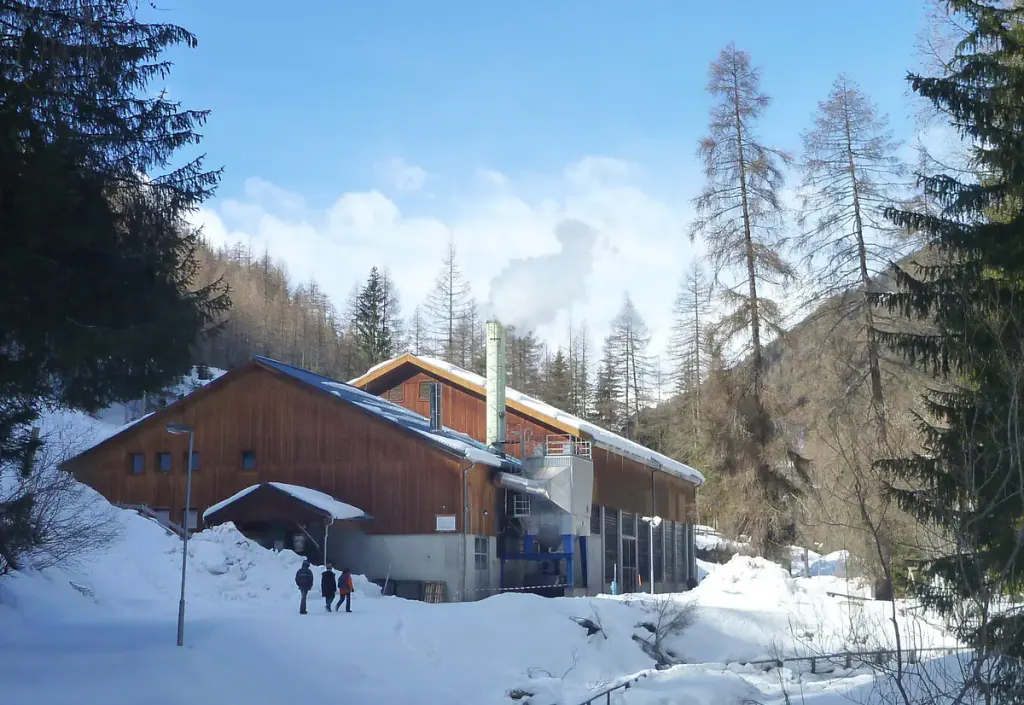
Running costs are higher than for a gas boiler
The running costs we use come from the largest farm plant we found in Germany, the 400 kW straw-fired plant at Haus Düsse. There, the electricity for feeders and fans costs €5-8 per megawatt-hour of heat, and the time spent tending the boiler costs €4-5. Both are in addition to the growing cost of the bales.
The boiler price
A house-scale chip system in Germany costs €20,000-38,000 installed, compared with €8,500-16,000 for a gas boiler. Bale boilers for farms are priced on request.
If the old boiler has to be replaced anyway, the cost of switching is only this difference, which can be financed like any other equipment.
Under the guideline in force since July 2026, the federal grant pays up to 80% of €28,000 towards a straw-type boiler; an owner who replaces an oil boiler receives 46% without the income bonus. Eligible boilers are listed by model, and the application must be submitted before the installer starts work.
This covers bales at their growing cost, electricity for the feeders and the hours spent in the boiler house; the boiler instalment is not included.
Rules for burning miscanthus on a farm or in a house, by country
In Germany miscanthus may be burned in automatically fed boilers that are type-tested on the fuel, but not in pellet stoves; from 100 kW of fuel input a plant needs a permit. In Poland the anti-smog resolutions require a label that straw boilers do not have. France has no separate rule for a house, and we could not verify Austria's rules for small boilers.
Small boilers. Miscanthus is classed as "straw and similar plant material" under the small-combustion ordinance, 1. BImSchV §3(1) no. 8. It may be burned in automatically fed boilers type-tested on the fuel, from 4 kW of rated heat output up to the permit threshold of 100 kW of fuel input. The limits are 20 mg/m³ of dust and 0.4 g/m³ of carbon monoxide, and a chimney sweep measures the emissions every second year. Households may use such boilers; pellet stoves are not covered. Chapter 04 names the boiler that has passed the type test.
Large plants. From 100 kW of fuel input, a plant needs a permit under the simplified procedure of the 4. BImSchV, annex 1, no. 1.2.4, and TA Luft applies. The threshold refers to the heat input of the fuel rather than the heat output of the boiler, so a boiler with a rated heat output of 90 kW may already need a permit. With a batch of fuel high in chlorine, the flue gas can exceed the hydrogen chloride limit of 30 mg/m³: the Bavarian technology centre TFZ measured about 100 mg/m³ in untreated flue gas.
Small boilers. We have not verified the rules for a house boiler.
Large plants. From 0.1 MW, the combustion-plant ordinance FAV 2019 lists miscanthus as a fuel.
Small boilers. Anti-smog resolutions, which are set region by region, require a boiler that meets the EU's Ecodesign standard and fuel with less than 20% moisture. The Ecodesign regulation classes miscanthus as non-woody biomass and leaves boilers built for it outside its scope, so straw boilers have no Ecodesign label. Check the resolution for your region before buying a boiler.
Small boilers. There is no separate rule for a house. The Nouvelle-Aquitaine chamber of agriculture recommends a moving or refractory grate.
Large plants. Under heading 2910 of the rules for classified installations (ICPE), no procedure is required below 1 MW; a declaration is required from 1 to 20 MW and registration from 20 to 50 MW.
Large plants
Above 100 kW the rules depend on the country. German rules are stricter for miscanthus than for wood: a wood boiler needs a permit only from 1 MW. The EU-wide rules, including those for plants above a megawatt, are in chapter 05 of the reference page, and the energy-return and carbon figures are in its chapter 06.
Germany has had a carbon price on heating gas and oil since 2021. From 2028 the EU's second carbon market will cover them in every member state.
A farm needs three hectares of miscanthus for its heat, and a house a third of a hectare
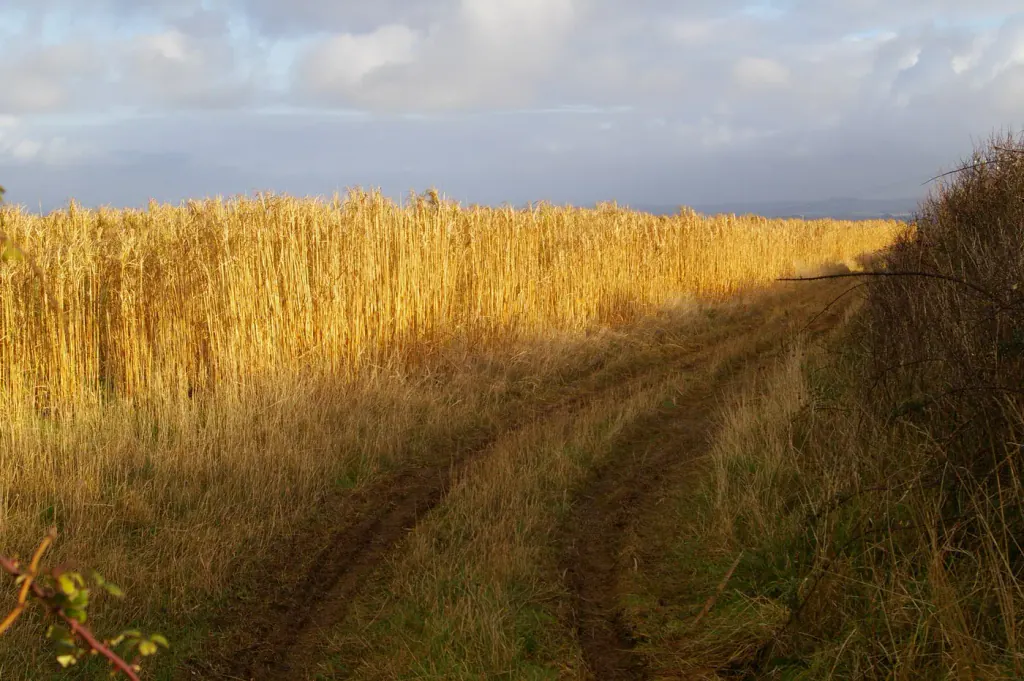
The crop is planted only once, at 17,800 rhizomes a hectare, on land prepared as for maize. Rhizomes are the pieces of underground stem from which the plant grows. It is harvested every winter for 20 years, from the January after its second growing season. The first harvest gives about 60% of a full crop and is burned from the third autumn after planting.
The minimum order
Our minimum order is three hectares. On a normal field of ours, that is enough to heat a farm, or ten houses at a third of a hectare each. The owner of a house or an estate with land can plant for the neighbours as well, or sell the surplus under contract. The 20-year budget, the cash-flow chart and the market for bales are covered in chapter 07 of the reference page.
The payback
Our planning model includes rent and harvesting but not the boiler. On that basis, with German rent, the planting cost of a hectare is recovered in year three if its bales replace gas. The gas is valued at the price that a farm-sized business pays in Germany. If the bales are sold at the German ex-farm price instead, the planting cost is recovered in year nine.
If you have no field of your own
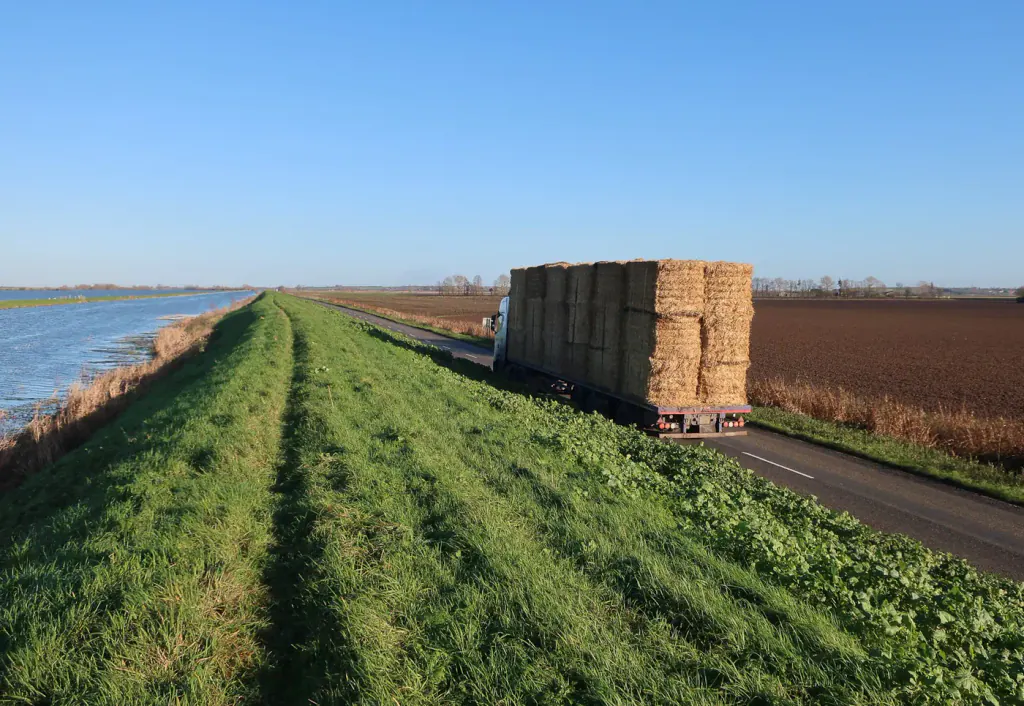
- Bales are traded between farms by the truckload, and we found no supplier that delivers them to households. We supply planting stock and have no fuel to sell.
- Bought at the farm-to-farm price with delivery, the fuel for the 150 m² house in chapter 02 would cost about €810 a year, compared with €2,940 for German household gas. The house would also need a €20,000-38,000 stepped-grate chip boiler, a fuel store the size of a double garage and permission to burn the fuel. In Germany it may be burned in a boiler whose model has passed a type test on this fuel, but not in a pellet stove. In Polish anti-smog zones a boiler needs a label that straw boilers do not have.
- At 2025 prices miscanthus pellets cost about as much per tonne as wood pellets. They give less heat per tonne and form hard lumps of fused ash in a pellet boiler.
- For a house without land, the practical option is a shared village boiler like the one in Alsace described in chapter 05.
If you have a gas boiler or a pellet stove and no land, we recommend keeping it. Bales are a cheaper fuel, but the boiler and the barn would cost more than you would save, and in some places a permit would not be granted.
The crop is planted once and harvested every winter for 20 years
A farm
Plant three hectares, our minimum order, to heat the farmhouse, the workshop and the barns. Allow for a straw-type boiler with a buffer tank, and a barn or a covered stack for the bales. Below 100 kW of fuel input the boiler must be type-tested on the fuel; from 100 kW the plant needs a permit.
A house or an estate
Allow a third of a hectare per house. The minimum order is enough for about ten houses, so plant for your neighbours as well or sell the surplus under contract. Chapter 05 above describes boilers already in use in Alsace, Cornwall, Bavaria and Austria.
A house without land
Ask your municipality about a village boiler. In Alsace a dozen growers supply such a boiler, and a resident pays a yearly bill for heat and hot water, as described in chapter 05. We supply such growers with planting stock.
Miscanthus as fuel: the other two parts of the series
The page covers the fuel specification, the price of heat by fuel and country since 2020, the energy return and carbon figures, the rules and the 20-year budget for a hectare.
Read it Grain dryers and process heatGrain drying with miscanthus: the cost of drying a tonne of maize with bales, chips or gasThe page covers farms that changed from gas, the cost of the furnace and of feeding it, a full-cost comparison for a dryer and the calculation for a sugar factory.
Read itFrequently asked questions
Such a boiler can burn it only for a short time. Miscanthus ash softens at about 970 °C, and the fuel contains several times as much chlorine as wood pellets. In a boiler built only for wood, the ash fuses into hard lumps, called clinker, and the flue gas corrodes the steel. A boiler for miscanthus must have a moving or stepped grate, a filter and a lining designed for straw-type fuels. Guntamatic, Hargassner and Ökotherm list it as a fuel, and ETA and Fröling boilers have run on it. Linka and Reka build straw-fired plants that burn shredded bales, although neither lists miscanthus as a fuel.
Potassium and chlorine in the stems form a glass that melts on a hot grate. Harvest late, so that part of the potassium and chlorine is leached out of the stems over the winter, and keep the grate moving. If you have to use a wood boiler, mix in wood chips or add 0.3-0.5% slaked lime to the fuel, as growers on the LandTreff forum do.
It leaves 2-4% of the fuel as ash, three to seven times as much as wood. In the farm boilers we found in France and Austria, the ash is removed about once a month in winter. Grate ash from untreated plant material can be spread back on the field where the fertiliser rules allow it.
A 150 m² house that uses 20,000 kWh of heat a year needs six tonnes of bales in a boiler of 82% efficiency, which is the crop of about a third of a hectare. Our minimum order of planting stock is three hectares, enough for ten houses or a farm.
It contains more nitrogen oxides and more hydrogen chloride than flue gas from wood, so it is more acidic and corrodes plain steel and condensing boilers. Boilers built for straw have stainless or refractory linings and a filter, so that they meet the same dust limits as wood boilers.
One house needs about 40 m³ of bales for a year, which is the size of a double garage. For the same amount of heat, bales take up four to five times as much space as pellets, so they are stored on pallets or gravel in a roofed barn with open ends. Round bales can also be stored outdoors under a tarpaulin. In a nine-month trial, covered bales lost 0.8% of their dry matter and uncovered bales 9%.
Yes, but removing the crop takes two seasons of work, because the rhizomes regrow after a single treatment. In University of Maryland field trials published in 2024, the treatment that suppressed the crop most combined discing with two mowings, each followed by glyphosate sprayed on the regrowth. Even so, the plants recovered within a year, so the following crop also needs weed control. Use only the products and rates authorised in your country.
If only the fuel is counted, miscanthus bales are cheaper. At April 2026 prices, a megawatt-hour of heat costs about €36 from miscanthus bales bought ex farm in Germany and €40 from delivered bales. Wood pellets cost €81 for the same heat in 2025, €97 on average from January to September 2026 and €107 in September 2026. Heat from your own bales, priced at their growing cost, comes to €21-27. Once the whole system is counted, miscanthus is cheaper only if you have a field, because a straw boiler costs more than a pellet boiler and the bales need a barn. Miscanthus pellets at €340-360 a tonne cost about as much as wood pellets at 2025 prices, give less heat per tonne and must be burned in a boiler built for agricultural pellets. A household without land should stay with wood pellets.
In practice this is not a realistic option. Bales are traded between farms by the truckload, at about €120 a tonne ex farm in Germany and €135 delivered, and we found no supplier that delivers them to households. Miscanthus pellets, at €340-360 a tonne, cost about as much as wood pellets did in 2025 and give less heat. They must be burned in a boiler built for agricultural pellets and are not suitable for a pellet stove. The boiler and the barn would cost more than you would save on fuel, and in some places a permit would not be granted. For a house without land, the practical option is a village boiler supplied by a dozen local growers, as in Alsace. We supply such growers with planting stock and have no fuel to sell.
About this article
We wrote this article ourselves. We grow miscanthus and sell planting stock, and we used the sources listed below and our own figures.
The information was current when the article was published. Prices and rules change, and errors are possible, so please check the figures before you rely on them.
If you find an error or have more accurate figures, write to us at info@miscanthus.eu or use the form below.
Sources
- TFZ Straubing, K. Reisinger. Thermische Verwertung von Miscanthus im Vergleich zu Holz (2009), Landtechnikbericht 154: net calorific value 17.7 MJ/kg DM; ash 3.9% (2.3-5.6); ash softening 973 °C; Cl 0.22%, K 0.72%; HCl and dust measurements; "no miscanthus in conventional chip or pellet boilers".
- TFZ, Anbauhinweise Chinaschilf (2007): harvest moisture ≤15% at a late harvest; site requirements.
- FNR, Basisdaten Bioenergie (2022): net calorific value 14.6 MJ/kg at 15% moisture; bulk densities.
- Jensen, E. et al. (2017). Spring stem moisture, ash and chlorine across sixteen miscanthus genotypes. PMC5412913.
- Sood, K. et al. (2014). Nine-month storage of miscanthus bales, covered 0.77% vs uncovered 9.24% dry-matter loss. ASABE.
- Frontiers in Energy Research (2025). Ash deposition in small biomass devices: chloride and potassium in miscanthus pellets vs softwood.
- LandTreff forum threads (2011, 2022, 2025); holzheizer-forum (2017), briquette slag case; Chambre d'agriculture Nouvelle-Aquitaine, recommandation miscanthus biocombustible (2026); CIBE note (2011).
- Guntamatic (Powercorn, Powerchip), Hargassner (Eco-HK), Ökotherm (Compact), ETA (Hack), Linka Energy, Reka: maker documentation, 2026.
- Eurostat, nrg_pc_202 (household gas, band D2, all taxes) and nrg_pc_204 (household electricity, band DC), Germany, 2024-S1 to 2026-S1, updated 7 October 2026; nrg_pc_203 (non-household gas before VAT, bands I1 and I3) for the farm prices.
- Guntamatic, price list 2026: Powercorn 75 with EC filter, BOX store and FLEX discharge, before VAT; Guntamatic, Powercorn 30/50 product page (2026): no type-test certificates for plant fuels; 4. BImSchV, annex 1, no. 1.2.4 (solid fuels other than coal and untreated wood, 100 kW to under 50 MW of fuel input, simplified procedure); Vollmer, K. & Rogers, E. (2024), Considerations for terminating giant miscanthus on Maryland farms, University of Maryland Extension, FS-2023-0685.
- Destatis, Statistischer Bericht Energiepreisentwicklung, table 61241-11 (heating oil, net of VAT; we added 19% VAT); DEPI/DEPV pellet price index (6 t, with VAT), 2020-2026.
- Banque des Territoires (2 May 2023) and France Miscanthus (Bernwiller/Ammertzwiller); Biomass Connect case study (Burlerrow Farm); Hargassner reference brochure (Lechermann, Schützenhofer, Hebenstreit); LWK NRW, Haus Düsse (25 January 2007), Farwick straw plant: electricity and labour.
- Heizspiegel 2026 (co2online), billing year 2025: 127 kWh/m²/yr for a single-family house on gas, 26.2 ct/kWh for heat-pump electricity; Kesselheld, heizung.de, Bosch, greenox, Verivox, enter.de (boiler prices, 2025-2026); Agraventa (miscanthus pellet price).
- 1. BImSchV §3(1) no. 8, §5(3), §15; KÜO; BEG EM guideline of 17 July 2026 and KfW Merkblatt 458 (September 2026): 30% base rate, 16% climate-speed bonus, income bonus, eligible costs up to €28,000; Ecodesign Regulation (EU) 2015/1189; Polish anti-smog resolutions; Austrian FAV 2019.
- Bale prices: agrarheute (7 April 2026: about €120 a tonne ex farm in Germany); Novabiom and the Bernwiller contract (France); Farmers Weekly (2020) and Biosorb (2024) (Britain); our own field-edge price.
- MCPD (EU) 2015/2193; IED 2010/75/EU; EU ETS Directive and ETS2; RED III, Directive (EU) 2023/2413, Art. 3 and Art. 29.
- Zelena Biomasna Energija, Miscanthus × giganteus CAPEX and OPEX structure: 1-hectare reference model, Croatia, September 2026 (planning-level; excludes financing, storage, transport, processing and plantation removal); run here with planting stock at list price.
- Hectare economics: miscanthus.eu/buy (planting-stock prices); our harvest cost, yields and price; LfL Bayern Deckungsbeiträge 2023-25; LfULG Sachsen (2014); Chambre d'agriculture de l'Oise (2025); Hastings, A. et al. (2017); Destatis, Agrarstrukturerhebung 2023 (rent for arable land, €407 a hectare); Poltava and Potash trial series behind the yield ladder.
- Photography: the photographs of our own fields are ours, from February 2026 and earlier winters; the others are credited in their captions.